Cauliflower and Chickpea Curry with Coconut
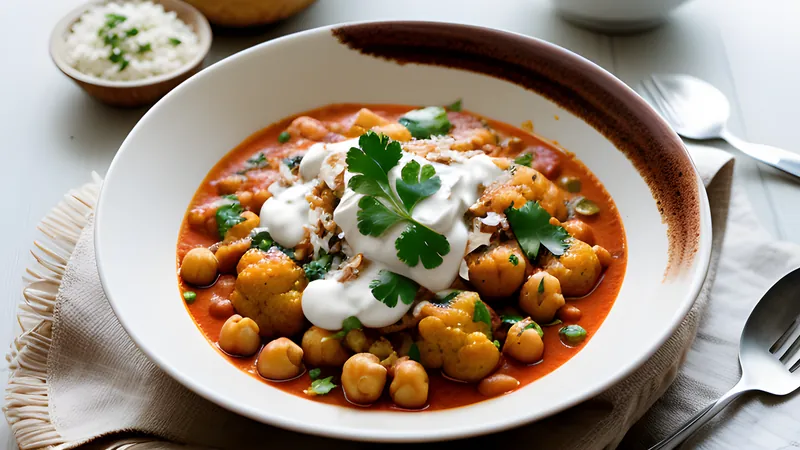
Charred florets and soft chickpeas in a toasted-coconut gravy
Contents
↓ Jump to recipeMost cauliflower curries fail in the same quiet way: the florets go into the sauce raw, simmer until they turn to grey mush, and lose every scrap of their character. The fix is to treat the cauliflower like the star it can be and roast it hard first, so the edges char and caramelise before it meets the gravy. Those toasted, almost nutty florets hold their shape and bring a depth that no amount of simmering ever will.
This is the curry I cook when the fridge is thin and the week has been long. Everything but the cauliflower comes from the store cupboard, it feeds four for the price of a sandwich, and it improves overnight. My small twist is a scatter of toasted desiccated coconut stirred in at the end, which doubles down on the coconut milk and gives the sauce a warm, praline-like edge you don’t often taste in a weeknight curry.
Cauliflower and Chickpea Curry with Coconut
Ingredients
- 1 large cauliflower (about 800g), cut into bite-sized florets
- 1 x 400g tin chickpeas, drained and rinsed
- 3 tbsp neutral oil, plus 1 tbsp for the florets
- 2 onions, finely chopped
- 4 garlic cloves, crushed
- 1 thumb ginger, grated
- 1-2 green chillies, finely chopped
- 1 x 400g tin chopped tomatoes
- 1 x 400ml tin full-fat coconut milk
- 2 tsp ground cumin
- 2 tsp ground coriander
- 1 tsp ground turmeric
- 1 tsp garam masala
- 1/2 tsp chilli powder (optional)
- 4 tbsp desiccated coconut, toasted
- Juice of 1/2 lime
- Small bunch coriander, chopped
- Fine sea salt
Method
- Roast the cauliflower florets, tossed with 1 tbsp oil and salt, at 220C fan for 20-25 minutes until charred at the edges.
- Toast the desiccated coconut in a dry pan over medium heat for about 2 minutes until golden, then tip out.
- Cook the onions in 3 tbsp oil over medium-low heat for 10-12 minutes until golden, then add the garlic, ginger and green chilli and fry for 2 minutes.
- Stir in the cumin, coriander, turmeric, garam masala and chilli powder and fry for 60-90 seconds.
- Add the chopped tomatoes and cook for 8-10 minutes until the oil separates, then pour in the coconut milk and chickpeas and simmer for 10 minutes.
- Fold in the roasted cauliflower and half the toasted coconut, warm through for 3-4 minutes, then finish with lime juice, salt and coriander and scatter with the rest of the coconut.
A dish with two homelands
Cauliflower is a relative newcomer to the subcontinent, arriving with British traders in the nineteenth century, yet it took to Indian cooking so completely that it now feels ancient. It flourished in the cool winters of the north, and dishes like aloo gobi and gobi masala became fixtures of Punjabi home kitchens within a generation or two.
Chickpeas, by contrast, have been grown across the region for thousands of years, a cornerstone of the vegetarian diet that much of India has always eaten. Pairing the two gives you a plate that is complete in the old Ayurvedic sense: the pulse brings protein and heft, the vegetable brings texture and sweetness, and the whole thing sits happily without a scrap of meat.
The coconut points the dish south. In Kerala, Goa and the coastal belt, coconut is the fat and the body of countless curries, ground fresh or squeezed into milk. Borrowing it for a northern-style cauliflower curry is exactly the kind of cross-country blending that home cooks have always done, and it softens the tomato’s edge into something rounder. If you enjoy this register of cooking, it keeps good company with my dal makhani with butter and cream and the richer, restaurant-style paneer butter masala.
Building flavour in layers
A good curry is built up in stages, each one there for a reason. Rushing any of them is the single most common home-cook mistake, so it helps to know what each step is actually doing.
Roast the cauliflower. Heat the oven to 220°C fan. Toss the florets with a tablespoon of oil and a good pinch of salt, spread them on a tray in a single layer, and roast for twenty to twenty-five minutes until deeply browned at the edges and tender at the stem. Crowd the tray and they steam instead of char, so use two if you must. This is where the flavour is made.
Toast the coconut. While the oven works, tip the desiccated coconut into a dry frying pan over a medium heat and stir constantly until it turns golden and smells like toasted biscuit, about two minutes. It scorches in seconds once it colours, so don’t wander off. Tip it straight out of the hot pan to stop it cooking.
Sweat the onions properly. Warm three tablespoons of oil in a heavy pan and cook the onions with a pinch of salt over a medium-low heat for a full ten to twelve minutes until soft and golden. Undercooked onions leave a raw, harsh note that no spice can cover. Add the garlic, ginger and green chilli and fry for two minutes more until fragrant.
Bloom the spices. Stir in the cumin, coriander, turmeric, garam masala and chilli powder and fry for sixty to ninety seconds. Cooking ground spices in hot oil, rather than dropping them into liquid, wakes up their fat-soluble aromatics and takes away any dusty, raw-powder taste. Keep them moving so they toast rather than burn; a splash of water helps if the pan runs dry.
Bringing the curry together
Pour in the chopped tomatoes and let them cook down for eight to ten minutes over a medium heat, stirring often, until the sauce darkens and the oil begins to separate and pool at the edges. That splitting is the sign the base is properly cooked and the tomato’s tinny sharpness has mellowed. Do not hurry it.
Add the coconut milk and the drained chickpeas, bring to a gentle simmer, and cook for ten minutes so the chickpeas soak up the sauce and the gravy thickens to a coating consistency. Give the tin of coconut milk a good shake before opening; the cream and water separate on the shelf and you want them recombined.
Now fold in the roasted cauliflower along with half the toasted coconut, and warm everything through for a final three or four minutes. Adding the cauliflower late keeps its charred edges intact and stops it collapsing. Taste and adjust: more salt almost certainly, the lime juice for brightness, and a little more chilli if you like heat. The lime at the end lifts the whole pan and stops the richness turning heavy.
Chickpeas, tinned and dried
A tin of chickpeas is one of the great convenience foods, and there is no shame in reaching for one on a Tuesday. Drain and rinse it well, though, because the starchy liquid it sits in carries a slightly metallic tang that muddies a delicate sauce. Rinsing also washes away some of the compounds that make chickpeas hard to digest, which your dinner guests will quietly thank you for.
If you plan ahead, dried chickpeas repay the effort handsomely. Soak 150g overnight in plenty of cold water with a pinch of bicarbonate of soda, which softens their skins, then simmer them for around an hour until they give completely when pressed. The texture is creamier and the flavour nuttier than any tin, and the cooking water makes a light stock you can use to loosen the finished curry. A hard chickpea never softens in an acidic tomato sauce, so make sure they are fully tender before they go anywhere near the tomatoes.
A word on your spices
Ground spices are not immortal. The cumin and coriander that have sat open in the back of the cupboard for three years have given up most of their volatile oils and will taste of dust. Buy them in small quantities, keep them sealed and dark, and replace them once a year. Better still, buy whole cumin and coriander seed, toast them in a dry pan until they smell fragrant, and grind them fresh; the difference in a simple curry like this one is genuinely startling. If you only upgrade one spice, make it the garam masala, since it goes in late and its aromatics are the ones you notice most on the plate.
Tips, storage and variations
If your sauce looks thin, simmer it a few minutes longer with the lid off; if it tightens too much, loosen it with a splash of water or stock. The consistency you’re after coats the back of a spoon and slides slowly off, thick enough to cling to rice.
This curry is a genuine make-ahead champion. The flavours deepen overnight, so it is often better on day two, and it keeps in the fridge for three days or freezes for three months. Reheat gently with a splash of water, since the chickpeas and coconut thicken as they sit.
For variations, a couple of handfuls of spinach wilted in at the end adds colour and iron, and a diced potato roasted alongside the cauliflower makes it more of a one-pot meal. Swap the chickpeas for a tin of butter beans if you prefer something creamier, or stir through a spoon of ground almonds for extra body. A vegan version needs no changes at all.
Serve it scattered with the remaining toasted coconut, the fresh coriander and, if you have it, a swirl of yoghurt. Basmati rice is the natural partner, though warm flatbread for scooping turns it into something you eat with your hands and no cutlery at all, which is my favourite way of all. A cooling side of cucumber raita tames the heat if you have gone heavy on the chilli, and a lime pickle on the table gives each forkful a sharp, salty jolt. Leftovers make a fine lunch stuffed into a wrap with a handful of shredded lettuce, cold from the fridge, which is proof of how well the flavours set once they have had a night to think about themselves. Like the best curries, this one asks little and gives back a great deal.
Related Content