Cassoulet with Duck Confit and Toulouse Sausage
The great white-bean project of south-west France, done over a weekend
Contents
↓ Jump to recipeThere is an old argument in south-west France, conducted with the seriousness usually reserved for football or inheritance, about which town makes the true cassoulet. Castelnaudary claims the original, all pork and beans and confit. Carcassonne adds mutton, sometimes partridge. Toulouse insists on its own sausage and a good deal more duck. The food writer Prosper Montagné called cassoulet the god of Occitan cuisine, with Castelnaudary the Father, Carcassonne the Son and Toulouse the Holy Ghost, and if that sounds like a lot of theology for a bean stew, you have not yet eaten a proper one.
What all three agree on is that cassoulet is a project. It is beans and preserved meat cooked so slowly and so lovingly that the whole thing turns creamy and unctuous, bound by nothing but its own starch and fat and time. This is not a weeknight dish and I would never pretend otherwise. It is a Saturday dish, a two-glasses-of-wine-while-you-cook dish, the sort you make when the weather has turned and you have people coming who will stay late.
Cassoulet with Duck Confit and Toulouse Sausage
Ingredients
- 500g dried haricot or cannellini beans, soaked overnight in cold water
- 1 ham hock (about 700g), or a 200g piece of unsmoked bacon
- 4 legs duck confit (shop-bought is fine)
- 6 Toulouse sausages (about 600g)
- 200g pork belly or unsmoked streaky bacon, cut into lardons
- 1 large onion, halved and stuck with 2 cloves
- 1 onion, finely diced
- 1 carrot, halved
- 4 garlic cloves, sliced, plus 2 whole
- 2 tbsp tomato purée
- 400g tin chopped tomatoes
- 1 bouquet garni (thyme, bay, parsley stalks)
- 1.2 litres chicken stock, warm
- 80g fresh breadcrumbs
- 2 tbsp duck fat (from the confit tin)
- Salt and black pepper
Method
- Drain the soaked beans. Simmer them with the ham hock, the clove-studded onion, the carrot and the bouquet garni in plenty of unsalted water for 45 minutes, until the beans are tender but still hold their shape. Reserve the cooking liquid; discard the onion and carrot. Shred the hock meat, discarding skin and bone.
- Wipe the confit legs, then brown them skin-side down in a dry frying pan for 5 minutes until crisp. Set aside. Brown the sausages all over in the rendered fat, then the lardons until golden. Set aside.
- In a heavy casserole, soften the diced onion and sliced garlic in a spoon of duck fat for 8 minutes. Stir in the tomato purée, cook 1 minute, add the tinned tomatoes and cook 5 minutes until thick.
- Drain the beans (keep the liquid). Fold them into the casserole with the shredded hock, lardons and the whole garlic cloves. Season, then pour in warm stock and reserved bean liquid to just cover. Bury the sausages and confit legs in the beans, skin proud of the surface.
- Bake uncovered at 150°C fan for 2 to 2½ hours. Each time a golden skin forms on top, break it gently back into the beans with the back of a spoon; do this 5–7 times. Add a ladle of bean liquid if it looks dry.
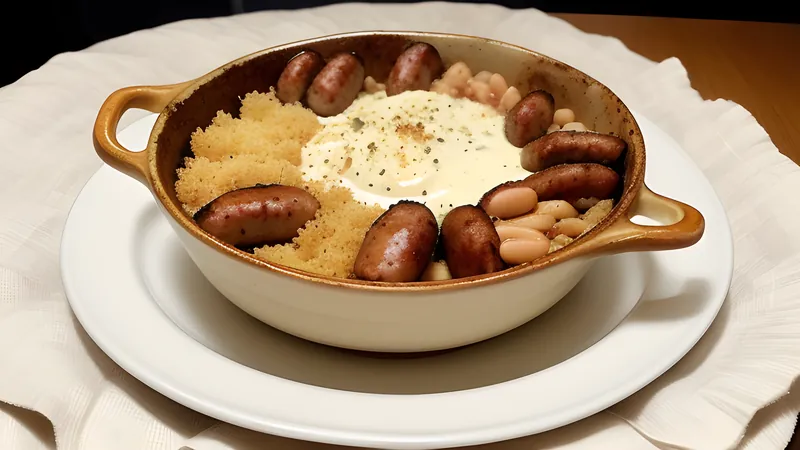
- For the last 30 minutes, scatter over breadcrumbs mixed with the remaining duck fat and leave undisturbed to form a final crust. Rest 15 minutes before serving.
The one technique that makes it cassoulet
If you take one thing from this, take the crust. As the cassoulet bakes uncovered, a golden skin forms on the surface where the beans meet the air. The old cooks of the Lauragais break that skin back down into the pot with the back of a spoon, and then let another form, and break that one too. Seven times is the folkloric number. Each broken crust thickens the whole dish and enriches it, drawing starch to the surface, and the repeated cycle is what gives cassoulet its particular texture, halfway between a stew and a set custard of beans.
My small departure from orthodoxy is to hold back a proper breadcrumb crust for the very last half hour. Purists in Castelnaudary would tut, because they think the crust should be beans alone. But a lid of breadcrumbs crisped in duck fat gives you a shattering top over the silk beneath, and the contrast is worth the tutting. I break the bean skin all through the cook, then armour the final surface with crumbs. You get the best of the argument.
Beans: the actual point of the dish
For all the meat, cassoulet is a bean dish, and the beans deserve respect. Soak them overnight; it isn’t optional, because unsoaked beans cook unevenly and split their jackets. In the Lauragais they use a local white bean called the lingot, but dried haricot or cannellini are honest substitutes and easy to find.
Two rules govern the first cook. Do not salt the water, because salt toughens the skins before the interiors soften and you get grainy beans. And stop while the beans still hold their shape, around 45 minutes, because they will cook for hours more in the oven and you want structure left to give. Simmering them with a ham hock seasons them from the inside and gives you both shredded meat and a savoury, gelatinous cooking liquid that becomes the braising stock. Throw none of that liquid away.
The meats, and why you brown them
Duck confit is the soul of the Toulouse style, and shop-bought legs are entirely acceptable; making your own is a separate weekend. Wipe the fat off and crisp the skin in a dry pan before it goes in, because skin buried straight into the beans goes flabby, and a quick sear locks in a crackle that survives the braise. Save the fat from the tin for the crumbs.
Toulouse sausage is coarse, garlicky, seasoned simply, and if you can’t find it any good coarse pork sausage will stand in. Brown the sausages and the pork lardons hard before they join the pot; that fond, the sticky brown residue, is flavour you’d otherwise lose. Everything gets a sear, then everything goes to meet the beans.
Assembly and the long bake
Layering matters less than people claim, but there is a logic: beans and their liquid and the shredded hock form the body, the sausages and confit sit half-buried with their crisp tops proud of the surface so they stay in the air. You want the liquid to just cover the beans, no more, topped up with the reserved bean water and warm stock. Cold stock stalls the whole pot and drops the temperature; keep it warm.
Then two to two and a half hours at a low 150°C fan, uncovered, breaking the crust back in every twenty minutes or so. This is the meditative part. Check it drinks the liquid rather than drying out; a ladle of bean water fixes a dry-looking top. The finished cassoulet should be thick enough to hold the trail of a spoon, glossy, the beans intact but yielding.
Rest it fifteen minutes before serving, because straight from the oven it’s molten and the flavours are still shouting over each other. A green salad with a sharp mustard dressing cuts the richness, and that is the whole meal.
Tips, swaps and getting ahead
- Make it over two days. Cook the beans and brown the meats on day one; assemble and bake on day two. Cassoulet is arguably better reheated, once everything has settled into everyone else.
- No duck confit? Use chicken thighs, salted overnight and slow-cooked in their own fat or a little duck fat until falling apart. It won’t be a Toulouse cassoulet, but it will be a fine bean stew.
- Freezing: freeze it before the final crumb crust, thaw fully, then reheat covered at 160°C and add the fresh crumbs for the last half hour so they crisp rather than steam.
- The bean liquid is treasure. Any left over becomes the base for a soup; don’t pour it down the sink.
Cassoulet sits at the rich, slow end of the same tradition that gives us beef shin and ale stew with herb dumplings, where cheap cuts and long low heat do all the work while you get on with your day. And if you’re already committed to a proper French Sunday, the pressed, buttery gratin dauphinois with garlic and thyme is the potato dish that belongs in the same oven on a different weekend, another patient thing that rewards you for leaving it alone. A hunk of fougasse with rosemary and olive on the table finishes the picture, good for scraping the last of the beans from the dish.
Cassoulet is a lot of hours for a pot of beans. But nobody who has eaten it in a Toulouse winter has ever thought the hours were wasted.
Related Content