Carnitas, Slow-Braised and Crisped
Pork shoulder that turns tender, then bronzes at the edges
Contents
↓ Jump to recipeCarnitas is a study in contradiction on the plate: meat so tender it falls apart under a fork, wearing edges so crisp they crackle. Getting both from the same pork shoulder is the entire trick, and it is far easier than the results suggest. The word means “little meats”, and it comes out of Michoacán in western Mexico, where cooks confit whole hogs in vast copper cazos of bubbling lard.
You do not need a copper cazo or a whole hog. You need a heavy pot, a cheap cut, a few hours of low heat, and one slightly unexpected ingredient that I will defend to anyone who raises an eyebrow: a splash of milk. It is my twist, and though it sounds odd in a pork braise, the milk sugars caramelise as the liquid cooks down and give the crisped edges a deeper, faster bronzing. I picked the habit up from Italian maiale al latte and it earns its place.
Carnitas, Slow-Braised and Crisped
Ingredients
- 1.5kg boneless pork shoulder, in 6cm chunks
- 2 tsp fine salt
- 1 tsp ground cumin
- 1 tsp dried oregano, preferably Mexican
- 1 orange, halved
- 1 onion, quartered
- 6 garlic cloves, smashed
- 2 bay leaves
- 1 cinnamon stick
- 100ml whole milk
- 80g lard or 80ml neutral oil
- 250ml water
- Corn tortillas, to serve
- 1 white onion, finely diced, to serve
- 1 small bunch coriander, chopped, to serve
- 2 limes, in wedges, to serve
Method
- Season the pork chunks all over with salt, cumin and oregano.
- Pack the pork into a heavy pot with onion, garlic, bay, cinnamon and lard. Squeeze in the orange juice and drop in the spent halves.
- Pour in the milk and water, bring to a bare simmer, cover and cook at 150C for 2.5 to 3 hours until the pork collapses.
- Uncover, remove the orange, onion and cinnamon, and let the liquid reduce to fat and dark juices.
- Break the pork into large shreds with two forks.
- Raise the oven to 220C or heat a wide pan. Spread the pork out and crisp for 15 to 20 minutes, turning once, until the edges are bronzed.
- Moisten with a spoonful of the reduced pan juices.
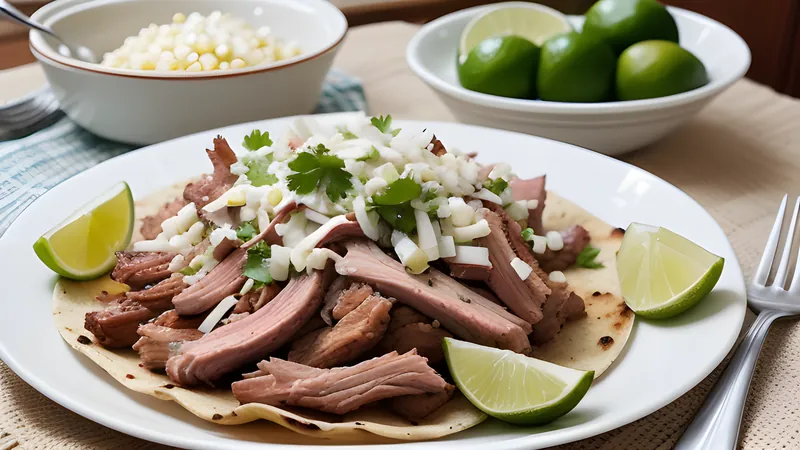
- Warm the tortillas, pile on the carnitas, and top with onion, coriander and a hard squeeze of lime.
Michoacán, copper and the confit method
Traditional carnitas is a confit. In Michoacán, the pork, and often the offal, skin and trotters too, goes into a huge copper pot filled with rendered lard and cooks gently for hours until meltingly soft, then the heat is raised to crisp the outsides. Whole animals get broken down and different cuts are sold together, so a good taquería offers maciza (lean shoulder), cueritos (skin), buche and more, and you point at what you want.
The copper matters more than you would think; copper conducts heat evenly and its trace ions are said to help the meat brown. Cooks also stir in unexpected sweeteners, a splash of cola or condensed milk or a knob of orange, to push caramelisation. My milk is a cousin of that same instinct. The confit-in-lard method is a preservation technique at heart, the same logic behind duck confit with crispy skin: fat protects the meat, low heat renders it soft, and a final blast of high heat gives you the crackle.
Choosing and cutting the pork
Pork shoulder, also sold as pork butt or collar, is the only sensible cut. It is threaded with fat and connective tissue that melt into gelatine over long cooking, keeping the meat moist and giving carnitas its silky texture. Leg is too lean and will end up stringy.
Cut it into chunks about 6cm across. Too small and they overcook into fibres before the collagen has broken down; too large and they take forever and crisp unevenly. Leave the fat cap on. That fat renders into the braise and does much of the work the copper cazo of lard would do, so you need far less added lard than a true confit.
The braise
Season the pork properly with salt, cumin and oregano; Mexican oregano if you can find it, as it is more citrussy and less minty than the Mediterranean sort. Pack everything into a heavy pot: pork, onion, smashed garlic, bay, a stick of cinnamon, the lard, and an orange squeezed and then dropped in, spent halves and all. The orange brings acidity and a floral bitterness from the peel that cuts the richness. Add the milk and just enough water to come halfway up the meat.
You are not boiling this. Bring it to the barest simmer, cover, and slide it into a 150C oven for two and a half to three hours. It is ready when a chunk gives no resistance and comes apart when you nudge it. The liquid will have turned into a shallow pool of clear rendered fat over dark, savoury juices, with the milk mostly cooked away into little pale flecks. Do not fear those flecks; they crisp into flavour.
The crisping, where most people stop too soon
This is the step that separates real carnitas from a pulled-pork impersonation. Fish out the orange, onion and cinnamon. Break the pork into large, rough shreds, some pieces the size of a thumb, keeping a bit of variety so you get both crisp shards and soft nuggets. Do not shred it to fluff.
Now spread the pork in a single layer and give it real heat: a 220C oven for fifteen to twenty minutes, or a wide, heavy pan on the hob. Leave it alone long enough to bronze, turn it once, and moisten with a spoonful of the reduced pan juices near the end so it does not dry out. You want a genuine caramel colour on the edges and a bit of chew, while the interior stays juicy. The milk sugars and the rendered fat make this happen faster and darker than braise-and-shred recipes that skip the sweet note.
Serving carnitas the way it should be
Warm corn tortillas, double them up, and pile on the carnitas. The classic garnish is spare on purpose: finely diced white onion, chopped coriander, a hard squeeze of lime. That acidity is not optional; it lifts the richness and makes you reach for another taco. A little salsa verde or a smear of guacamole is welcome, but the meat should lead.
If you want to turn it into a spread, set out the carnitas alongside barbacoa de res with consommé and a pot of pickled onions, and let people build their own. The two braises could not be more different in flavour, and having both on the table is how a proper Sunday comida looks.
A word on the fat, and the tortillas
Do not pour the rendered fat down the sink. Once the meat is out, let it settle, skim the clear golden lard from the top, and keep it in a jar in the fridge. It is pork lard flavoured with orange and cinnamon, and it will make the best refried beans of your life, or a batch of roast potatoes that taste faintly of this dish. Waste it and you have thrown away half the point of confit cooking.
The tortillas matter as much as the meat. Corn, not flour, and warmed properly: one at a time in a dry, hot pan for twenty seconds a side until they puff and smell toasty, then wrapped in a clean cloth to steam and soften. Cold tortillas straight from the packet crack and taste of cardboard. If you can find fresh masa or nixtamalised corn tortillas from a Mexican grocer, the difference is night and day, and it is worth a special trip.
Tips, storage and variations
Make it ahead. Carnitas is arguably better the next day; braise it, cool it in its fat, and refrigerate. The fat sets into a protective cap that keeps the meat moist, exactly the confit principle. Reheat by spreading and crisping straight from cold, which drives off the fridge moisture and gives you an even better edge. It freezes well for up to three months.
A few things that go wrong and why. If the meat comes out dry, the braise ran too hot and fast; keep it at a whisper of a simmer. If it will not crisp, there is too much liquid clinging to it, so reduce the juices further and give the pan more time. If it tastes flat, you under-salted at the start, and there is no rescuing that at the end, so season the raw pork generously.
For a smokier version, add a chipotle in adobo to the braise. For a leaner supper, this method scales down to a kilo of shoulder for four, though I would argue carnitas is a dish worth cooking in quantity. Whatever is left goes into tacos, quesadillas, or a fried-egg breakfast that makes the whole slow afternoon feel like a wise investment. Cook it once and it will earn a place in your regular rotation, a big, forgiving braise that asks for patience and pays it back with interest.
Related Content