Cardamom Kulfi with Pistachio
Slow-reduced Indian ice cream, dense and cool
Contents
↓ Jump to recipeKulfi is the ice cream that refuses to be rushed, and that patience is exactly why it tastes the way it does. Where Western ice cream is churned soft and full of air, kulfi is dense, close-textured and almost fudge-like, set solid in little conical moulds and eaten in cool, slow bites on a hot afternoon. The flavour I come back to again and again is cardamom and pistachio: floral, green, faintly resinous, over a milk base cooked down until it turns the colour of weak caramel. My one small liberty with tradition is toasting the milk powder first, which deepens that cooked-milk sweetness without adding an hour to the stove.
Cardamom Kulfi with Pistachio
Ingredients
- 1 litre whole milk
- 3 tbsp milk powder (full-fat)
- 100g caster sugar
- 8 green cardamom pods
- 60g shelled unsalted pistachios, plus extra to finish
- 2 tbsp double cream
- 1 tbsp cornflour
- A pinch of fine salt
- A few strands of saffron (optional)
Method
- Toast the milk powder in a dry pan over a low heat, stirring constantly, until it smells nutty and turns pale gold, about 3 minutes. Tip it out to stop it cooking.
- Crush the cardamom pods, discard the husks and pound the black seeds to a fine powder in a pestle and mortar.
- Pour the milk into a wide, heavy pan and bring to a gentle simmer, stirring often and scraping down the sides, until reduced by roughly a third, about 25 minutes.
- Whisk the cornflour into the cream to a smooth slurry, then whisk it into the simmering milk with the toasted milk powder, sugar, salt, saffron and ground cardamom.
- Cook, stirring, for a further 8 to 10 minutes until thickened enough to coat the back of a spoon.
- Blitz or finely chop the pistachios and stir most of them through, keeping a little back to finish. Cool the mixture to room temperature.
- Pour into kulfi moulds, lolly moulds or small cups, pressing cling film onto the surface of any open cups.
- Freeze for at least 6 hours or overnight until solid.
- Dip the moulds briefly in warm water to release, and serve scattered with the reserved pistachios.
An ice cream older than the freezer
Kulfi has a genuinely long lineage. The most-repeated account traces it to the kitchens of the Mughal court in sixteenth-century northern India, where cooks reduced milk over slow fires, flavoured it with pistachio and saffron, sealed it into metal cones and froze it using ice hauled down from the Himalayas and packed with saltpetre, which lowers the temperature of the surrounding ice enough to freeze the mixture. The Ain-i-Akbari, the sixteenth-century administrative record of the emperor Akbar’s court, describes the use of ice and saltpetre in exactly this way, which is about as good a paper trail as a frozen pudding ever leaves.
That history is written into the texture. Because kulfi was frozen slowly in solid moulds rather than churned, it never took on air, and because the milk was reduced first, it was thick with concentrated milk solids and sugars that keep large ice crystals from forming. The result is that signature dense, slightly chewy bite. It belongs to a whole tradition of Indian milk sweets built on the patient reduction of milk, and if that world appeals to you it sits close to the spiced warmth of Golden Turmeric Milk (Haldi Doodh) and the extravagant, layered Falooda with Rose, Basil Seed and Vermicelli, which is often served with a stick of kulfi standing in it.
The twist: toasted milk powder
Traditional kulfi gets its caramel depth purely from long reduction, sometimes an hour or more of stirring a pan of milk down to a fraction of its volume. I love that flavour but rarely have the arm for it, so I cheat honestly. I toast full-fat milk powder in a dry pan until it turns pale gold and smells of warm biscuits, then stir it back into a milk base I have reduced for a more manageable twenty-five minutes. The toasting drives a gentle Maillard reaction in the milk proteins and lactose, producing the same nutty, caramelised notes that hours of slow cooking would, and the extra solids also thicken the base and suppress iciness. You get most of the character of a long-reduced kulfi in a little over half the time.
Cardamom is the other pillar, and it rewards a small effort. Buy whole green pods, crush them, discard the papery husks and grind only the sticky black seeds, because pre-ground cardamom loses its volatile oils fast and tastes flat and dusty by comparison. Freshly ground, it is heady and almost eucalyptus-bright, and it stands up to the richness of the milk where a tired powder would vanish.
Making it, carefully
Use a wide, heavy pan for the reduction. Width gives you surface area so the milk evaporates faster, and heaviness stops it catching and scorching on the base, which taints the whole batch with a burnt note. Stir often and, importantly, keep scraping down the skin that forms on the sides of the pan back into the liquid; in traditional kulfi that clinging, slightly caramelised milk skin is prized for the texture it adds.
The cornflour slurry is my small insurance policy. A teaspoon of starch, whisked smooth into the cream first so it does not lump, thickens the base and, more usefully, coats the milk proteins so they cannot clump into a grainy set as it freezes. It keeps the finished kulfi smooth and sliceable. Cook it out for a good eight minutes after adding, or you will taste the raw starch as a faint chalkiness.
Cool the mixture fully before you freeze it. Pouring warm custard into moulds and straight into the freezer forms a wide zone of large ice crystals as it slowly loses heat, which is the enemy of that dense, fine texture. Room temperature first, then a hard freeze, gives the smoothest result. Traditional conical kulfi moulds are lovely if you have them, but small paper cups, dariole moulds or even a loaf tin you later slice all work.
Tips, troubleshooting and getting ahead
If your kulfi turns out icy and coarse, the base was under-reduced or not cold enough going into the freezer. Reduce it a little further next time and be patient with the cooling. If it is grainy, the milk may have caught and half-scrambled, or the base boiled too hard once the milk powder went in; keep it at a steady simmer rather than a rolling boil.
To unmould, dip the mould in a bowl of warm (never hot) water for just a few seconds and slide the kulfi out; too long in the water and the surface melts to slush. Kulfi keeps beautifully, well wrapped, for up to a month in the freezer, which makes it an ideal make-ahead pudding for a dinner. Pull it out five minutes before serving so the first bite is not jaw-achingly hard.
A word on the pistachios: use unsalted, and if you can find them, the vivid green Iranian or Sicilian kind have far more flavour than pale, salted bar nuts. Chop them rather than reducing them to powder, so you keep a little texture against the smooth base.
Serving, and the joy of the reduction
There is something meditative about the long stir of a kulfi base that I have grown to look forward to. You stand at the pan with a wooden spoon, the milk slowly thickening and taking on colour, the kitchen filling with the smell of warm dairy and, once the cardamom goes in, of an Indian sweet shop. It is twenty-odd minutes of doing very little except paying attention, and it is a good antidote to a scattered day. Reducing milk this way is called making rabri when it is taken further, and the same technique underpins a whole shelf of subcontinental sweets, from kheer to barfi, so the arm you build here transfers to plenty else.
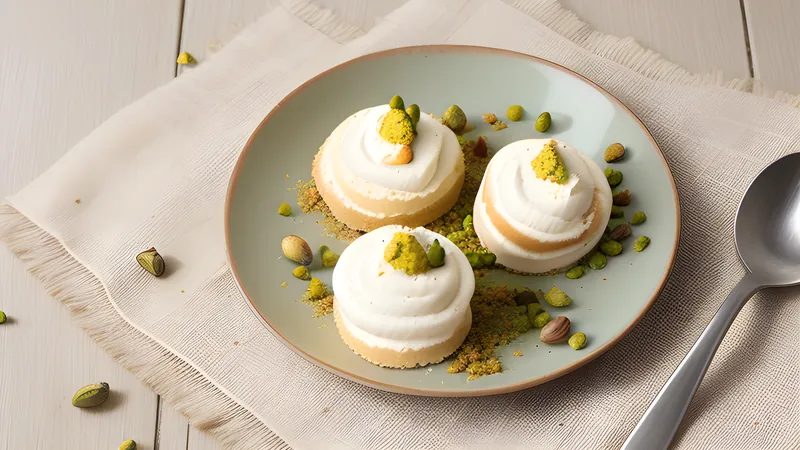
Serve kulfi in the traditional way if you can: unmoulded onto a small plate, sliced across into rounds so the flecks of pistachio show, and eaten with a fork rather than a spoon. On a street stall in Delhi you would get it slid off a wooden stick, sometimes cut into coins with a length of thread. However you plate it, a scatter of extra chopped pistachios and, if you are feeling generous, a few threads of saffron on top makes it look every bit the courtly pudding it once was.
Variations
Saffron kulfi is the grand version, and a good pinch of saffron steeped in a spoon of warm milk before it goes in turns the base a gentle amber and adds a honeyed, hay-like note. For a rose kulfi, leave out the cardamom and stir in a teaspoon of rosewater at the end, tasting as you go because rosewater strengths vary wildly. Mango kulfi, made by folding in a thick, sweet mango purée, is the summer favourite, though it freezes a touch icier, so hold back a little of the milk.
However you flavour it, serve it as it is meant to be served: unhurried, on a warm evening, the moulds sweating in the heat while you slice or bite through that cool, dense milk. It is a four-hundred-year-old pudding that predates every ice-cream machine in existence, and it needs none of them. Just milk, patience, and the good sense to grind your own cardamom.
Related Content