Caramelised Onion Marmalade
Deep, sticky, sweet-savoury onions with a whisper of star anise
Contents
↓ Jump to recipeOnion marmalade is one of those preserves that costs almost nothing to make and sells for absurd money in delis, which tells you two things: people love it, and they assume it is harder to make than it is. It is not hard at all. It asks for patience and a bag of onions, and it rewards you with a jar of sticky, dark, sweet-savoury relish that turns a lump of cheese and a cracker into a small event.
Caramelised Onion Marmalade
Ingredients
- 1.5kg red onions (about 8 large), halved and thinly sliced
- 50g unsalted butter
- 2 tbsp olive oil
- 1 tsp fine sea salt
- 150g dark muscovado sugar
- 1 whole star anise
- 2 bay leaves
- 150ml balsamic vinegar
- 50ml red wine vinegar
- 75ml ruby port
- 1/2 tsp cracked black pepper
Method
- Melt the butter with the olive oil in a large, heavy-based pan over medium heat. Add the sliced onions and the salt and stir to coat.
- Cook over medium-low heat, stirring every few minutes, for 30–40 minutes until the onions have collapsed to a fraction of their volume and turned deep golden-brown. Lower the heat if they catch.
- Add the muscovado sugar, star anise, bay leaves and black pepper. Stir until the sugar melts and the onions turn glossy and darker, about 5 minutes.
- Pour in the balsamic vinegar, red wine vinegar and port. Bring to a simmer, scraping any sticky bits from the base of the pan.
- Cook uncovered over low heat, stirring more often as it thickens, for 25–35 minutes until jammy and reduced; a spoon dragged across the base should leave a clear trail that fills slowly.
- Remove the star anise and bay leaves. Taste and adjust with a pinch more salt or a splash of vinegar if it needs sharpening.
- Spoon into warm sterilised jars while hot, leaving 5mm headspace, and seal. Cool, then store in a cool dark place for up to 6 months; refrigerate once opened.
Not really a marmalade at all
The name is a bit of a cheat. Marmalade properly means a citrus preserve set with pectin, and onion marmalade contains no fruit and sets by reduction rather than by any gelling. The word attached itself in the late twentieth century, when the British gastropub boom borrowed the French confit d’oignon and needed a friendlier name for the menu; “onion marmalade” and “onion chutney” both did the rounds, and marmalade won because it sounded a shade more refined next to the ploughman’s board.
The dish itself is much older than the name. Cooks across France and Britain have been slowly cooking down onions with fat, sugar and something acidic for centuries, because it is one of the oldest tricks for turning a cheap, abundant vegetable into something that keeps and tastes of far more than its ingredients. What the modern version added was a heavier hand with the sugar and vinegar, pushing the onions from a savoury confit towards a proper sweet-sharp preserve stable enough to jar. It sits in the same family as a chutney, cooked long and slow until the acid and sugar between them do the preserving work, which is why a sealed jar keeps happily for months.
The two stages of colour
The whole flavour of this preserve is built on caramelisation, and it happens in two distinct stages that are worth understanding. The first is the long, slow cooking of the raw onions in butter and oil. Onions are around 90 per cent water, and that water has to cook off before browning can begin, so the first twenty minutes are mostly about collapse: the pile in the pan shrinks dramatically as the cells break down and release their moisture. Only once the pan is drier do the onions’ natural sugars start to brown, through the same Maillard and caramelisation reactions that colour toast and roast meat. This stage cannot be rushed with high heat, because a fierce flame burns the edges before the middle softens, leaving you with bitter black flecks in pale mush.
The second stage of colour comes from the added sugar. Dark muscovado, which I use in place of ordinary caster, brings its own molasses colour and a treacly depth, and when it melts into the browned onions it deepens everything by a shade or two and starts to turn glossy. From here the vinegar and port go in, and the long reduction that follows concentrates all of it into something thick and lacquered. Keep the heat low and your patience high; the reward is a marmalade that is genuinely dark and complex rather than merely sweet.
The twist: one star anise, quietly
Most onion marmalades stop at balsamic and sugar, and they are perfectly good. What lifts mine is a single whole star anise dropped in with the sugar and fished out at the end. Star anise shares aromatic compounds with the onion’s own sweet, faintly liquorice character, and used in this restrained way it amplifies rather than dominates, giving the finished preserve a warm, mysterious backnote that people struggle to place. Use more than one and it takes over; use one, and it simply makes the onions taste more like themselves.
The splash of ruby port is the other small luxury. Balsamic on its own can be a little one-dimensionally sour-sweet, and the port brings a fruity, slightly resinous depth and a touch of tannin that gives the marmalade grip. A cheap ruby port is fine here; save the vintage stuff for the glass. A tablespoon of red wine vinegar alongside the balsamic keeps the acidity bright, so the whole thing stays lively rather than tipping into cloying sweetness.
Judging the set and avoiding trouble
Because there is no pectin, the marmalade sets purely by reduction, so the doneness test is visual. Drag a spoon across the base of the pan: when the trail it leaves fills back in slowly rather than instantly flooding, and the mixture looks jammy and holds a soft mound on the spoon, it is ready. Remember it thickens further as it cools, so stop a fraction before it looks fully set or you will end up with something you can stand a fork in.
The most common problem is scorching in the final stretch. As the marmalade reduces it gets sticky and the sugars sit right against the hot base of the pan, so stir more and more often as it thickens, and drop the heat without shame. A heavy-based pan is a real help here, because it spreads the heat and buys you a margin against catching. If you do catch it slightly, do not scrape the burnt base into the mixture; decant the good marmalade off the top and leave the scorched layer behind.
Onions, fat and variations
Red onions give the deepest colour and a slightly sweeter result, which is why I default to them, but a mix of red and brown onions works well and brown onions alone make a perfectly good, if paler, marmalade. Whatever you use, slice them evenly and reasonably thin, around 3mm, so they cook down at the same rate; a jumble of thick and thin slices gives you some pieces still firm while others have dissolved.
The fat is worth a thought too. Butter alone gives the richest flavour but scorches more readily, so I cut it with olive oil, which raises the smoke point and lets you push the browning a little harder. Duck or goose fat, if you happen to have some after a roast, makes a gorgeously savoury version.
For variations, a sprig of thyme cooked in with the bay leaves leans the marmalade more savoury and French, lovely with a soft cheese. A pinch of chilli flakes gives a gentle warmth that plays surprisingly well against the sweetness. And for a Christmas batch, a tablespoon of orange zest and a little more port turns it festive, echoing the citrus-and-onion pairing that also underpins a good cranberry sauce with port and orange.
Storage and serving
Spoon the hot marmalade into sterilised jars and seal while it is still hot, which helps create a decent vacuum as it cools. Kept in a cool dark cupboard it lasts up to six months; once opened, keep it in the fridge and use within a month or so. Like most chutney-family preserves it improves with a couple of weeks’ rest, as the sharp edges of the vinegar soften into the onions.
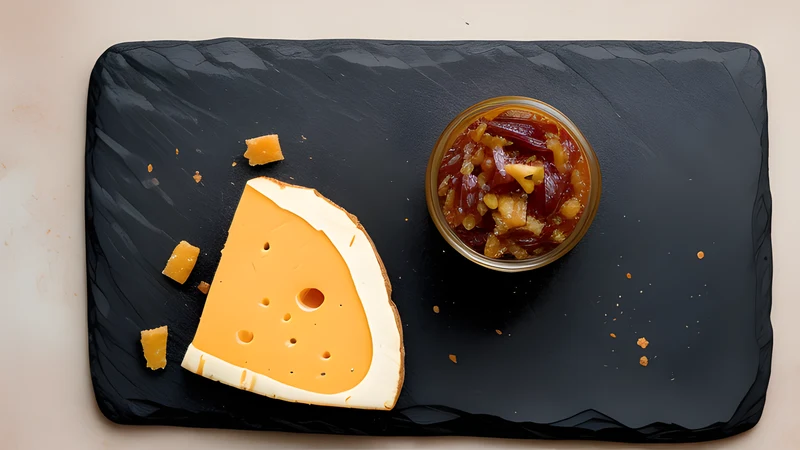
Where to use it is the easy part. It is the natural partner to strong cheese on a board, sublime in a cheese toastie, and very good spread on the base of a tart before the goat’s cheese goes on. Fold a spoonful into gravy for sausages, pile it onto a burger, or spread it in a steak sandwich. It sits comfortably beside a sharper preserve like bread-and-butter pickles on a cold-cuts plate, one sweet-savoury and one bright and vinegary, and on a Christmas cheeseboard I like it next to a wedge of quince membrillo for the cheeseboard, the dark onions and the amber fruit paste covering the two great directions a good cheese relish can take.
Related Content