Cannoli with Ricotta and Candied Peel
Crisp fried shells and a bright, honeyed ricotta
Contents
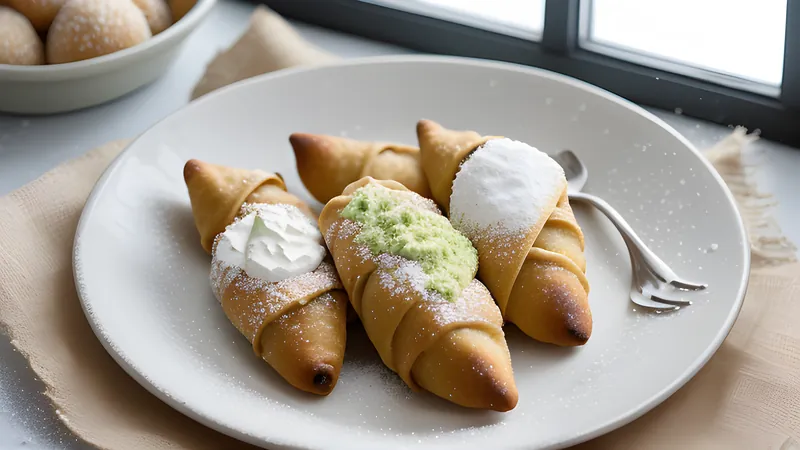
↓ Jump to recipeThere is a rule about cannoli that everyone who has eaten a good one understands in their bones and everyone who has eaten a bad one has suffered for: the shell and the filling must not meet until the last possible moment. A cannolo filled in a bakery at nine in the morning and sold at three in the afternoon has spent six hours turning its beautiful, blistered, glass-crisp shell into damp cardboard. Fill it yourself, to order, and you get the thing itself: a shatter of fried pastry giving way to a cool, sweet, faintly grainy ricotta studded with orange and pistachio. It is one of the great desserts, and it is almost never served at its best outside a Sicilian kitchen.
The pastry that carries a whole island
Cannoli come from Sicily, and their history is bound up with the island’s long Arab period. The Emirate of Sicily, from the ninth to the eleventh century, brought sugar cane, citrus, almonds and the technique of working ricotta into sweet creams, and much of the island’s pastry tradition grew from that inheritance. The most persistent origin story places the cannolo in the convents around Caltanissetta, whose name may itself derive from an Arabic phrase, where nuns are said to have made them for Carnevale. That timing stuck: for centuries cannoli were a Carnival sweet, made in the weeks before Lent when frying rich, sugary things was a small act of defiance against the fasting to come.
The word cannolo means “little tube”, after the reeds, canne, that were originally used to shape the shells before metal forms took over. The great Sicilian writer Gaetano Basile liked to point out that the cannolo was once so tied to Carnival that eating one out of season was almost improper, a bit of seasonal discipline that has thankfully collapsed. What has not collapsed is the Sicilian seriousness about the ricotta, which should be sheep’s milk ricotta, drained until firm and sweetened by hand, never the loose, wet, over-whipped stuff piped into tourist shells along the coast. The filling is the soul of the thing, and it rewards patience.
Cannoli with Ricotta and Candied Peel
Ingredients
- 250g plain flour
- 2 tbsp caster sugar
- 1 tbsp cocoa powder
- 0.5 tsp ground cinnamon
- 0.25 tsp fine salt
- 30g cold unsalted butter, cubed
- 1 egg yolk
- 120ml Marsala (dry), plus a splash more if needed
- 1 egg white, for sealing
- 1.5 litres sunflower oil, for frying
- 500g whole-milk ricotta, drained overnight
- 100g mascarpone
- 90g icing sugar, sifted
- Zest of 1 orange
- 75g candied orange peel, finely chopped
- 50g shelled unsalted pistachios, chopped
- 40g dark chocolate (70%), finely chopped
- Extra icing sugar and pistachio, to finish
Method
- Whisk the flour, caster sugar, cocoa, cinnamon and salt together, then rub in the cold butter until sandy.
- Stir in the egg yolk and Marsala to form a firm dough, adding a splash more Marsala only if it will not come together. Knead for 5 minutes until smooth, wrap and rest for 1 hour.
- Drain the ricotta in a sieve lined with muslin overnight, then beat with the mascarpone, icing sugar and orange zest until smooth. Fold in the candied peel, pistachio and chopped chocolate. Chill.
- Roll the rested dough to 2mm thick and cut into 9cm rounds. Roll each round slightly into an oval, wrap around a greased metal cannoli tube and seal the overlap with a dab of egg white.
- Heat the oil to 180C. Fry the shells, two or three at a time, for 1 to 2 minutes until blistered and deep golden, turning once. Lift out, drain on kitchen paper and slide off the tubes while still warm.
- Cool the shells completely. Spoon the filling into a piping bag and fill each shell from both ends just before serving.
- Dip the exposed ends in chopped pistachio and dust the cannoli with icing sugar. Eat within the hour.
Frying the shells
The dough is enriched with Marsala, the fortified Sicilian wine that turns up in so much of the island’s cooking and in Italian puddings like zabaglione with Marsala and berries. The alcohol does two useful things: it relaxes the gluten so the dough rolls thin without fighting back, and it encourages those signature blisters as it flashes to steam in the hot oil. Roll the dough as thin as you dare, down to about two millimetres, because it puffs and thickens in the fryer and a thick shell is a leathery one.
Wrap each oval around a greased metal cannoli tube, overlapping the edges by a couple of centimetres, and seal that seam with a dab of egg white. Egg white glues far better than water here and sets in the heat. Fry at a steady 180C; too cool and the shells drink oil and go greasy, too hot and they brown before they blister. Ninety seconds to two minutes gives you deep golden, bubbled shells. Slide them off the tubes while still warm, because a cooled shell grips the metal and cracks when you force it. You will need several tubes to keep a rhythm going, or fry in patient batches.
Filling at the last minute
Once the shells are stone cold and the filling well chilled, pipe from both ends towards the middle so there are no air gaps. Dip the exposed ricotta at each end into chopped pistachio for colour and crunch, and dust the shells with icing sugar just before they go to the table. From here you have perhaps an hour of grace before the shell begins to soften, which is exactly why you fill to order. This last-second assembly is the same logic behind a good affogato with amaretto, where the hot espresso hits the cold gelato at the table and the whole thing is eaten before it can settle into a compromise.
Getting ahead, and keeping
You can, and should, get ahead in stages. The unfilled shells keep for up to a week in an airtight tin and freeze beautifully; they are the fiddly part, so make a big batch when the oil is already hot. The filling keeps for two days covered in the fridge, and in fact improves after a few hours as the candied peel softens and its orange perfume spreads through the ricotta. Only the assembly is last-minute, and it takes five minutes. What you cannot do is store a filled cannolo and expect anything good; the shell will be sad by morning.
Substitutions and variations
Candied orange peel is traditional and I would not skip it, though candied citron, the classic Sicilian choice, is even better if you can find it. Chopped glacé cherries or a spoonful of chopped candied pumpkin, zuccata, both belong to the older recipes. For the chocolate, keep it dark and chop it by hand into irregular shards so you get pockets of it rather than an even dusting. If you cannot drink or cook with alcohol, replace the Marsala in the dough with white grape juice sharpened with a teaspoon of white wine vinegar; you lose a little complexity and gain a slightly crisper shell.
For a Palermo-style finish, leave the ends plain pistachio; for a Catania feel, press a candied cherry into each exposed end. A dusting of cinnamon in the final icing sugar is a small, warming touch that suits a winter table, and pairs the cannoli neatly with roasted or grilled peaches with amaretti and mascarpone if you are building a Sicilian spread. Another Neapolitan cousin worth knowing is the sfogliatella, which shares this love of citrus-scented ricotta wrapped in crisp pastry.
Where cannoli go wrong
Three faults account for almost every disappointing cannolo. The first is wet ricotta, which turns the filling into a runny mess that soaks the shell from the inside; drain it overnight, without exception. The second is filling too early, the cardinal sin, which no quality of shell survives. The third is under-frying, which leaves a pale, bendy shell with no shatter; the shells must go deep golden and blistered, past the point where a nervous cook wants to pull them. Get the ricotta firm, the oil hot and the timing late, and you will make a cannolo that a Sicilian grandmother would grudgingly, silently approve of, which is the highest praise there is.
Related Content