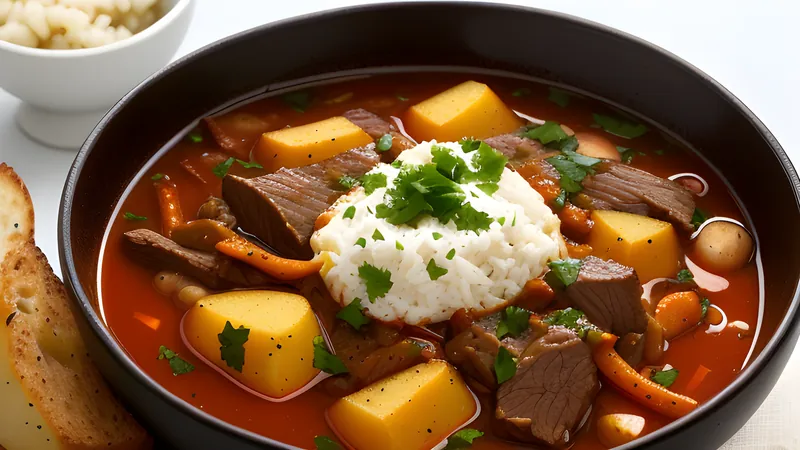
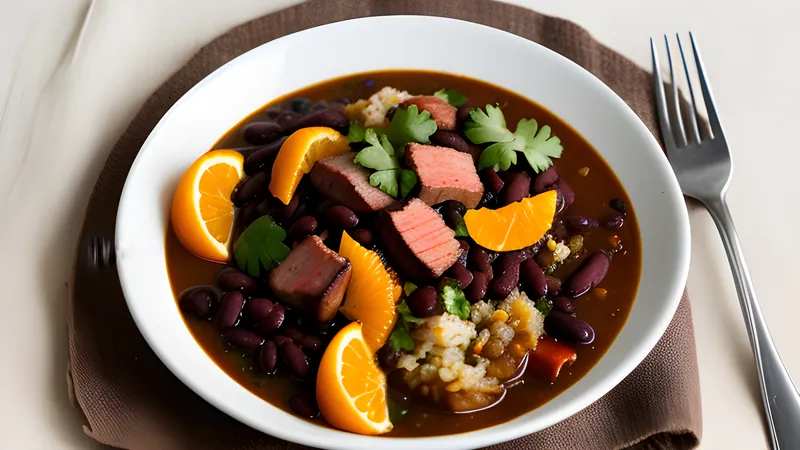
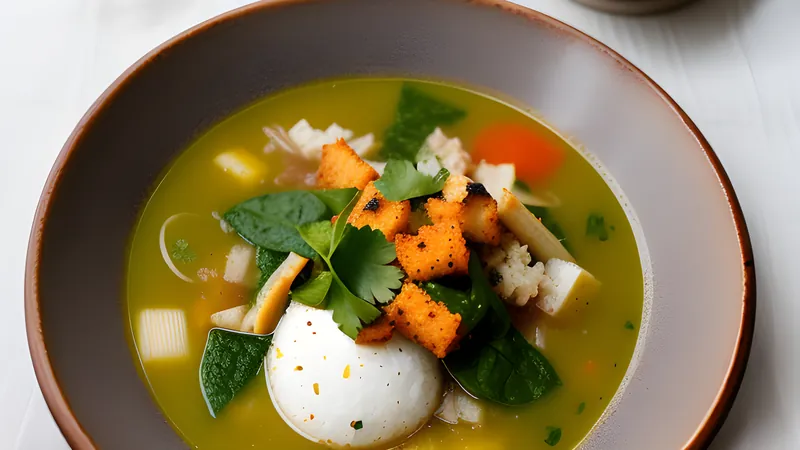
Callaloo Soup with Coconut and Crab
The velvety Caribbean greens soup, thickened with okra and enriched with crab
Contents
↓ Jump to recipeCallaloo is one of those words that means slightly different things on different islands, and the arguments about it are part of the Caribbean’s culinary character. In Jamaica it usually names the leafy amaranth green itself, often cooked simply with onion and served for breakfast. In Trinidad and the eastern Caribbean, callaloo is a dish: a lush, velvety soup or stew of dark leaves cooked down with okra, coconut milk and often crab or salt pork into something between a soup and a sauce. This recipe follows that eastern tradition, the one where callaloo becomes a rich, green, spoonable bowl, thickened by okra and enriched with sweet crab meat.
Whichever island you take your lead from, the soul of the dish is dark leafy greens brought to silky tenderness and married to coconut. It is a Sunday dish in Trinidad and Tobago, closely tied to the national one-pot tradition, and it carries the layered heritage of the region in a single bowl: African greens-cookery, Indian and indigenous ingredients, and the coconut and seafood of the islands themselves.
Callaloo Soup with Coconut and Crab
Ingredients
- 500 g callaloo (amaranth or taro leaves), or use young spinach with a handful of chard
- 2 tbsp coconut oil
- 1 onion, finely chopped
- 4 garlic cloves, minced
- 4 spring onions, sliced
- 1 thumb ginger, grated
- 8 okra, sliced
- 6 sprigs fresh thyme
- 1 x 400 ml tin coconut milk
- 700 ml vegetable or fish stock
- 1 scotch bonnet chilli, left whole
- 1/2 tsp ground allspice
- 200 g white crab meat, plus 50 g brown crab meat
- 1 lime, juiced
- Salt and black pepper
Method
- Wash the callaloo well and strip the leaves from any tough stalks. Chop roughly. If using spinach and chard, wash and roughly chop.
- Warm the coconut oil in a heavy pot over a medium heat. Add the onion, spring onions, ginger and thyme and sweat gently for 6 minutes until soft.
- Add the garlic, allspice and sliced okra and cook for 3 minutes, stirring, until the okra softens and starts to release its natural thickener.
- Pour in the coconut milk and bring to a brisk simmer. Let it reduce for 6-8 minutes, stirring now and then, until it thickens slightly and smells nutty and toasted at the edges.
- Add the stock and the whole scotch bonnet, bring back to a simmer, then add the greens. Cover and cook gently for 15 minutes until the leaves are completely tender.
- Remove the whole scotch bonnet and the thyme stalks. For a smoother soup, blend about half of it and return it to the pot; leave it chunkier if you prefer.
- Stir in the white and brown crab meat and warm through for 3-4 minutes without boiling hard, so the crab stays sweet and tender.
- Add the lime juice, season with salt and black pepper, and serve hot with rice, fried dumplings or crusty bread.
What callaloo actually is
The confusion is worth untangling, because it affects what you buy. The “callaloo” leaf is most often the leaf of the amaranth plant (sometimes called Chinese spinach or bhaji), and in Trinidad the soup is traditionally made with the young leaves of the taro or dasheen plant. Both cook down to a soft, dark, faintly earthy green with more body than spinach. Tinned callaloo is sold in Caribbean shops and is a perfectly good shortcut; fresh is better if you can find it.
Outside the Caribbean, the honest substitute is young spinach with a handful of chard or spring greens mixed in, which gives you the colour and the tender-but-substantial texture without pretending to be the real leaf. Spinach alone collapses to almost nothing and can taste thin, so the chard adds a little backbone and a mineral depth closer to the original. Whatever greens you use, wash them thoroughly and strip out any thick, stringy stalks before cooking, as those stalks stay tough long after the leaves have gone soft.
Okra, the natural thickener
Okra is the quiet engine of this soup and the reason it has its characteristic velvety body. When okra is cut and cooked in liquid it releases a mucilage, a natural thickener, that gives callaloo its glossy, slightly viscous texture. Some cooks find okra’s sliminess off-putting, but here it is doing exactly the job it is meant to, binding the soup into something luxurious. Cooking it briefly in the fat first, before the liquid goes in, tempers the texture and coaxes out the thickening slowly rather than all at once.
If you genuinely dislike okra you can leave it out and blend more of the soup at the end to thicken it, but you lose some of the authentic character. Eight pods is enough to give body to a four-person pot without turning it into glue. Fresh okra is best; frozen sliced okra works and saves the prep.
The coconut twist: reduce it till it turns
Here is the small step that gives this callaloo a deeper, rounder flavour than most. Rather than tipping the coconut milk in with all the stock and simmering gently, add the coconut milk first and let it reduce on its own over a brisk heat for a few minutes until it thickens and just begins to smell nutty and toasted at the edges. This mimics the old Caribbean technique of cooking coconut milk down until the oil starts to separate and the sugars catch, which builds a caramelised, almost roasted coconut note under the greens.
Watch it as it reduces and stir now and then, because you want it thickened and fragrant rather than split and greasy. The moment it smells warm and nutty, add the stock to loosen it back to a soup. That short reduction is the difference between a coconut soup that tastes flatly creamy and one with real depth. Use full-fat tinned coconut milk; light coconut milk hasn’t the fat to develop that flavour, and it thins the soup too far.
Aromatics, and the whole scotch bonnet
The flavour base is onion, spring onion, garlic, ginger, thyme and allspice, the familiar Caribbean chorus, with a whole scotch bonnet dropped in for perfume. As with so many island dishes, the scotch bonnet is there for its fruity, floral aroma as much as its heat; left whole and unbroken, it scents the soup gently and is fished out before serving. If you want more fire, pierce it once or chop a little into the pot, but take care, because scotch bonnet is fierce and easy to overdo in a delicate coconut soup.
Fresh thyme goes in on the stalk and is removed at the end. Allspice, the warm, clove-like berry that runs through Jamaican cooking, adds a subtle background spice; half a teaspoon is plenty. Sweating these aromatics slowly in coconut oil at the start builds the foundation everything else sits on.
Crab, added last and gently
Crab is the classic enrichment in Trinidadian callaloo, traditionally whole blue crabs simmered in the pot. For a home version, good picked crab meat is far easier and gives you the sweetness without the work. Use mostly white meat for delicate flakes, with a spoonful of brown meat stirred in for its intense, savoury richness, which melts into the soup and deepens it. Add the crab near the very end and warm it through gently, because hard boiling makes crab meat tough, stringy and dull, and you want it sweet and just-set.
A squeeze of lime at the finish lifts the whole bowl, sharpening the coconut richness and brightening the greens. Season carefully with salt, remembering that crab and any fish stock bring their own. Some cooks blend half the soup for a smoother, more uniform texture while leaving the rest with recognisable leaf and crab; do whichever suits you. If crab is hard to come by, cooked and picked white fish or a handful of peeled prawns slips in just as happily at the same late stage.
Serving, and keeping it
Callaloo is often eaten as a soup course or a light main, and in Trinidad it is a fixture of the Sunday lunch alongside rice, stewed meat and macaroni pie. On its own it wants something to go with it: a mound of rice to spoon it over, fried dumplings, or good bread to dip. It is rich and filling despite being built on greens, so a modest bowl goes a long way, and a hot pepper sauce on the table lets everyone dial up the heat that the whole scotch bonnet kept gentle.
It keeps well in the fridge for two or three days and the flavour settles nicely, though the greens dull in colour; reheat gently so the crab doesn’t toughen. It freezes for a couple of months, best done before the crab goes in, with fresh crab added on reheating. For more of the Caribbean table, Ackee and Saltfish, the Jamaican Way is the classic island breakfast and a natural companion to this soup. If it is the seafood-in-broth idea that draws you, Cioppino: San Francisco’s Tomato Seafood Stew and the smoky Scottish Cullen Skink: Smoked Haddock and Potato take it in different directions.
Related Content