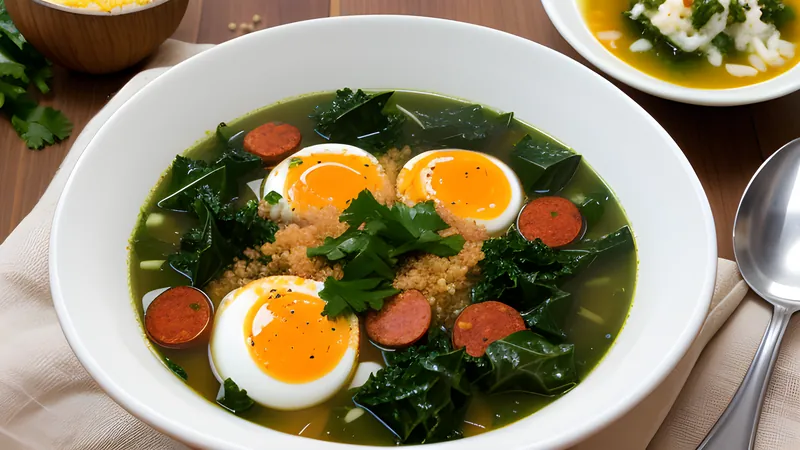
Caldo Verde with Chorizo and Charred Kale
A silky blitzed-potato base, hair-thin kale charred for smoke, and good olive oil to finish
Contents
↓ Jump to recipeCaldo verde is Portugal’s most-loved soup, and it is deceptively plain: a silky green-flecked potato broth studded with smoky sausage, finished with a slick of good olive oil. The magic is entirely in the details. The potato is blitzed until the base is glossy and smooth, the kale is sliced to hair-thin threads so it cooks in minutes and keeps its bite, and here I char a little of that kale for a whisper of smoke on top. Get those three things right and a handful of cheap ingredients turns into something you will make on repeat all winter.
Caldo Verde with Chorizo and Charred Kale
Ingredients
- 4 tbsp good olive oil, plus extra to finish
- 1 large onion, chopped
- 4 garlic cloves, sliced
- 700g floury potatoes (Maris Piper or similar), peeled and cut into chunks
- 1.2 litres water or light chicken stock
- 1 tsp fine salt, plus more to taste
- 200g chourico (or cured cooking chorizo), sliced into thin coins
- 250g kale (cavolo nero or curly kale), stalks removed
- Freshly ground black pepper
Method
- Warm 3 tbsp of the olive oil in a large pan over medium heat. Soften the onion and garlic for 8-10 minutes until sweet and translucent, without browning.
- Add the potato chunks, water or stock and 1 tsp salt. Simmer for 15-18 minutes until the potatoes are completely soft.
- Meanwhile, stack the kale leaves, roll them into a tight cigar and slice as thinly as you possibly can into hair-thin ribbons.
- Fry the chourico coins in the remaining 1 tbsp oil over medium-high heat until the edges crisp and the fat runs red. Lift out and reserve, keeping the coloured oil.
- Blitz the soup base with a stick blender until completely silky and smooth. Loosen with a little more water if it is too thick.
- Add most of the sliced kale to the simmering base and cook for 4-6 minutes until just tender and still deep green.
- In a dry or lightly oiled hot pan, char the remaining kale for a minute until the edges blacken and crisp, for smoke and texture on top.
- Season the soup well with salt and pepper. Ladle into bowls, top with the crisp chourico, the charred kale, a thread of the red chourico oil and a generous drizzle of raw olive oil.
A soup from the green north
Caldo verde, “green broth”, comes from the Minho, the lush, rainy region of north-west Portugal above Porto, and it has spread to become a national dish eaten from Braga to the Algarve. It is the soup of festas and family tables, ladled out at weddings and saint’s-day feasts, and it is especially tied to the São João celebrations of late June, when it is eaten in the small hours after a night in the streets.
The traditional green is couve galega, Galician kale, a tall, loose-leafed cabbage-collard with broad dark leaves, grown in gardens all over the north. It is sliced impossibly thin, almost shredded, and this fine cut is the defining texture of the dish. Outside Portugal you are unlikely to find couve galega, so cavolo nero (Tuscan kale) or ordinary curly kale stand in well, provided you slice them just as finely.
Portuguese emigration carried caldo verde far beyond the Minho. It travelled with families to the Azores and Madeira, across the Atlantic to the Portuguese communities of New England and to Brazil, where caldo verde remains a fixture of winter festas and June celebrations. Wherever the diaspora settled, the soup was recreated from whatever dark cabbage and cured sausage the new country offered, which is exactly why kale-and-chorizo swaps sit so comfortably with the original. It is a peasant dish in the best sense: cheap, filling, built from a garden green, a few potatoes and a length of sausage.
The sausage is chouriço, the Portuguese cured pork sausage seasoned with paprika, garlic and wine. It is a cousin of Spanish chorizo, and a good cured cooking chorizo is the standard substitute abroad. Its smoked-paprika fat is what colours the surface of the bowl and gives caldo verde its savoury backbone. If you love that paprika-and-pork note, it is the same flavour that carries my smoked paprika and chorizo white bean stew, a heartier bowl for a colder day.
The base: blitzed until silky
The soul of caldo verde is a smooth potato base, so use floury potatoes. Maris Piper, King Edward or another high-starch variety break down and blend into a velvety purée; waxy salad potatoes stay firm and blend gluey and grey, which is not what you want. Peel them and cut them into even chunks so they cook at the same rate.
Start by softening the onion and garlic slowly in olive oil until they are sweet and translucent but not coloured; this quiet, unhurried step is the difference between a base that tastes deep and one that tastes of raw water and starch. Then add the potatoes, water or a light stock, and salt, and simmer until the potatoes are completely, fallingly soft. Undercooked potato will not blend smooth, so give it the full time.
Blitz the base with a stick blender until it is glossy and entirely smooth, with no lumps. You are after a pourable, silky consistency, thicker than a thin soup but nowhere near a mash; loosen it with a splash more water if it has tightened up. The smoothness of this base is what lets the fine green threads of kale float through it so prettily. The same blend-it-silky logic underpins my creamy potato and leek soup, where the potato does the thickening without a drop of cream, and caldo verde works exactly the same way: no dairy, just well-cooked potato doing the job.
The kale: hair-thin, and a little charred
This is the step people rush and regret. Strip the tough stalks from the kale, stack the leaves, roll them into a tight cigar and slice across as thinly as your knife and patience allow, aiming for fine green threads a couple of millimetres wide. The finer the cut, the faster the kale cooks and the more it keeps its colour and a slight bite, which is the texture that defines the dish. Coarsely chopped kale stews into something dark and chewy and misses the point entirely.
Add most of the sliced kale to the smooth, simmering base and cook it only briefly, four to six minutes, until it is just tender and still vividly green. Overcook it and it turns olive-drab and loses its freshness.
The charred kale is my one small twist on the classic. Take the handful you held back, toss it in a screaming-hot dry pan for barely a minute until the edges blacken and crisp, and pile it on top of each bowl. Those charred threads bring a smoky, slightly bitter edge and a crunch that plays against the silky base, echoing the smoke in the chouriço. It is a tiny extra step with a big return.
Bringing it together
Fry the chouriço coins separately in a little oil over medium-high heat until the edges crisp and the fat runs out red and fragrant. Lift the sausage onto kitchen paper and keep every drop of that coloured oil, because it is liquid seasoning. Frying rather than simmering the sausage keeps the coins crisp on top of the soup and renders the paprika oil you will drizzle over the finished bowls.
Season the finished soup properly with salt and plenty of black pepper; a bland caldo verde is almost always underseasoned, so taste and correct. Ladle it into warm bowls and build the top: crisp chouriço coins, a tangle of the charred kale, a thread of the red sausage oil, and, above all, a generous drizzle of raw, good olive oil right at the end. That final uncooked oil is non-negotiable in Portugal; it perfumes the whole bowl and gives it a peppery, grassy lift. Use the best oil you have.
Choosing the sausage
Not all chorizo behaves the same in this soup. Portuguese chouriço and Spanish cured chorizo are firm, dry sausages that slice into neat coins and crisp at the edges, releasing their paprika oil; this is what you want. Soft, fresh, uncured cooking chorizo, the kind that squishes out of its skin, will work in a pinch but breaks down into the broth rather than sitting on top, so if you use it, fry it hard to render and firm it first. For a more robust, smoky version, seek out a smoked chouriço or add a little linguiça, its milder Portuguese cousin. Whichever you choose, slice it thinly so each coin crisps rather than steams.
If you eat pork, this is a soup that rewards a good sausage, so it is worth going to a Portuguese or Spanish deli rather than reaching for the cheapest supermarket ring. The paprika, garlic and smoke in a proper cured chouriço are doing a large share of the seasoning, and a bland sausage leaves a bland bowl.
Serving, storage and variations
Caldo verde is traditionally served with broa, a dense Portuguese cornbread with a thick crust and a close, slightly sweet crumb, and a hunk of crusty bread is the right partner if broa is beyond reach; you want something sturdy to mop the bowl. A glass of vinho verde, the region’s lightly spritzy young white, is the classic drink alongside, which closes the loop back to the soup’s Minho home.
A word on the olive oil, because it is the one ingredient not to economise on. The raw oil added at the end is tasted, not just cooked, so its flavour goes straight into the bowl. A grassy, peppery extra-virgin oil lifts the whole soup; a flat, refined oil does nothing. Warm the bowls before you ladle, too, since caldo verde cools quickly once the thin sheet of surface oil sets, and it is at its best steaming hot.
The base keeps beautifully. Make it up to the point before the kale goes in, cool it, and refrigerate for up to three days or freeze for a month; it actually thickens and deepens overnight. Reheat, then slice and add the kale and fry the chouriço fresh so both stay bright and crisp. Adding kale to a whole pot you intend to store is a mistake, because it dulls and softens on reheating, so keep the greens a last-minute job.
For a lighter, meat-free version, leave out the chouriço and lean harder on the char and a hit of smoked paprika bloomed in the finishing oil, which gives you the smoke without the sausage. To make it more of a meal, a poached egg slipped into each bowl turns caldo verde into supper. However you serve it, keep the three defining moves intact: a truly silky potato base, kale sliced to threads, and a last flourish of raw olive oil.
Related Content