Cajun Blackened Salmon
A dark spice crust and a brown-butter finish
Contents
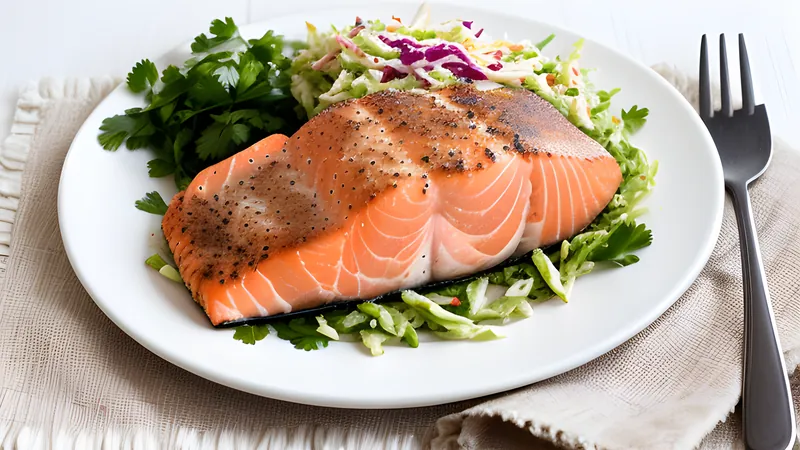
↓ Jump to recipeBlackening has a bad reputation it does not deserve, mostly because a lot of people confuse “blackened” with “burnt”. A properly blackened fillet is not carbonised. The dark crust is toasted spice and browned butter, not ash, and underneath it the salmon is still glossy and just cooked. Get that distinction right and you have one of the fastest, most dramatic ways to put dinner on the table.
The twist here lives at the very end. After the crust is set, I let a knob of butter brown in the pan and spoon it, nutty and lime-sharpened, over the fish. Classic blackening uses melted butter at the start, which tends to burn on that fierce heat and turn acrid. Moving the butter to the finish gives you all its richness without the bitterness, and the lime slices through the smoked-paprika depth so the whole plate stays lively.
Cajun Blackened Salmon
Ingredients
- 4 salmon fillets, skin on, about 150g each
- 2 tbsp smoked paprika
- 2 tsp sweet paprika
- 1 tsp cayenne pepper
- 2 tsp garlic powder
- 2 tsp onion powder
- 1 tsp dried oregano
- 1 tsp dried thyme
- 1 tsp freshly ground black pepper
- 1.5 tsp fine sea salt
- 2 tbsp neutral oil, plus a little for the fish
- 60g unsalted butter
- 1 lime, halved
- 1 handful flat-leaf parsley, chopped
Method
- Combine both paprikas, cayenne, garlic and onion powder, oregano, thyme, black pepper and salt in a bowl to make the blackening spice.
- Pat the salmon completely dry. Brush the flesh side lightly with oil and press a generous, even layer of the spice mix onto the flesh side.
- Heat a cast-iron pan over high heat with 2 tbsp oil until it just begins to smoke, about 3-4 minutes.
- Lay the fillets spice-side down and cook undisturbed for 3 minutes until a dark crust forms. Flip onto the skin and cook 3-4 minutes more.
- Add the butter to the pan, let it foam and turn nut-brown, then squeeze in the lime and spoon the brown butter over the fish for 30 seconds.
- Rest for 1 minute, scatter with parsley, and serve with the pan butter poured over.
The Prudhomme story
Blackening is younger than most people assume. It was popularised in the early 1980s by Paul Prudhomme, the Louisiana chef whose New Orleans restaurant K-Paul’s sent blackened redfish sweeping across America. Prudhomme’s method was built for restaurant conditions: a cast-iron skillet heated until it glowed white, fish dipped in melted butter and pressed into Cajun spice, then dropped into the dry heat where the butter and seasoning charred into a crust in seconds. It became such a craze that it nearly wiped out Gulf redfish stocks, and states had to bring in fishing restrictions.
What Prudhomme drew on was older: the Cajun and Creole pantry of paprika, cayenne, garlic, onion and dried herbs that seasons everything from gumbo to jambalaya. Blackening simply concentrated that palette into a dry rub and married it to a searing technique. Salmon was never the original fish, but it takes to the method beautifully, because its fat bastes the crust from within and keeps the flesh moist even under aggressive heat.
Building the spice mix
A good blackening blend balances three things: colour and body from paprika, heat from cayenne, and aromatic depth from garlic, onion and dried herbs. I use two kinds of paprika, smoked for that campfire note and sweet for roundness, and keep the cayenne at a level that warms rather than wounds. Scale the cayenne up or down to taste, but do not drop it entirely; a little heat is what makes the crust sing against the rich fish.
Make more than you need. The blend keeps for months in a sealed jar and is superb on chicken thighs, on prawns, stirred into mayonnaise, or dusted over roast potatoes. Once you have a jar of it in the cupboard, weeknight dinners get considerably more interesting.
The method, and the crucial heat
Pat the salmon bone dry; surface moisture is the enemy of a crust, because it has to boil off before any browning can start. Brush the flesh side with a thin film of oil, which helps the spice adhere and conducts the heat evenly, then press on a generous, even layer of the blend. Leave the skin side clean.
Heat a cast-iron pan over high heat with a couple of tablespoons of neutral oil until it just begins to smoke. This is not a delicate simmer; you genuinely want it fierce, so open a window and turn the extractor on. Lay the fillets spice-side down and then do the hardest thing in the recipe, which is nothing at all. Leave them for a full three minutes so the crust sets. If you fidget and lift them early, the spice tears away and sticks to the pan.
Flip onto the skin and give it another three to four minutes, depending on thickness, until the salmon is just cooked through with a faintly translucent centre. Now drop in the butter. It will foam furiously; let it settle and turn the colour of toffee, which happens fast in that hot pan, then squeeze in the lime and tilt the pan to pool the butter at one edge. Spoon it over the fillets for thirty seconds, basting the crust so it drinks up the browned butter. Rest for a minute, scatter with parsley, and serve.
What can go wrong
If the crust comes out bitter rather than deep and smoky, the pan was too hot for too long, or you used butter from the start; that acrid edge is scorched milk solids and cayenne. Ease off the heat slightly and keep the butter for the finish. If the spice fell off in the pan, the fish was either wet or lifted too soon. Dry it hard and respect the three-minute rule.
If the salmon is cooked through but pale under the crust, your pan was not hot enough to blacken before the inside overcooked. A ripping-hot cast-iron pan is non-negotiable; a thin non-stick pan cannot hold the heat and will steam the fish grey. Thickness matters too, so try to buy fillets of even depth, or fold the thin tail end under itself to match the rest.
Serving, sides and swaps
Blackened salmon wants cooling, starchy company. The Louisiana default is dirty rice or a herby remoulade, and a slaw sharpened with cider vinegar is never wrong. A cool avocado and tomato salad, or a spoon of soured cream, calms the heat for anyone who finds it lively.
The technique is generous with other fish. Firm fillets such as cod, sea bass or snapper all blacken well, as do prawns threaded onto skewers. If you like this kind of bold, spice-forward seafood, the warm chilli and lime of Thai steamed fish with lime, chilli and garlic makes a lighter counterpoint on another night, while the tomato-braised depth of chraimeh, the Libyan-Jewish spiced fish in tomato scratches the same big-flavour itch with a slow-cooked calm.
Make-ahead and storage
The spice blend is your make-ahead friend; mix a big batch and you are always ten minutes from dinner. You can rub the fillets up to an hour before cooking and keep them in the fridge, though any longer and the salt starts to draw moisture to the surface and soften the crust.
Cooked salmon keeps for two days in the fridge and is genuinely good cold, flaked over a grain bowl or folded into a salad where the blackened crust plays the role of dressing. Reheating is a mistake, because the second cook dries the fish and dulls the crust. Eat it hot the first time and cold thereafter, and it will never let you down.
A word on pans and smoke
If there is one piece of kit that decides whether this dish works, it is the pan. Cast iron holds and radiates heat in a way that thin pans simply cannot, and that reserve of heat is what forms the crust in the first three minutes without steaming the fish. A heavy carbon-steel pan does the job almost as well. Preheat it properly, giving it a full three or four minutes on high, and test it with a bead of water, which should skitter and vanish rather than sit and simmer.
Do plan for smoke, because there will be some. This is a dish that respects an open window and a working extractor fan, and it is worth doing on the hottest burner you own. If your kitchen ventilation is limited, a griddle pan outdoors on a gas burner, or even a barbecue with a cast-iron pan set over the coals, gives you the fierce dry heat blackening needs without setting off every alarm in the house. The reward for the drama is a crust you cannot get any gentler way.
Building a whole plate
To turn this into a proper supper for four, think in temperatures and textures. Something cool and creamy, a soured-cream dressing or sliced avocado; something sharp, a vinegary slaw or a squeeze more lime; and something starchy to carry the spice, whether that is rice, a baked sweet potato or a hunk of cornbread. The salmon is intense and self-contained, so the sides should be calm and cooling around it. Cook the fish last, once everything else is on the table, and bring it to the plate straight from the pan with the brown butter still bubbling.
Related Content