Cacio e Pepe with Toasted Pepper and a Whisper of Lemon
Three ingredients, perfect technique
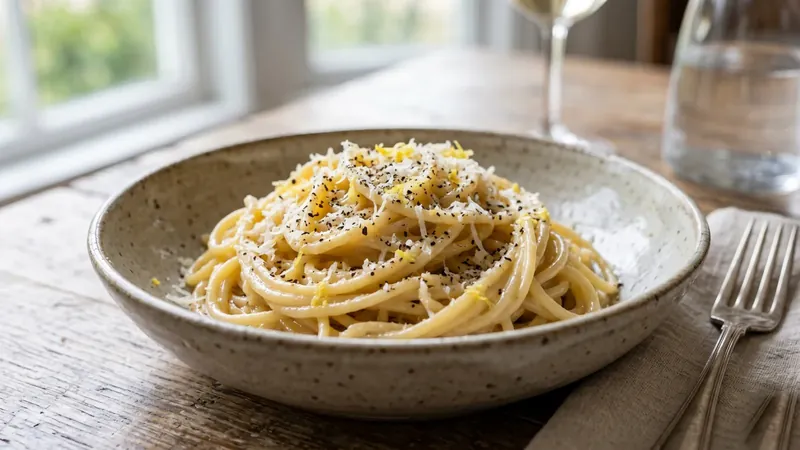
Cacio e pepe is the ultimate test of restraint: pasta, sharp sheep’s cheese and black pepper, bound into a glossy sauce by nothing more than technique and starchy water. The twist is small and deliberate, toasting the peppercorns to wake their aroma and adding the barest whisper of lemon zest to brighten the cheese. Done well, it is one of the most satisfying plates of pasta there is, and it comes together in the time it takes the water to boil.
Cacio e Pepe with Toasted Pepper and a Whisper of Lemon
Ingredients
- 200 g tonnarelli or spaghetti
- 2 tsp whole black peppercorns
- 100 g Pecorino Romano, very finely grated
- 1/2 tsp finely grated lemon zest
- Sea salt for the pasta water
Method
- Bring a pan of water to the boil and salt it lightly; Pecorino is salty, so go easy.
- Crush the peppercorns coarsely in a mortar or under a heavy pan.
- Toast the crushed pepper in a dry wide frying pan over a medium heat for about a minute, until fragrant.
- Add a ladleful of the boiling pasta water to the pepper and let it bubble to make a fragrant base.
- Cook the pasta until just shy of al dente, reserving plenty of the starchy water before draining.
- Meanwhile, mix the grated Pecorino with a few tablespoons of cooled pasta water to a smooth, thick paste.
- Transfer the drained pasta to the pepper pan off the heat and toss, loosening with splashes of pasta water.
- Add the Pecorino paste and the lemon zest, tossing vigorously until a glossy, clinging sauce forms.
- Loosen with more pasta water if it tightens, then serve at once with extra pepper.
3 The Story
Cacio e pepe means simply “cheese and pepper”, and the name is the whole recipe. It belongs to the Roman tradition of cucina povera, the resourceful cooking of people who made memorable food from very little. With just three core ingredients and water, it was the kind of dish a shepherd or a trattoria cook could produce from a near-empty larder, which is part of its enduring romance. There is nowhere to hide in a plate this spare, and that is precisely what makes mastering it so rewarding.
The hero is Pecorino Romano, a hard cheese made from sheep’s milk that has been produced in and around Rome for a very long time. It is sharper and saltier than Parmesan, with a tang that defines the dish; substituting a milder cow’s-milk cheese changes the character entirely. Because it is so salty, the pasta water needs only the lightest seasoning, a detail that catches out many first-timers.
The real challenge is the sauce, which is an emulsion rather than a melt. The starch released by the pasta into its cooking water is what allows the cheese to bind into a creamy coating instead of seizing into rubbery clumps. The two enemies of a good cacio e pepe are excess heat, which makes the cheese clump, and too little starchy water, which leaves it dry. Working off the heat and keeping plenty of that cloudy water to hand are the keys, which is why both feature so prominently in the method.
The twist respects the original rather than reinventing it. Toasting the crushed peppercorns in a dry pan before they meet any liquid coaxes out their volatile aromatic oils, giving the finished dish a warmer, more rounded heat than raw pepper provides. The lemon zest is used with great discretion, just enough to sharpen the rich cheese and lift the whole plate without ever announcing itself; nobody should taste lemon and think the dish has strayed. Both touches are in keeping with the spirit of the original, which has always been about getting the most from the fewest possible things.
A word on the pasta itself. The traditional choice in Rome is tonnarelli, a square-cut, slightly rough strand whose texture grips the cheese, though good spaghetti makes a fine stand-in. Cooking it a touch short of al dente matters, because it finishes in the pan with the sauce and the starchy water, drinking in flavour as it does. Grate the Pecorino as finely as you can, since coarse shreds are far more likely to clump than a fine, almost powdery grate. Master the emulsion, and the rest is detail.
Related Content