Cà Phê Trứng: Vietnamese Egg Coffee
Hanoi's wartime luxury: a whipped egg-yolk cloud over dark phin-brewed coffee
Contents
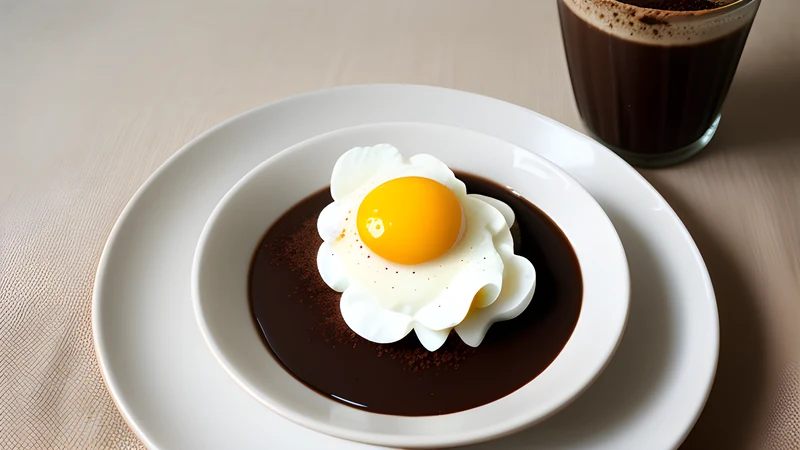
↓ Jump to recipeCà phê trứng was born of scarcity, which is often where the best things come from. The year was 1946, Hanoi was at war, and milk was both expensive and hard to find. A bartender named Nguyễn Văn Giảng, working at the grand Sofitel Metropole hotel, faced the problem every Vietnamese coffee drinker faced: the local coffee was fierce and dark and cried out for the softening sweetness of milk, and there was almost none to be had. His answer was to whip egg yolk with sweetened condensed milk into a rich, airy cream and float it on top of the coffee in place of the missing dairy. He later left the Metropole and opened his own shop, Giảng Café, which his family still runs in Hanoi’s Old Quarter, and where the drink he invented is still the reason people queue.
The result is one of the loveliest things you can drink, and it lands somewhere unexpected: closer to a warm, boozy-tasting dessert than to any coffee you know, though there is no alcohol in it. The whipped yolk on top is like a soft, custardy tiramisu cream, its sweetness and richness sitting over intense dark coffee that keeps the whole thing from cloying. You drink it slowly, dipping through the cool cloud into the hot coffee beneath, and it feels far more luxurious than its cupboard-simple ingredients have any right to.
Cà Phê Trứng: Vietnamese Egg Coffee
Ingredients
- 3 heaped tbsp dark-roast coffee, coarsely ground for a phin (or use strong espresso)
- 160ml just-boiled water
- 2 large egg yolks, at room temperature
- 4 tbsp sweetened condensed milk
- 0.25 tsp vanilla extract
- 1 small pinch fine salt
- Cocoa powder or grated dark chocolate, to finish (optional)
Method
- Brew the coffee strong. In a phin, add the grounds, a splash of water to bloom for 30 seconds, then the rest of the water and let it drip through into two cups (about 60ml of concentrated coffee each).
- While it brews, put the egg yolks, condensed milk, vanilla and salt in a small deep bowl.
- Whisk hard with electric beaters for 3 to 5 minutes, until the mixture is pale, thick, glossy and roughly tripled in volume, holding a soft ribbon.
- Warm the brewed coffee if it has cooled; it should be hot but not boiling.
- Spoon the whipped egg cloud generously over the top of each cup of coffee so it floats as a thick pale layer.
- Dust with a little cocoa or grated dark chocolate if you like, and serve at once, ideally in a bowl of warm water to hold the heat.
- Drink by dipping through the foam into the coffee, or stir it together for a richer, uniform cup.
Vietnamese coffee, and why it suits this
The coffee underneath matters, because the egg cloud needs something strong to lean against. Vietnam is one of the world’s largest coffee producers and grows mostly robusta, a bean that is harsher, more bitter and far higher in caffeine than the arabica most of the West drinks. It makes a dark, intense, almost chocolatey brew that would be punishing taken black and sweetened lightly, which is precisely why Vietnamese coffee culture pairs it with condensed milk. That same intensity is what stands up to the sweet egg foam here without vanishing beneath it.
The traditional brewing tool is the phin, a small metal drip filter that sits on top of the cup: you add ground coffee, a filter press on top, and hot water, and it drips slowly through into the cup over several minutes. It makes a concentrated, syrupy coffee ideal for this drink. If you do not own a phin — and they cost very little, so it is worth getting one — a strong shot of espresso or a small pot of very strong moka coffee stands in perfectly well. What you must avoid is anything weak and watery, which the egg cloud would simply overwhelm.
The egg cloud, and how it works
The magic of the topping is emulsion and aeration, the same principles behind a good zabaglione, the Italian whipped-yolk custard that cà phê trứng closely resembles. Egg yolks are extraordinary emulsifiers, thanks to a compound called lecithin, which lets their fat and water hold together as a smooth, stable cream. Whipping hard with condensed milk drives air into that emulsion and expands it into a pale, glossy foam that roughly triples in volume and holds its shape. The condensed milk does double duty, sweetening the yolks and lending its own thick, cooked-milk richness.
Whisk it properly and for long enough. Three to five minutes with electric beaters takes the mixture from an unpromising orange slick to a thick, pale, mousse-like cream that falls in a slow ribbon. Under-whip it and the topping is thin and sinks into the coffee; over-whipping is hard to do here, so err on the side of more. Room-temperature yolks whip faster and fuller than fridge-cold ones, so take the eggs out ahead of time.
The twist: vanilla and a pinch of salt
The classic Giảng recipe is closely guarded and famously simple, and purists take it as yolk, condensed milk and coffee alone. My small additions are a quarter-teaspoon of vanilla extract and a pinch of fine salt whisked into the yolks, and both earn their place. The vanilla leans into the custardy, dessert-like character of the foam and rounds off any faint eggy smell that can otherwise linger. The salt is doing what salt always does with sweetness and bitterness: a tiny amount lifts the sweetness of the condensed milk and takes the hard edge off the robusta’s bitterness underneath, so the two halves of the drink meet more gently. Neither is traditional, and neither shouts; together they make a very good drink slightly better.
Method, step by step
Brew the coffee strong first, so it is ready when the foam is. In a phin set over each cup, add a heaped tablespoon and a half of dark, coarsely ground coffee, level it, rest the press on top, and pour a splash of just-boiled water to let it bloom for thirty seconds. Then top up with the rest of the water — around 60ml of concentrate per cup — and let it drip through slowly. If you are using espresso instead, pull a strong double shot per cup.
While it drips, put two room-temperature egg yolks, four tablespoons of sweetened condensed milk, a quarter-teaspoon of vanilla and a pinch of salt into a small deep bowl. Whisk hard with electric beaters for three to five minutes, until the mixture is pale, thick, glossy and about tripled, falling in a soft ribbon. Make sure the brewed coffee is properly hot, reheating it gently if it has cooled while you whipped. Spoon the egg cloud generously over each cup so it floats as a thick pale cap, dust with a little cocoa or grated dark chocolate if you like, and serve at once. Sitting the cups in a bowl of warm water, as Giảng Café does, keeps the coffee hot to the last sip.
Variations worth trying
Once you have the egg cloud in your hands, it floats over more than hot coffee. Hanoi cafés serve a whole family of egg drinks: cà phê trứng’s cousins include egg cocoa, where the same whipped yolk sits over hot chocolate, and even egg beer, an acquired taste that pours the cream over a cold lager. For a summer version, whip the cloud a little firmer and float it over iced Vietnamese coffee, letting the cold coffee and the sweet foam meet over ice.
A grating of dark chocolate on top is the finish I reach for most, its slight bitterness echoing the coffee and cutting the sweetness of the foam. A dusting of cocoa does the same job more softly. If you want to lean the drink further towards dessert, a few drops of good coffee liqueur folded into the yolks turns it into something to end a dinner on, though it stops being a breakfast at that point.
A note on raw yolk, and how to drink it
The traditional drink uses raw egg yolk warmed only by the coffee beneath it, which is how it is served across Hanoi. If you are pregnant, elderly, very young or otherwise wary of raw egg, use pasteurised eggs, which are widely sold and behave identically, or gently warm the whipped mixture over a pan of barely simmering water, whisking constantly for a couple of minutes, to bring it to a safe temperature without scrambling it. The heat firms the foam a little, which is no bad thing.
However you drink it, take it slowly. Some dip a spoon through the cloud into the coffee below, mouthful by mouthful, keeping the two layers separate; others stir the whole thing together into a uniform, rich, milky-coffee cream. Both are correct, and both are wonderful. If you have fallen for the sweet, custardy end of the coffee spectrum, the perfumed, cardamom-scented world of a Turkish coffee is the natural next cup to learn, brewed slow in its own small pot.
Related Content