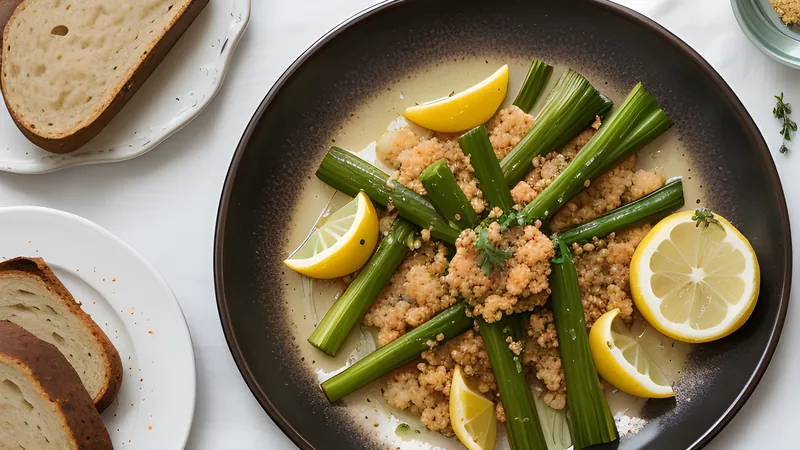
Buttered Leeks with Thyme and Breadcrumbs
A humble allium, coaxed silky and finished with a crackle
Contents
↓ Jump to recipeThere is a moment, about ten minutes into cooking leeks slowly in butter, when the kitchen stops smelling of raw allium and starts smelling of something sweet and almost creamy. That shift is the whole dish. Leeks are the gentlest thing in the onion family, and given time and fat they turn into something close to a savoury custard, holding their shape but yielding completely. My one change to the old formula is a handful of breadcrumbs fried in brown butter, thrown over the top at the last second. It gives you crunch against silk, and it means the dish arrives at the table sounding as good as it tastes.
I make this most weeks between autumn and early spring, when leeks are cheap, sweet and thick as a wrist. It sits happily beside a roast, a piece of grilled fish, or a plate of sausage and mash with red onion gravy, and it will quietly steal attention from any of them.
Buttered Leeks with Thyme and Breadcrumbs
Ingredients
- 4 medium leeks (about 800g untrimmed)
- 60g unsalted butter, divided
- 3 sprigs fresh thyme, leaves stripped
- 1 bay leaf
- 100ml dry white wine or vegetable stock
- 50ml double cream (optional)
- 40g fresh white breadcrumbs, from day-old bread
- 1 small garlic clove, finely grated
- Finely grated zest of half a lemon
- 1/2 tsp fine sea salt, plus more to taste
- Freshly ground black pepper
Method
- Trim the roots and dark green tops from the leeks. Halve lengthways and slice into 1.5cm half-moons. Wash thoroughly in a bowl of cold water, lifting the leeks out so grit sinks to the bottom. Drain well.
- Melt 40g of the butter in a wide, heavy pan over medium-low heat. Add the leeks, thyme, bay leaf and 1/2 tsp salt. Stir to coat, then cover and sweat gently for 12 minutes, stirring twice, until collapsed and soft with no colour.
- Pour in the wine or stock, raise the heat slightly and simmer uncovered for 6 to 8 minutes until the liquid has almost gone. Stir in the cream if using and cook 2 minutes more until glossy. Season with pepper and check the salt.
- Meanwhile, melt the remaining 20g butter in a small frying pan over medium heat. Let it foam and turn golden-brown and nutty, about 3 minutes. Add the breadcrumbs and toss until crisp and deep gold, 3 to 4 minutes. Off the heat, stir in the grated garlic and lemon zest.
- Tip the leeks into a warm serving dish, discard the bay leaf, and scatter the brown-butter breadcrumbs over the top just before serving so they stay crunchy.
Why leeks reward patience
The leek is one of the oldest cultivated vegetables in Europe, eaten by Roman labourers and adopted so thoroughly by the Welsh that it became a national emblem, worn in caps at the Battle of Crécy in 1346 according to the legend the Welsh themselves tell. For centuries it was the poor cook’s onion: milder, easier to grow through a cold winter, and forgiving of long, slow pots. That history is baked into how it wants to be cooked. A leek fried hard and fast goes bitter and stringy. A leek sweated low and slow in butter goes sweet, because gentle heat converts its harsher sulphur compounds and draws out natural sugars without scorching them.
The other thing worth knowing is that leeks are grown in sandy, ridged-up soil, and grit works its way down between the tightly furled layers. Nothing ruins a plate of buttered leeks faster than a crunch of soil where you wanted a crunch of breadcrumb. Slicing first and then washing in a bowl of standing water, so the grit falls away while the leeks float, is far more reliable than trying to rinse a whole leek under the tap.
The method, step by step
Start with the prep, because it is most of the work. Trim off the hairy root and the toughest dark-green tops, keeping the pale and light-green parts. Halve each leek lengthways, lay the halves flat and cut into half-moons about a centimetre and a half thick. Drop the lot into a big bowl of cold water, swish, and let everything settle for a minute. Lift the leeks out with your hands into a colander so the grit stays behind. Give them a shake; a little clinging water is fine and actually helps them steam.
Melt most of the butter in your widest heavy pan over medium-low heat. Width matters here: a crowded pan steams and greys, a wide one lets the leeks settle into a shallow layer and cook evenly. In go the leeks, the stripped thyme leaves, a bay leaf and half a teaspoon of salt. Stir to coat every piece in butter, then put a lid on and leave them to sweat. Give them a stir at the four and eight minute marks. After about twelve minutes they will have slumped down to half their volume, glassy and tender, with no brown edges at all. Colour means your heat is too high; drop it and add a splash of water if you need to.
Now build the sauce around them. Pour in the white wine, turn the heat up a touch and let it bubble uncovered until it has almost entirely cooked away, five to eight minutes, leaving the leeks coated in a savoury, concentrated glaze. This is where the dish tightens up. If you want it richer, stir in a little double cream and simmer for two minutes until it clings; if you want it lighter and more everyday, leave the cream out and finish with a squeeze more lemon at the end. Taste, and be honest about the salt. Butter and leeks are both sweet, and the dish needs enough salt to lift them or it tastes flat.
The breadcrumb twist
While the leeks finish, make the topping in a separate small pan so you can watch the butter closely. Melt the last of the butter over medium heat and let it go past foaming to the point where the milk solids at the bottom turn the colour of a hazelnut shell and the smell turns toasty. This is beurre noisette, and it takes about three minutes; the moment it smells nutty, it is done, and thirty seconds later it can taste burnt, so keep your nose on it. Tip in the fresh breadcrumbs and toss constantly until they drink up the butter and turn deep gold and properly crisp. Off the heat, stir through a little grated raw garlic and the lemon zest, which will sizzle in the residual warmth and go fragrant without turning acrid.
Fresh crumbs from a day-old loaf are the ones to use, torn or blitzed to a rough gravel. Shop-bought dried crumbs go sandy and stale-tasting; panko works at a pinch and stays especially crunchy. Whatever you use, keep the crumbs and the leeks apart until the last possible second. Fold them in early and they turn to paste within minutes, and you lose the entire point of them.
Getting it right, and what goes wrong
The two failures I see are greying and wateriness. Greying comes from too much heat or too little butter, so the leeks fry and toughen instead of melting; keep the flame low and the pan generous. Wateriness comes from not driving off the liquid at the end, which leaves the leeks swimming rather than coated. Give them those extra minutes uncovered and let the sauce reduce until it looks glossy and just barely pools around the leeks.
Salt early, with the leeks, rather than only at the end. A pinch at the sweating stage draws out moisture and seasons from within, so the leeks taste of themselves rather than of butter with salt sitting on top.
Variations and make-ahead
This is a generous base to riff on. A tablespoon of wholegrain mustard stirred in with the cream turns it into a sharp, grown-up partner for gammon or a firm white fish like the one in this fish pie with a cheddar mash crust. A handful of grated Gruyère or mature Cheddar melted through at the end, then run under a hot grill, makes a leek gratin substantial enough to eat on its own with bread. Chopped tarragon or parsley folded in at the end keeps it fresh and green. For something heartier still, fold the finished leeks through cooked pasta with a little of the reserved cooking water, in the spirit of a spaghetti aglio e olio with toasted breadcrumbs, letting the same brown-butter crumbs do double duty on top.
You can cook the leeks up to two days ahead and keep them covered in the fridge; they reheat beautifully in a low pan with a splash of water to loosen them. The breadcrumbs, though, must be made fresh, or at least the same day and stored airtight at room temperature, so they keep their snap. Leftover buttered leeks are a gift: spread cold on toast under a poached egg, stirred into an omelette, or folded through a risotto in place of the usual onion base.
Serve them warm rather than scalding, in a shallow dish so the crumbs have room to sit proud on top. This is a side that behaves like a main character, and I have more than once made a double batch, eaten half straight from the pan standing up, and told no one.
Related Content