Burrata with Charred Peaches and Basil
A summer plate that lives or dies on the ripeness of the fruit
Contents
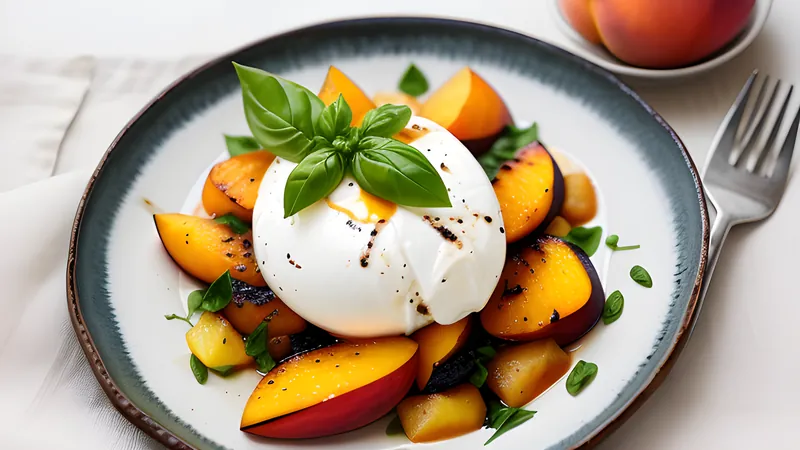
↓ Jump to recipeThere are dishes that reward a fortnight of planning and dishes that reward a good greengrocer, and this is firmly the second kind. Burrata with charred peaches is barely a recipe: ripe fruit, a soft cheese, some basil and a dressing you can whisk in a bowl with a fork. The whole thing stands on the quality of two ingredients and a hot griddle pan. The twist is small and worth it: a honey and cracked-black-pepper dressing that pulls the sweetness of the peaches towards the savoury, so the plate reads as a starter rather than a pudding that wandered onto the wrong course.
Burrata with Charred Peaches and Basil
Ingredients
- 4 ripe but firm peaches, halved and stoned
- 1 tbsp olive oil, for the peaches
- 2 balls of burrata (about 250g total), at room temperature
- 3 tbsp extra-virgin olive oil, for the dressing
- 1 tbsp runny honey
- 1 tbsp lemon juice
- 1/2 tsp coarsely cracked black pepper
- 1/4 tsp flaky salt, plus more to finish
- A large handful of basil leaves, a mix of small and torn large
- 2 tbsp toasted flaked almonds or crushed hazelnuts
- Crusty bread or grilled sourdough, to serve
Method
- Take the burrata out of the fridge 30 minutes before serving so it comes to room temperature and turns properly creamy.
- Heat a griddle pan over high heat until very hot. Brush the cut faces of the peaches with the tablespoon of olive oil.
- Lay the peaches cut-side down and griddle undisturbed for 3 to 4 minutes, until deep grill marks form, then turn and give the skin side 1 to 2 minutes more. Lift onto a plate to cool slightly.
- Whisk the extra-virgin olive oil, honey, lemon juice, cracked pepper and flaky salt into a loose dressing.
- Tear each peach half into two or three pieces and arrange over a serving platter.
- Tear the burrata open over the peaches so the soft curd spills out, and season the cheese with a little flaky salt.
- Spoon the dressing over everything, scatter with basil and toasted nuts, and serve at once with bread.
The story
Burrata is one of the great accidents of thrift. It was invented in the early twentieth century in Andria, a town in the Puglian region of southern Italy, as a way of using up the ragged offcuts of mozzarella that were left when the fresh curd was stretched into balls. Some enterprising cheesemaker, generally credited as the Bianchini dairy in the 1920s, gathered those scraps, soaked them in cream, and wrapped the mixture inside a pouch of the same stretched mozzarella curd, tied at the top like a little purse. The name comes from burro, the Italian for butter, a plain description of what happens when you cut into one and the soft, creamy centre (properly called the stracciatella) floods out. Before refrigeration and fast transport, burrata was strictly a local, eat-it-today pleasure, which is why it stayed a Puglian secret for decades and only became a fixture on menus across Europe once cold chains made it travel.
Pairing that richness with stone fruit is a more modern idea, and a sound one. A ripe peach brings acidity and perfume that cut straight through the cream, the way a squeeze of lemon lifts anything fatty, so the plate never feels cloying however generous you are with the cheese. Charring the fruit takes the idea a step further. Heat concentrates the peach’s sugars and caramelises them at the edges, and the faint bitterness of a good grill mark plays against the honey and the milky cheese far more interestingly than raw fruit would. It is the same principle that makes charred pineapple or grilled figs work with salty, fatty things: a little controlled burning turns simple sweetness into something with corners.
Choosing and charring the fruit
Everything hinges on the peaches, so buy them by smell rather than sight. A ripe peach should give slightly at the shoulders near the stem and smell floral and sweet even through the skin; a hard, scentless one picked green will stay mealy and sour no matter what you do to it. That said, you want fruit that is ripe but still firm enough to hold a shape on the griddle, since a peach that is soft and dripping will collapse into jam the moment it hits the heat. If your only options are rock hard, leave them in a paper bag on the counter for a day or two, where the ethylene they give off ripens them further. Nectarines work just as well and are easier to find truly ripe; flat doughnut peaches are lovely too, though they char faster because they are thinner.
The griddle needs to be properly, aggressively hot before the fruit goes near it. A hot surface sears the sugars quickly and releases the peach cleanly once the marks have formed, while a lukewarm pan lets the fruit stick, tear and stew in its own juice. Brush oil onto the peach rather than into the pan, so the oil goes exactly where the contact is and does not smoke and burn across the whole surface. Once the peaches are down, leave them completely alone for three or four minutes: moving them too soon rips the caramelising face away before it has set, and you lose both the grill marks and the flavour they carry. You are looking for deep, dark stripes rather than a timid golden tinge.
Getting the cheese right
Burrata is a room-temperature cheese, and serving it fridge-cold is the single most common way to waste a good one. Straight from the fridge the cream inside is stiff and the flavour muted, all of which disappears if you let the balls sit out for half an hour first; warmed to room temperature the centre goes loose and pourable and the milky sweetness comes forward. Tear the burrata open by hand over the fruit rather than slicing it neatly, so the ragged curd spills across the plate and catches the dressing in its folds. And season the cheese itself with a pinch of flaky salt once it is torn, because burrata is made with very little salt and a naked ball tastes flat next to the sweet, acidic peaches.
What can go wrong, and variations
The failures here are all failures of timing and temperature. Cold cheese stays rubbery; underripe fruit stays sour; a cool griddle gives you stewed, stuck peaches instead of charred ones. Fix those three and the dish more or less makes itself. The other pitfall is dressing too early: spoon the honey dressing over only at the moment of serving, since the acid will start to break down the delicate basil and draw water out of the cheese if it sits.
For variations through the year, the same template welcomes almost any ripe stone fruit or a handful of griddled apricots, and in high summer a few torn strawberries or figs alongside the peaches make it more generous. A drizzle of good aged balsamic in place of the lemon brings a darker, syrupy sweetness. Chopped fresh chilli or a pinch of Aleppo pepper over the top gives a gentle heat that suits the honey, and a scatter of torn prosciutto turns the plate into a light lunch rather than a starter. Swap the basil for mint or a mix of the two if that is what the garden is giving you.
If this kind of fruit-and-cheese plate is your idea of summer, my fennel, orange and black olive salad works the same sweet-savoury balancing act with citrus and brine. And for the classic melon version of the trick, my watermelon, feta and mint with black olive is the one I make when the peaches are not quite there yet.
Related Content