Bun Cha: Charred Pork in a Herb Tangle
Hanoi's grilled pork noodles, patties charred hard, herbs piled high
Contents
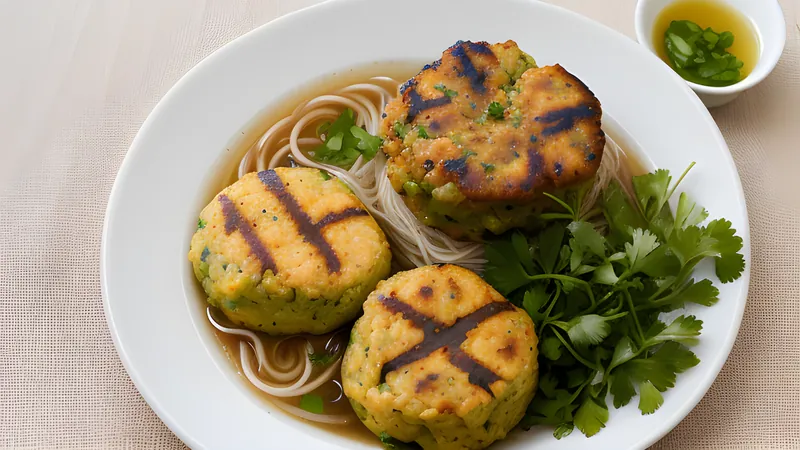
↓ Jump to recipeBun cha is Hanoi’s answer to the question of what to do with grilled pork, and the answer is: char it hard, drown it in a warm sweet-sour broth, and let a mountain of fresh herbs do half the work of seasoning the dish. It’s not subtle. The pork wants real, aggressive char — the sort that verges on too much before you pull it — because that bitterness and smoke is what the sauce and herbs are built to answer.
Bun Cha: Charred Pork in a Herb Tangle
Ingredients
- 500g pork shoulder, minced (not too lean — 20% fat is right)
- 300g pork belly, sliced 3mm thick
- 4 shallots, 2 finely minced and 2 thinly sliced
- 5 garlic cloves, 3 finely minced and 2 thinly sliced
- 3 tbsp fish sauce, divided
- 2 tbsp caramel sauce (nuoc mau) or dark brown sugar
- 1 tbsp vegetable oil, plus extra for grilling
- 1 tsp ground black pepper
- 120ml warm water
- 4 tbsp lime juice
- 3 tbsp granulated sugar
- 1 red bird's eye chilli, finely sliced
- 1 carrot, julienned or ribboned
- 50g white radish (daikon), julienned, optional
- 400g dried rice vermicelli (bun)
- 1 large bunch fresh mint
- 1 large bunch Thai basil or perilla
- 1 large bunch coriander
- 1 head lettuce or bunch of Vietnamese lettuce leaves
- 150g beansprouts
Method
- In a large bowl, mix the minced pork with the minced shallot, minced garlic, 1 tablespoon fish sauce, 1 tablespoon caramel sauce, the oil and black pepper. Mix by hand until sticky and well combined.
- Shape the mixture into 12 to 16 flat patties, about 5cm across and 1.5cm thick, and rest in the fridge for at least 20 minutes.
- Toss the pork belly slices in the remaining 1 tablespoon fish sauce and 1 tablespoon caramel sauce and marinate alongside the patties for the same 20 minutes.
- Make the dipping sauce: whisk the warm water, remaining 1 tablespoon fish sauce, lime juice and sugar until the sugar dissolves, then stir in the sliced shallot, sliced garlic and sliced chilli.
- Add the carrot and radish to the dipping sauce and leave to lightly pickle for at least 15 minutes while you cook the pork.
- Heat a griddle pan, barbecue or grill to as hot as it will go and brush lightly with oil.
- Grill the pork belly slices for 2 to 3 minutes per side until the edges are charred dark brown and the fat has crisped.
- Grill the patties for 3 to 4 minutes per side, pressing gently once, until charred deeply at the edges and cooked through.
- Cook the vermicelli according to the packet instructions, drain, rinse under cold water, and divide between four bowls or plates.
- Ladle the warm dipping sauce with its pickled vegetables into individual bowls, then drop in the hot grilled pork straight from the grill.
- Serve the noodles, lettuce, beansprouts and a large pile of mint, basil and coriander alongside, for each diner to assemble and dip as they eat.
Where bun cha comes from
Bun cha is specifically a Hanoi dish, distinct from the sweeter, more Southern-inflected grilled pork noodle dishes you’ll find further down the country, and it has been sold from street stalls in the Old Quarter for well over a century, traditionally at lunchtime rather than dinner. The name breaks down simply: bun is rice vermicelli, cha refers to grilled or pounded meat. It reached genuinely global fame in 2016 when President Obama ate it with Anthony Bourdain at a modest Hanoi restaurant called Bun Cha Huong Lien, a plastic-stool meal that cost about six dollars total and that the restaurant now marks with a glass case around the exact table.
What makes bun cha distinct from other Vietnamese grilled-pork dishes is the format: rather than piling everything into one bowl, the components arrive separately — a bowl of warm nuoc cham with pickled vegetables and the hot grilled pork dropped straight in, a plate of noodles, and a tangle of raw herbs and lettuce — and the diner assembles each mouthful themselves, dunking noodles and herbs into the meat-laced sauce rather than eating a composed bowl. That format rewards contrast: hot pork against room-temperature sauce, charred meat against raw herb, sweet-sour broth against cool rice noodle.
It’s worth telling bun cha apart from its cousins, since menus abroad often blur them together. Bun thit nuong, more associated with the south, tends to arrive as a single composed bowl with the grilled pork, herbs, pickle and sauce already tossed through the noodles rather than kept separate for dipping. Bun cha cha (or bun cha Hanoi) is specifically the northern, dip-as-you-go format described here, and specifically pairs the pork with nem cua be or other fried spring rolls on the side in many Hanoi restaurants, cut into pieces and dropped into the same bowl of sauce as the pork. The name of the sauce itself, nuoc cham, translates roughly as “dipping water,” a plain, functional name for what’s actually the backbone of half of Vietnam’s savoury cooking — the same fish sauce, lime, sugar and chilli balance turns up, in different ratios, behind spring rolls, grilled meats and plain rice alike.
Why the char matters
The pork here is deliberately grilled hotter and closer to the direct heat than a Western burger recipe would recommend, and for longer than feels safe, right up to the point where the edges go properly dark and patchily blackened at the high points, where the meat’s own rendered fat has dripped and flared against the coals or the pan. That patchy, aggressive char is doing two things. It’s building bitter, smoky Maillard compounds that cut straight through the sweetness of the caramel sauce marinade and the dipping broth — without that bitterness, the whole dish tips sweet and one-note. And the smoke itself, if you’re cooking over charcoal, perfumes the pork in a way no amount of marinade time achieves; even on a gas griddle or a hot cast-iron pan, the sheer intensity of the direct heat produces a depth that a gentler, more careful grilling temperature won’t.
This is also why the pork mix wants real fat — 20% is the right ballpark for the mince, and the belly slices should show a generous ribbon of fat throughout. Fat rendering and dripping onto a hot surface is what produces the flare and char that lean pork simply can’t achieve; a lean patty will dry out and toughen before it ever gets properly dark. The caramel sauce or brown sugar in the marinade accelerates the char further, since sugar browns and blackens faster than protein alone — which is exactly the effect wanted here, as long as you’re watching closely enough not to cross from char into simple burning (char has bitter, smoky notes; burnt is just acrid, with nothing to redeem it).
The warm dipping sauce is the other half of the equation, and it needs to stay genuinely warm — warmth releases the aromatics of the garlic and chilli more readily and, more importantly, keeps the pork’s fat from seizing and clouding as it sits in the bowl. Dropping the hot pork straight from the grill into the warm sauce means the two stay compatible in temperature, and the fat that renders off the meat into the sauce becomes part of what you’re eating.
The herb tangle isn’t interchangeable garnish either, and it’s worth knowing what each one is actually doing. Vietnamese mint (a milder, more citrus-toned relative of spearmint) cools the palate between bites of charred, salty pork. Thai basil, with its aniseed edge and sturdier leaf, holds its shape and flavour even after sitting in a warm bowl, which is why it’s favoured over the more delicate sweet basil used in Italian cooking. Perilla, sometimes called Vietnamese shiso, brings a faintly citrusy, slightly cumin-like note that’s genuinely hard to substitute; if you can’t find it, extra Thai basil and mint together get closer than any single herb alone. Coriander rounds the pile out with its familiar green, slightly soapy brightness. Piled together and torn rather than chopped, so their cut edges stay ragged and release oil gradually rather than all at once, they turn each mouthful into something different from the last.
The recipe
Mix minced pork with shallot, garlic, fish sauce, caramel sauce, oil and pepper, then shape into flat patties and rest 20 minutes. Marinate sliced pork belly in fish sauce and caramel sauce alongside. Make the dipping sauce with warm water, fish sauce, lime and sugar, then add sliced shallot, garlic, chilli and the julienned carrot and radish to lightly pickle while the pork rests. Grill both cuts of pork over the highest heat you can manage until deeply charred at the edges — belly 2 to 3 minutes per side, patties 3 to 4 minutes per side. Cook and rinse the vermicelli. To serve, drop the hot pork into individual bowls of the warm sauce, and put the noodles, lettuce, beansprouts and a generous tangle of mint, basil and coriander alongside for everyone to build their own mouthful.
Tips, substitutions, make-ahead and storage
Nuoc mau (Vietnamese caramel sauce, made by cooking sugar to a dark caramel and cutting it with water) gives the most authentic colour and bitter-sweet depth; it’s sold ready-made at Asian grocers, or dark brown sugar is a fair substitute that still supports good charring. Ask a butcher to mince pork shoulder for you if you can’t find pre-minced pork at the right fat ratio — pre-packaged “lean” mince will not char or stay juicy the same way. The herb pile isn’t a garnish here; use a genuinely large bunch each of mint, Thai basil or perilla, and coriander, torn roughly rather than chopped.
Shaping the patties well makes a real difference to how evenly they char. Wet your hands before handling the mince, since the mixture is sticky enough to cling stubbornly to dry palms, and press each patty flatter and thinner than feels natural, closer to 1.5cm than the plumper 2.5cm shape a Western burger might take, so the whole disc cooks through by the time the edges have properly caught. A patty that’s too thick will burn at the rim long before the centre is cooked, forcing you to pull it off the heat with the middle still raw. Press down once, gently, partway through the first side’s cooking time, mostly to help the patty sit flatter against the grill rather than to compress the meat.
The pork patties can be shaped up to a day ahead and kept covered in the fridge, ready to grill straight from cold. The dipping sauce also keeps well, covered, in the fridge for up to 3 days, though it’s best served warmed through again rather than cold. Leftover grilled pork reheats reasonably in a hot dry pan for a minute or two per side, though it won’t recapture quite the same char as fresh off the grill.
Variations
For a spicier version, add extra sliced bird’s eye chilli directly into the pork mix rather than only the sauce. Chicken thigh mince works as a lighter substitute for the pork patties, though reduce the grilling time by about a minute per side since chicken cooks faster and dries out more readily than fattier pork. If you don’t have access to an open grill or barbecue, a cast-iron griddle pan heated until it’s smoking hot is the closest indoor substitute — resist the urge to turn the heat down even if it smokes; that’s the char doing its job, so make sure your extractor fan is on.
Bun cha sits well alongside vo.rs’s other Vietnamese dishes — lemongrass pork banh mi with quick pickle uses the same fish-sauce-and-lime instincts in sandwich form, and nuoc cham: the dipping sauce for everything is worth reading if you want to understand the base sauce in more depth than fits here. Once the sauce and herbs are on the table, the pork is genuinely the fastest part of the meal — the char takes minutes.
Related Content