Bún Bò Huế: Spicy Lemongrass Beef Noodle Soup
The fierce, lemongrass-scented cousin of pho, from Vietnam's old imperial capital
Contents
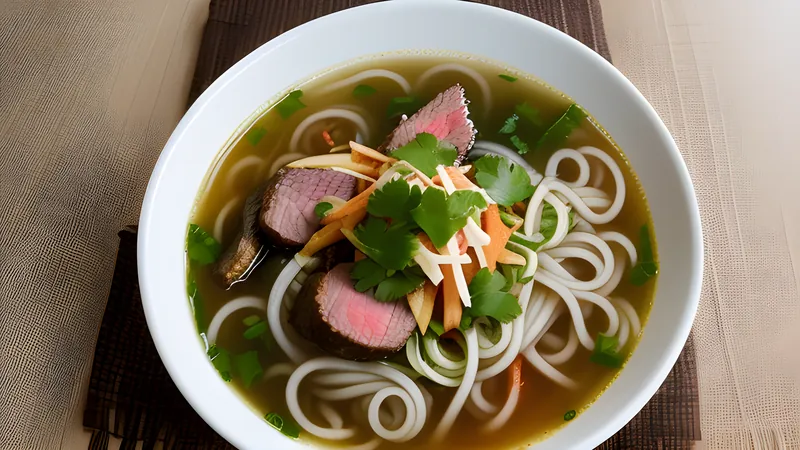
↓ Jump to recipeIf pho is Vietnam’s calm, clear-eyed morning soup, bún bò Huế is its fiery, perfumed relative from the centre of the country. It comes from Huế, the old imperial capital on the Perfume River, and it carries the refinement of a city that once fed emperors along with a robust, chilli-red heat that pho never reaches for. The broth is built on beef bones and lemongrass, seasoned with fermented shrimp paste, and finished with a slick of scarlet annatto oil that stains the surface and announces what you are in for.
The name tells you the essentials: bún are the round rice noodles, thicker than the flat ribbons of pho; bò is beef. What it leaves out is everything that makes the soup sing, the lemongrass and shrimp paste and chilli, and the traditional additions of pork knuckle, cubes of set pig’s blood and slices of Vietnamese ham. It is a big, layered, deeply savoury bowl, and for many Vietnamese cooks it is the one they are proudest of.
Bún Bò Huế: Spicy Lemongrass Beef Noodle Soup
Ingredients
- 1.2 kg beef shin or brisket, in large pieces
- 1 kg beef or pork bones (marrow and knuckle)
- 1 pig's trotter, split (optional, for body)
- 8 lemongrass stalks, bruised and knotted
- 1 large onion, halved
- 1 thumb ginger, halved
- 2 tbsp mam ruoc (Vietnamese fermented shrimp paste)
- 2 tbsp fish sauce, plus more to taste
- 2 tbsp rock sugar (or 1 tbsp caster sugar)
- 2 tsp salt
- 3 tbsp neutral oil
- 3 tbsp annatto (achiote) seeds
- 4 garlic cloves, minced
- 1-3 tbsp Vietnamese chilli-satay (sa te), to taste
- 500 g thick round rice noodles (bun bo Hue noodles)
- To serve: sliced onion, spring onion, coriander, shredded banana blossom, bean sprouts, lime, sliced red chilli
Method
- Blanch the beef and bones: cover with cold water, bring to a rolling boil for 5 minutes, then drain and rinse away all the scum. This is the key to a clear broth.
- Char the onion and ginger halves directly over a flame or under a hot grill until blackened at the edges, about 5 minutes.
- Return the meat and bones to a large clean stockpot with 5 litres fresh water. Add the charred onion and ginger, the knotted lemongrass, salt and rock sugar. Bring to the boil, then reduce to a bare simmer.
- Simmer gently, skimming often, for 45 minutes, then lift out the beef shin or brisket, cool it, and set aside; keep the bones simmering for a further 2 hours.
- Dissolve the shrimp paste in a ladle of hot broth, let the grit settle, then pour the clear liquid into the pot, leaving sediment behind. Add the fish sauce.
- Make the annatto oil: warm the oil with the annatto seeds over a low heat for 3-4 minutes until deep red, then strain out the seeds. Fry the garlic and sa te in this oil for 1 minute and stir the lot into the broth. Taste and balance with fish sauce, sugar and salt.
- Cook the rice noodles according to the packet, drain and divide between bowls. Slice the reserved beef and lay over the noodles.
- Ladle over the hot broth. Serve with the plate of herbs, sprouts, banana blossom, lime and chilli for each person to add.
Huế, and a soup fit for an emperor
Huế was the seat of the Nguyễn dynasty from 1802 until 1945, and its cooking still carries that courtly inheritance: many small, precise dishes, elegant presentation, a fondness for chilli that sets central Vietnamese food apart from the milder north and the sweeter south. Bún bò Huế is the city’s most famous export, a market-stall and home dish that scaled up from imperial refinement to everyday sustenance. Every family and every vendor has a version, and arguments about the correct balance of shrimp paste and lemongrass are conducted with real feeling.
The soup’s character sits between the aromatic clarity of a good broth and the funk of fermented seafood, and the lemongrass is what holds those two poles together. Where pho leans on star anise, cinnamon and clove, bún bò Huế leans hard on lemongrass, bruised and knotted and simmered in quantity, giving the broth its citrus-grassy backbone. Get a lot of lemongrass in and the soup smells like Huế.
Blanch first, for a clean broth
The single technique that separates a professional-looking bowl from a murky home version is blanching the bones and meat before you make the stock. Cover them in cold water, bring to a hard boil for five minutes, then tip the whole lot out and rinse away the grey scum and released impurities. Starting again with clean bones and fresh water gives you a broth you can see through, and it is worth the extra pot. Skipping it leaves the stock cloudy and slightly off-tasting.
From there the rules are the rules of any good stock: a bare, trembling simmer rather than a rolling boil, and diligent skimming of the foam that rises in the first half-hour. A boil emulsifies the fat back into the liquid and turns it cloudy, so keep the heat low and patient. Charring the onion and ginger over a flame first adds a smoky sweetness and a little colour, the same trick that underpins pho.
Shrimp paste and the annatto-oil twist
Two ingredients do the heavy lifting on flavour and colour, and both reward a little care. Mắm ruốc, fermented shrimp paste, is the soul of the soup and the thing that makes it taste of Huế rather than anywhere else; it brings a deep, briny, savoury funk that mellows into the broth. It also carries grit, so the proper method is to dissolve it in a ladle of hot stock, let the sediment settle, and pour only the clear liquid into the pot. Add it gradually and taste, because too much turns the broth harsh.
The colour and much of the fragrance come from an annatto-lemongrass oil, and making it properly is the clever step that lifts the whole bowl. Warm annatto (achiote) seeds gently in oil until it turns a deep brick red, strain the seeds out, then use that stained oil to fry garlic and Vietnamese chilli-satay before stirring the lot into the broth. Blooming the aromatics in the annatto oil carries their flavour on fat and gives the soup its glossy scarlet surface. Annatto is almost flavourless and purely for colour, so this is how you get the look without a mound of chilli.
Noodles, meat and the balance
The noodles are specific: thick, round rice vermicelli, usually sold as “bún bò Huế” noodles, chunkier than pho noodles and with a satisfying chew that stands up to the strong broth. Cook them separately and to the packet timing, because overcooked rice noodles turn to paste and cloud the soup if boiled in it. Divide them between deep bowls and ladle the near-boiling broth over at the last moment.
For the meat, beef shin or brisket gives slices with texture and a little chew after their forty-five minutes of gentle cooking; pull them out before they go stringy, then let the bones carry on giving up their collagen for a couple of hours more. A split pig’s trotter or some pork knuckle adds body and a silkiness to the broth, and is traditional. Balance the finished broth carefully with fish sauce for salt, a little rock sugar for roundness, and more sa te if you want it fiercer; the aim is a broth that is savoury, faintly sweet, sour-edged and hot all at once.
The garnish plate, and how to eat it
Like all great Vietnamese noodle soups, bún bò Huế is finished at the table by the person eating it, and the herb plate is half the pleasure. Shredded banana blossom is the classic, its faint bitterness and crunch cutting the rich broth; bean sprouts, sliced raw onion, spring onion, coriander and Vietnamese mint go alongside, with lime wedges and sliced red chilli. Each diner piles in what they like, squeezes over lime, and eats while the broth is scalding.
Serve it as a one-bowl meal; it needs nothing else. The contrast of hot, spicy, aromatic broth against cool, raw, crunchy herbs is the whole point, and it makes every mouthful slightly different from the last.
Make-ahead and leftovers
The broth is the labour, and it is better made a day ahead. Cook it fully, strain it, and chill it overnight; the fat sets on top and can be lifted off or stirred back in as you prefer, and a night’s rest deepens the flavour. It keeps three days in the fridge and freezes for two months, so a big batch of broth is a sound investment. Cook the noodles fresh each time and keep the herbs, meat and broth separate until serving, since assembled soup goes soft quickly.
If this style of long-simmered, garnish-your-own noodle bowl appeals, the pork-bone epic of Tonkotsu Ramen with a 12-Hour Pork Broth shares the same devotion to a slow stock, while Wonton Soup with Prawn-and-Pork Dumplings offers a gentler broth. For the cool, herb-forward Vietnamese flavours in salad form, Gỏi Gà: Vietnamese Chicken and Cabbage Salad uses the same lime, chilli and fish-sauce balance.
Related Content