Buddha Bowl with Miso-Roasted Vegetables and Tahini
Caramelised roots, nutty grains and a pourable tahini sauce
Contents
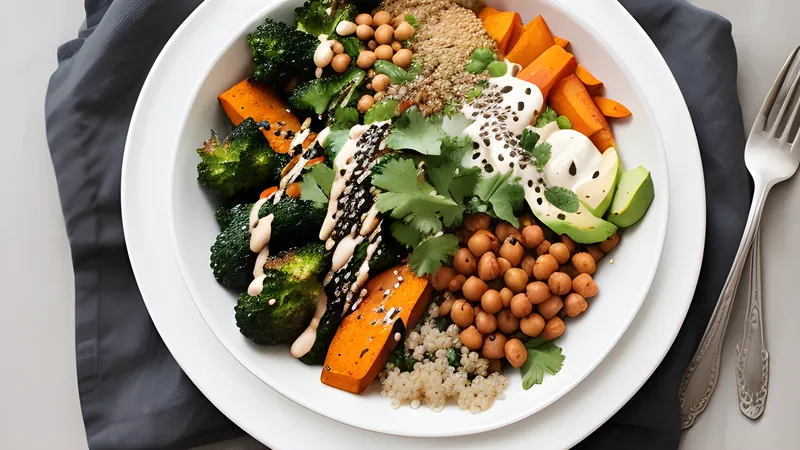
↓ Jump to recipeThe Buddha bowl gets mocked as wellness-blog wallpaper, all beige grains and worthy virtue, and often it deserves the mockery. A bowl of steamed vegetables over plain rice is a sad lunch dressed up as a lifestyle. The difference between that and a bowl you genuinely look forward to comes down to two things: browning and a proper sauce. Roast the vegetables until their edges caramelise, coat them while hot in miso, and drown the lot in a lemony tahini dressing, and you have a meal with real backbone.
I make this on a Sunday and eat it in shifts through the week, because every element holds and reheats and the sauce keeps for days. My twist is the miso glaze: a spoon of white miso whisked with maple and brushed over the roots in the last stretch of roasting, so they lacquer and blister and pick up a savoury, almost caramel depth that plain oil never gives.
Buddha Bowl with Miso-Roasted Vegetables and Tahini
Ingredients
- 150g quinoa (or brown rice)
- 1 medium sweet potato, cut into 2cm chunks
- 2 carrots, cut into batons
- 1/2 head broccoli, cut into small florets
- 1 red onion, cut into wedges
- 1 x 400g tin chickpeas, drained and patted dry
- 2 tbsp white miso paste
- 1 tbsp maple syrup
- 2 tbsp neutral oil
- 1 tbsp rice vinegar
- 1 ripe avocado, sliced
- 2 handfuls baby spinach or kale, shredded
- 1 tbsp toasted sesame seeds
- For the tahini sauce: 3 tbsp tahini
- Juice of 1 lemon
- 1 small garlic clove, grated
- 4-6 tbsp cold water
- Fine sea salt
Method
- Rinse the quinoa, simmer in twice its volume of salted water for 12-15 minutes, drain and rest covered for 5 minutes.
- Heat the oven to 200C fan and roast the sweet potato, carrots and red onion on one tray and the chickpeas on another, both tossed with oil and salt, for 15 minutes.
- Whisk the miso, maple syrup and rice vinegar together, add the broccoli to the vegetable tray, brush with two-thirds of the glaze and roast for a further 12-15 minutes until blistered and the chickpeas are crisp.
- Whisk the tahini, lemon juice and garlic, then loosen with cold water a spoonful at a time to a pourable sauce and season with salt.
- Assemble each bowl with quinoa, wilted greens, the roasted vegetables and chickpeas and sliced avocado, then pour over the tahini sauce and scatter with sesame seeds.
Where the bowl really comes from
The name is a Western invention of the 2010s, and the “Buddha” label is a bit of a marketing flourish, sometimes explained by the rounded, belly-like heap of food and sometimes by a loose nod to the monk’s alms bowl. Either way, the concept it borrows from is genuinely old.
Across Buddhist monastic traditions, particularly in Japan and Korea, temple cuisine developed the practice of oryoki — a mindful, balanced meal eaten from a set of nesting bowls, built to nourish without excess or waste. The Korean bibimbap, with its ring of individually seasoned vegetables over rice and a fierce dab of chilli paste, is the clearest ancestor of the modern bowl. The Western version keeps the architecture — a base grain, a rainbow of vegetables arranged in sections, a protein, a sauce poured over — while swapping the seasonings for whatever the cook fancies.
What makes the format endure is that it is complete. You get slow-release carbohydrate from the grain, protein and fibre from the pulse, a spread of vitamins from the vegetables, and healthy fats from the avocado and tahini. It is the kind of easy, throw-it-together nourishment that also underpins my aubergine katsu curry, and the miso here nods to the same fermented-soybean magic I lean on in miso black cod.
The two things that make it sing
Roast the vegetables hard. A hot oven does two jobs at once. It drives off water so the vegetables concentrate rather than dilute, and it triggers the Maillard browning that builds savoury, roasted flavour on every caramelised edge. Steamed vegetables are soft and pale and taste mostly of themselves; roasted ones taste of far more.
A sauce that pours. Tahini straight from the jar is a stiff paste, and the moment you add lemon juice it seizes into something like wet cement, which alarms first-time makers into thinking they have ruined it. Keep going. Whisk in cold water a spoon at a time and it loosens, pales and turns silky, arriving at a pourable, creamy dressing that clings to everything. That brief seizing is the sauce working exactly as it should.
Building the bowls
Start the grain. Rinse the quinoa well in a sieve under cold water — this rinses off the bitter, soapy saponin coating that gives badly cooked quinoa its reputation — then simmer it in twice its volume of salted water for twelve to fifteen minutes until the little curls of germ pop out. Drain, return to the pan off the heat, and leave it covered for five minutes to steam. This resting fluffs the grains and stops them going claggy.
Meanwhile, heat the oven to 200°C fan. Put the sweet potato, carrots and red onion on one large tray and the chickpeas on another, toss both with the oil and a good pinch of salt, and roast for fifteen minutes. Keeping the chickpeas separate lets them crisp; buried among wet vegetables they only steam and go soft.
While those roast, whisk the miso, maple syrup and rice vinegar into a loose glaze. At the fifteen-minute mark, add the broccoli to the vegetable tray, brush everything with about two-thirds of the miso glaze, and give the chickpeas a shake. Return both trays for a further twelve to fifteen minutes, until the roots are tender and blistered, the broccoli has charred tips, and the chickpeas rattle and crackle. Watch the glazed vegetables near the end; the sugar in the maple and miso can tip from caramelised to burnt quickly.
For the sauce, whisk the tahini, lemon juice and grated garlic together in a bowl. It will thicken and clump alarmingly. Add cold water a spoonful at a time, whisking hard, until it flows off the whisk in a smooth ribbon. Season with salt and taste; it should be sharp, nutty and savoury. If it is too tight, more water; too thin, a little more tahini.
Choosing your tahini and miso
Tahini varies enormously between brands, and a bad jar can sink the whole bowl. The best is made from hulled, lightly roasted sesame and pours like thick cream, pale and smooth with a gentle bitterness. Cheaper versions are darker, grainier and aggressively bitter, and no amount of lemon rescues them. Look for a Middle Eastern brand if you can, give the jar a look for a thick layer of separated oil on top, and stir it back in thoroughly before you measure; the solids sink and the oil rises, so an unstirred scoop from the bottom is dense and claggy. Once opened, keep it in a cool cupboard and stir before each use.
Miso rewards the same small care. White miso, or shiro miso, is the mild, sweet, short-fermented one, and it is the right choice here because its gentle character glazes the vegetables without overwhelming them. Red miso is darker, saltier and far more assertive, brilliant in a hearty soup but too forceful brushed over sweet roots. Whichever you use, remember that miso is a living, fermented food full of beneficial cultures, and fierce heat kills them; that is why the last brush of glaze goes on after roasting, raw, where its savoury complexity stays intact. Keep the tub in the fridge and it lasts for months, quietly deepening as it goes.
Assembly, storage and swaps
Assembly is where a bowl earns its looks, and a little arrangement pays off. Spoon the quinoa into two wide bowls and pile the raw spinach or kale to one side, letting the residual warmth wilt it slightly. Arrange the roasted roots, broccoli and crisp chickpeas in their own sections rather than mixing everything into a heap; the separate zones let each element keep its texture and make the bowl look like something you plated on purpose. Add the sliced avocado, brush the vegetables with the last of the miso glaze, then pour the tahini sauce generously over the top and finish with the toasted sesame seeds.
For make-ahead, this is close to ideal. Roast the vegetables and chickpeas, cook the grain, and make the sauce, then keep the three separate in the fridge for up to four days. Assemble cold for a packed lunch, or warm the vegetables and grain and add the avocado and sauce fresh. The chickpeas soften once stored, so if you love them crackling, roast a fresh small batch or refresh them for five minutes in a hot oven.
The bowl bends to whatever you have. Swap quinoa for brown rice, farro or even leftover roast potatoes; trade sweet potato for squash, beetroot or parsnip; use whatever greens are wilting in the drawer. For more heft, a soft-boiled egg or a block of roasted tofu slots in neatly, and a spoon of kimchi or a scatter of pickled onions adds the sharp, acidic hit that a rich bowl always wants. The tahini sauce, meanwhile, is worth making in double and keeping in a jar; it turns any tray of plain roasted vegetables into something you actually want to eat, which is the whole quiet promise of a good bowl. One last thing on balance: a good bowl needs contrast in every mouthful, so aim for something soft, something crisp, something sharp and something creamy in each forkful. Get that right and you will stop thinking of this as a virtuous lunch and start thinking of it as simply dinner, which is exactly where it belongs. Served warm on a cold evening or cool on a hot one, it is one of those rare meals that feels light and satisfying at the same time.
Related Content