Buckwheat Crêpes with Ham, Gruyère and a Fried Egg
Nutty Breton galettes folded around melting cheese and a crisp-edged egg
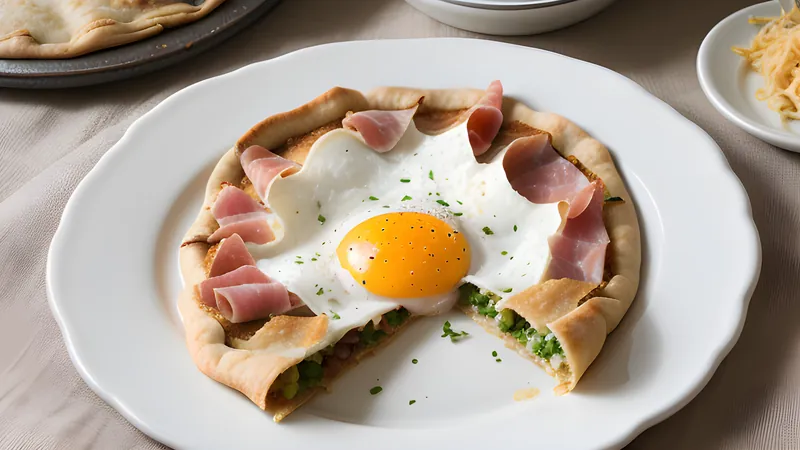
Buckwheat Crêpes with Ham, Gruyère and a Fried Egg
Ingredients
- 150g buckwheat flour
- 50g plain flour
- 0.5 tsp fine salt
- 2 large eggs (for the batter)
- 400ml cold water
- 100ml whole milk
- 30g unsalted butter, melted, plus extra for cooking
- 150g Gruyère, coarsely grated
- 6 slices good cooked ham
- 6 large eggs (one per galette)
- Black pepper and a little flaky salt
- A handful of chives, snipped, to finish
Method
- Whisk the buckwheat flour, plain flour and salt in a large bowl. Make a well, crack in the 2 batter eggs and whisk, gradually pouring in the water and milk to make a smooth, thin batter.
- Whisk in the melted butter, then cover and rest the batter in the fridge for at least 1 hour, or overnight.
- Heat a wide non-stick or crêpe pan over a medium-high heat and rub with a little butter. Pour in a small ladle of batter and swirl to coat the base thinly.
- Cook for about 1 to 2 minutes until the underside is set and lacy at the edges, then flip and cook the other side for 30 seconds. Keep warm under a cloth while you cook the rest.
- Return a cooked galette to the pan over a medium heat. Scatter a layer of Gruyère across the middle and lay a slice of ham on top.
- Crack an egg into the centre, season, and let it cook for 2 to 3 minutes until the white is just set but the yolk still runny and the cheese is melting.
- Fold the four sides of the galette inwards to make a square, leaving the yolk peeking through the middle. Slide onto a plate, scatter with chives and serve at once.
There is a reason the buckwheat galette is the unofficial national breakfast of Brittany, and it has everything to do with what happens when you crack an egg into the centre of one. The thin, lacy, faintly nutty pancake crisps at the edges, the Gruyère melts into ropes, the ham warms through, and the yolk sits there glossy and waiting to be broken. My one small twist is browning a knob of butter in the pan before the second side cooks, which gives the galette an extra toasty depth and beautifully crisp, frilly edges. It is a proper, satisfying brunch that happens to be naturally gluten-free in its truest form.
1 From Breton fields to the crêperie
Buckwheat, despite the name, is not a wheat at all but the seed of a plant related to rhubarb and sorrel. It thrives in poor, acidic soil and short growing seasons, which is exactly what Brittany has, and so it became the grain of the Breton peasantry when wheat would not grow. Ground into flour, it was turned into galettes de sarrasin, large savoury pancakes cooked on a flat iron griddle called a billig and folded around whatever the household had: an egg, a slice of ham, a little cheese.
That holy trinity, egg, ham and cheese, has a name of its own. A galette filled this way is a galette complète, the “complete” galette, and it remains the benchmark order in any Breton crêperie. The sweet, dessert crêpes made with white wheat flour came later and are a different beast entirely. The savoury buckwheat galette is the original and, to my taste, the more interesting of the two, with its earthy flavour and rustic, slightly speckled appearance.
2 The batter and the rest
A good galette starts with a thin, well-rested batter. Buckwheat flour has no gluten, so the batter will not turn tough no matter how much you whisk, but resting it for an hour, or overnight, hydrates the flour fully and gives a more tender, less gritty result. Some traditional recipes use only buckwheat flour and water; I cheat a little with a small amount of plain flour and a splash of milk, which makes the galettes easier to handle and flip while keeping that distinctive nutty flavour front and centre. If you want them entirely gluten-free, use all buckwheat flour and an extra splash of water, and be gentle when turning them.
Aim for a batter the consistency of single cream. Too thick and the galettes are heavy; too thin and they tear. The first one is always a sacrifice to the pan, so do not despair if it sticks or rips; by the second you will have the heat and the swirl figured out.
3 Building the galette complète
The assembly is where it becomes a meal. Lay a cooked galette back in the pan, scatter the cheese across the middle so it begins to melt, top with ham, then crack an egg straight into the centre. Season it, let the white set gently while the yolk stays soft, then fold the four sides up and over to make a neat open square with the yolk glistening in the middle. The cheese acts as a kind of glue, holding the parcel together. Serve it immediately, because a galette waits for no one and is at its best straight from the pan.
4 Tips, swaps and make-ahead
The galettes themselves can be made ahead and reheated, which makes this very doable for a crowd. Cook them all, stack with greaseproof between each, and keep them under a cloth or covered in a low oven; then it is just a quick assembly per person to order. The batter keeps happily in the fridge for two days.
As for fillings, treat the egg-ham-cheese version as your base and improvise from there. Gruyère is traditional and melts beautifully, but Comté, Emmental or a mature Cheddar all work. Wilt some spinach in alongside, add a few sautéed mushrooms, or slip in a spoonful of crème fraîche for richness. A little Dijon brushed over the cheese before the ham adds a welcome sharpness. Whatever you do, keep the runny yolk; breaking it so it pools across the buckwheat is the whole pleasure of the dish.
Related Content