Bucatini all'Amatriciana with Guanciale
Crisp guanciale, tomato, pecorino and the tug of hollow pasta
Contents
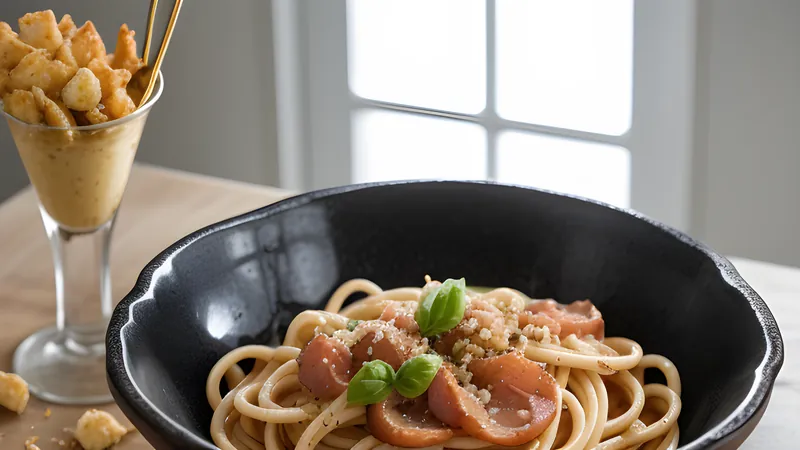
↓ Jump to recipeAmatriciana is one of the four great Roman pastas, and like all of them it is nearly nothing: cured pork, tomato, sheep’s cheese, chilli, pasta. There is no garlic, no onion, no herbs, and the Italians will fight you over each of those omissions. What makes it sing is the guanciale, cured pig’s cheek, whose fat renders down into a savoury, almost sweet slick that carries the tomato and coats every strand. My one indulgence is holding back half the crisped guanciale and scattering it over the top at the end, so you get shattering crunch on the plate as well as depth in the sauce. It is a small thing, and it makes the dish feel finished.
Bucatini is the classic shape here, a fat spaghetti with a hole down the middle that whips and splatters as you eat it and, more usefully, traps sauce inside the tube. If you cannot find it, use rigatoni or plain spaghetti. This is fast, cheap, weeknight food that happens to taste like a special occasion, and it sits in good company with a plate of spaghetti aglio e olio with toasted breadcrumbs or pasta alla Norma with fried aubergine and ricotta salata in the canon of Italian dishes that prove restraint beats abundance.
Bucatini all'Amatriciana with Guanciale
Ingredients
- 400g bucatini
- 150g guanciale, cut into short 5mm-thick batons
- 1 tbsp extra-virgin olive oil
- 60ml dry white wine
- 400g tin San Marzano or good whole plum tomatoes, hand-crushed
- 1/2 tsp dried chilli flakes, or 1 small dried peperoncino
- 60g pecorino romano, finely grated, plus more to serve
- Fine sea salt, for the pasta water
- Freshly ground black pepper
Method
- Put the guanciale in a cold, wide frying pan with the olive oil. Set over medium-low heat and cook slowly for 8 to 10 minutes, stirring, until the fat has rendered and the pieces are golden and crisp at the edges but still a little tender.
- Lift out about half the crisp guanciale with a slotted spoon and set aside for the finish. Add the chilli flakes to the pan and stir for 20 seconds in the hot fat.
- Pour in the white wine and let it bubble and reduce by half, scraping the pan, about 2 minutes. Add the hand-crushed tomatoes, season with black pepper, and simmer gently for 12 to 15 minutes until thickened and glossy.
- Meanwhile, bring a large pan of water to the boil, salt it well, and cook the bucatini until just shy of al dente, about 1 minute less than the packet says. Reserve a mugful of pasta water before draining.
- Add the drained bucatini to the sauce with a splash of pasta water. Toss over medium heat for 1 to 2 minutes until coated and glossy. Off the heat, stir through most of the pecorino, adding a little more pasta water to make it creamy. Serve topped with the reserved guanciale, extra pecorino and black pepper.
Where it comes from
The dish is named for Amatrice, a small town in the mountains of Lazio near the border with Abruzzo, and it began life as gricia, an even older shepherd’s pasta of just guanciale, pecorino and black pepper, with no tomato at all. Tomato was a later addition, arriving once the New World fruit had worked its way into central Italian cooking in the eighteenth century, and the red version travelled down to Rome with migrant workers and cooks until it became a fixture of the capital’s trattorie. Amatrice takes the dish so seriously that it holds an annual festival in its honour, and in 2015 the town won an official designation, the denominazione, that lays down the traditional recipe.
That history explains the fierce rules. There is no onion and no garlic in a classical Amatriciana; the sweetness and depth are meant to come from the rendered pork fat alone. The cheese is pecorino romano, the sharp and salty sheep’s cheese that gives the dish its backbone. And the pork must be guanciale, cured cheek, which behaves quite differently from pancetta or bacon. These rules go beyond snobbery; each ingredient genuinely changes the dish, and knowing why helps you cook it well.
Guanciale is the whole point
Guanciale is pig’s cheek cured with salt, pepper and sometimes herbs, and it is fattier, softer and more intensely porky than pancetta, which is cured belly. When you render guanciale slowly, it gives up a generous amount of clean, flavourful fat that becomes the cooking medium for the entire sauce, while the meat itself crisps into little nuggets. Pancetta will do at a push, and streaky bacon in an emergency, but both are leaner and smokier and give a thinner, less luxurious result. If you can find guanciale, from an Italian deli or increasingly a good supermarket, it is worth the trip.
The technique that matters is starting it in a cold pan. Put the guanciale batons in with a little oil before you turn on the heat, then bring it up slowly over medium-low. A cold start gives the fat time to render out gradually as the pan warms, so you finish with crisp, golden meat sitting in a pool of rendered fat. Throw guanciale into an already-screaming pan and the outside seizes and burns before the interior fat has a chance to melt, leaving you with tough, greasy lumps. Low and slow is the rule, and you are looking for the pieces to turn golden at the edges while staying a touch tender in the middle.
Building and finishing the sauce
Once the guanciale is rendered, lift out half of it to keep crisp for the top, then bloom your chilli in the hot fat for a few seconds before deglazing with white wine. The wine lifts the tasty browned bits off the pan and adds a faint acidity; let it reduce by half so the raw alcohol cooks off. Then in go the tomatoes. Buy whole plum tomatoes, ideally San Marzano, and crush them by hand rather than using ready-chopped, which are often watery and can carry an unpleasant tinny edge. Simmer gently until the sauce thickens and turns glossy and the fat starts to separate out at the edges, which is the sign it is ready.
Season with black pepper but be cautious with salt until the very end, because both the guanciale and the pecorino are salty, and the pasta water is salted too. It is easy to overshoot. Cook your bucatini a minute short of al dente, because it will finish in the sauce, and always save a mug of the starchy cooking water before you drain.
The final toss is where an Amatriciana becomes creamy rather than oily, and it hinges on the pecorino. Take the pan off the heat before you add the cheese, and add a splash of the reserved pasta water first. Pecorino is prone to seizing into rubbery clumps if it hits fat that is too hot, and the starchy water, plus lower heat, lets it melt into a smooth, clinging emulsion instead. Stir vigorously, adding a little more pasta water as needed, until the sauce turns silky and coats each strand. Then pile it into warm bowls, scatter over the reserved crisp guanciale and a final shower of pecorino and black pepper.
A word on the pasta itself
Bucatini deserves its starring role here. The hollow tube is made by extruding the dough around a rod, and that channel down the centre does real work, filling with sauce so each mouthful delivers a little reservoir of tomato and fat from the inside as well as the outside. It also gives the pasta a distinctive springy chew that thinner spaghetti lacks. The one drawback is that it flicks sauce with abandon as you twirl and slurp it, which is simply part of the fun and the reason no one eats Amatriciana in a white shirt. Cook it in plenty of well-salted water, and do not overcook it; bucatini turns from pleasantly firm to gummy quickly, and a minute short of the packet time is exactly right when it is going to finish in the sauce.
Troubleshooting and variations
The two classic disasters are greasy sauce and clumping cheese. Greasiness usually means too much rendered fat for the amount of tomato; if your guanciale was very fatty, pour off a little of the fat before adding the wine. Clumping cheese means you added the pecorino to a pan that was too hot, or without enough pasta water to buffer it; pull the pan off the heat, add water, and stir hard to bring it back. If the sauce looks thin and refuses to cling, it needs another minute of tossing with the pasta so the starch does its work.
As for variations, tradition allows very little, and the joy of the dish is in that discipline. Leave out the tomato altogether and you have made gricia, the ancestor, which is superb in its own right. Swap pecorino for a mix with a little Parmesan if you find pure pecorino too sharp, though purists will wince. What you should not do is add garlic, onion or a pile of basil and call it Amatriciana; make one of the many other excellent tomato pastas instead, such as a slow rigatoni alla Genovese, and let this one stay lean and Roman. Cook it once by the rules and you will understand why the people of Amatrice guard it so jealously.
Related Content