Bubble and Squeak with a Crispy Crust
Leftover potato and greens fried into a proper golden cake
Contents
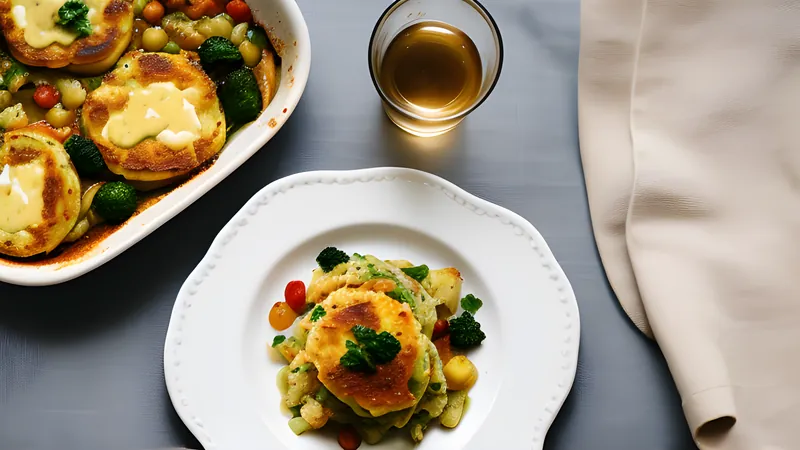
↓ Jump to recipeBubble and squeak is the finest thing to do with the ruins of a roast dinner, and it lives or dies on one thing: the crust. Done carelessly, it is a pale, soft heap of reheated potato and cabbage, pleasant enough but forgettable. Done properly, it is a golden-brown cake with a deep, shattering crust that gives way to a soft, savoury middle flecked with greens, and it is arguably better than any of the components were the first time round. The difference between the two is almost entirely a matter of nerve: you have to leave it alone and let it fry.
The sound in the name
The name is onomatopoeic, and it describes the noise the dish makes in the pan: the bubble and squeak of cabbage and potato frying in hot fat, hissing and popping as the water cooks off. The phrase turns up in English cookery writing from the late eighteenth century, though the early versions were rather different from what we make now. Georgian recipes for bubble and squeak often meant sliced cold boiled beef fried up with cabbage, the potato coming to dominate only later as it became the cheap, filling staple of the British kitchen. By the Victorian era it had settled into its familiar form as a way of using up the leftovers of the Sunday joint, and it became a fixture of Monday’s table across the country.
It belongs to a whole international family of thrifty fried-leftover dishes, the sort of clever, economical cooking that every food culture develops around not wasting yesterday’s dinner. Its closest cousin is the Irish and northern English colcannon and its fried-up leftovers, and it sits in spirit alongside the Spanish and Portuguese habit of frying yesterday’s greens and potato with garlic. What unites them all is the understanding that cooked potato, given a second life in hot fat, becomes something with a crust and a character it never had as a simple mash. Bubble and squeak is Britain’s contribution to that idea, and the version worth making leans hard into the frying.
Bubble and Squeak with a Crispy Crust
Ingredients
- 500g cooked leftover potato, mashed or roughly crushed
- 300g cooked greens (cabbage, sprouts, kale or a mix), chopped
- 1 small onion, finely sliced
- 30g butter, plus 1 tbsp beef dripping or oil
- 1 tsp wholegrain mustard
- Salt and plenty of black pepper
- A grating of nutmeg
- 1 tbsp neutral oil, for frying
Method
- If the leftover potato is cold and dense, break it up roughly with a fork; it need not be smooth. Squeeze any excess moisture from the cooked greens and chop them fairly small.
- Melt the butter with the dripping or oil in a heavy, ovenproof 24cm frying pan over a medium heat. Add the onion with a pinch of salt and cook for 6 to 8 minutes until soft and lightly golden.
- Tip the onion and its fat into a large bowl with the potato, greens, mustard, plenty of pepper, a good grating of nutmeg and a little salt. Fold together until evenly combined but still with some texture.
- Wipe out the pan, add the 1 tbsp neutral oil and set over a medium-high heat until shimmering. Add the mixture and press it firmly into an even cake with the back of a spatula.
- Leave it undisturbed for 8 to 10 minutes, until the underside has formed a deep golden-brown crust and you can smell toasted potato. Do not stir.
- Turn it by sliding onto a plate and inverting back into the pan, or by cutting into quarters and flipping each piece, adding a little more fat if the pan looks dry.
- Fry the second side for another 6 to 8 minutes until equally crisp. Serve at once, cut into wedges.
The crust is a chemistry lesson
The whole pleasure of bubble and squeak is that deep brown crust, and understanding why it forms tells you exactly how to get it. When the starchy potato hits hot fat and sits still, its surface dries out and the sugars and proteins begin to brown through the Maillard reaction, the same process that gives roast potatoes and toast their savoury, nutty colour and flavour. This takes heat, fat and, crucially, time and stillness. Every time you stir or poke the cake, you break the forming crust and drag uncooked mixture to the surface, and you never let any of it brown properly. The single most common mistake is fussing.
So press the mixture down firmly, get the pan properly hot, and then walk away for the best part of ten minutes. You want to hear a steady sizzle and start to smell toasting potato before you even think about touching it. A heavy pan holds its heat and browns evenly, and a decent amount of fat is what carries that heat to the potato’s surface. This is exactly the logic behind a good pommes Anna, where pressed, buttered potato is left to crisp into a burnished cake. The technique rewards patience and punishes impatience, which is really the whole recipe.
The small clever twist: mustard and nutmeg
Two small additions lift bubble and squeak from a bland reheat into something with a bit of backbone. A teaspoon of wholegrain mustard folded through the mixture cuts the richness of all that potato and fat with a gentle, warming heat and a little acidity, waking the whole thing up without announcing itself as mustard. It does the same job that a dab of English mustard does on the side of a plate of roast, only worked all the way through.
The grating of nutmeg is the quieter of the two and, I think, the more important. Nutmeg has a natural affinity with both potato and cabbage, and a good grating brings a warm, faintly sweet aromatic note that makes the greens taste greener and the potato taste richer. It is the same instinct that puts nutmeg into a bowl of creamed spinach, where it turns simple greens and dairy into something that tastes considered. Between them, the mustard and the nutmeg mean your bubble and squeak tastes seasoned and deliberate, which is what separates a good one from a dutiful one.
Getting the texture right
The ideal bubble and squeak holds together in a sliceable cake while still eating light rather than dense and gluey, and the balance comes down to the mash. Very smooth, heavily worked mash can turn stodgy when fried, because overworking cooked potato releases its starch and makes it sticky. Leftover roast or boiled potato roughly crushed gives a better, lighter texture with more variety in each bite. Squeeze the water out of the greens too, because wet cabbage will steam rather than fry and sabotage your crust. If your mixture is too loose to hold a cake, it is usually too wet; if it is crumbling apart, a knob more butter and a firm press in the pan will bind it as it fries.
What to serve it with, and keeping it
Bubble and squeak is traditionally a breakfast or brunch hero, and its natural partner is a fried egg with a runny yolk that breaks over the crisp surface, ideally alongside good bacon and perhaps a spoon of brown sauce. It is also a fine supper in its own right with a poached egg and some wilted greens, or served as a side to cold cuts from the fridge. Any leftover roast meat, chopped and stirred in, turns it into a complete meal in one pan.
You can mix the base a day ahead and keep it covered in the fridge, which actually helps it firm up and hold together better when it comes to frying. Once fried, it is best eaten straight from the pan while the crust is at its crispest, though leftovers reheat surprisingly well in a hot oven or a dry pan, where the crust can crisp up again. It does not microwave happily, because that softens the very crust you worked for. Make it the morning after a roast, when the fridge is full of odds and ends, and it will quietly become the meal everyone remembers more fondly than the roast itself.
Related Content