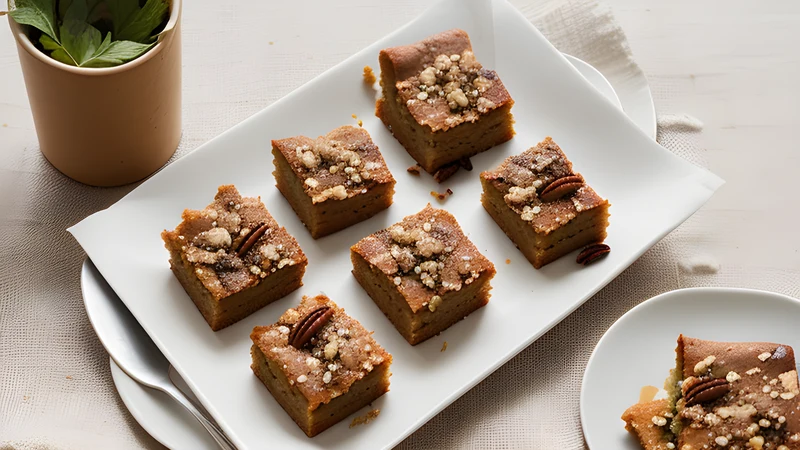
Browned-Butter and Pecan Blondies
Nutty, fudgy squares with a savoury whisper of miso
Contents
↓ Jump to recipeFor years I thought of blondies as the beige square you reach for when the brownies have gone. Then I started browning the butter, and they turned into something I bake on purpose. Browned butter gives the whole tray a toffee-and-hazelnut depth that plain melted butter never manages, and once you pair that with toasted pecans and a fudgy, barely set middle, you have a square with real backbone. The clever twist here is a couple of teaspoons of white miso whisked into the warm butter. You will not taste it as miso; you will taste a rounder, saltier, more grown-up butterscotch that makes people ask what you did differently.
Browned-Butter and Pecan Blondies
Ingredients
- 175g unsalted butter
- 2 tsp white miso paste
- 225g soft light brown sugar
- 50g caster sugar
- 2 large eggs, plus 1 yolk
- 2 tsp vanilla extract
- 215g plain flour
- 1/2 tsp baking powder
- 3/4 tsp fine sea salt
- 150g pecan halves, toasted and roughly chopped
- 100g white chocolate, chopped (optional)
- Flaky sea salt, to finish
Method
- Melt the butter in a light-coloured pan over medium heat, then keep cooking, swirling, for 4 to 6 minutes until it foams, quietens and the milk solids turn a toasted, nut-brown colour.
- Off the heat, whisk in the miso until smooth, then pour into a large bowl and cool for 10 minutes.
- Preheat the oven to 170C fan and line a 20cm square tin with parchment, leaving an overhang.
- Whisk both sugars into the warm browned butter, then beat in the eggs, yolk and vanilla for a full minute until thick and glossy.
- Fold in the flour, baking powder and fine salt until just combined, then fold through the pecans and white chocolate.
- Scrape into the tin, level the top and press in a few extra pecan pieces.
- Bake for 26 to 30 minutes until the top is set and deep gold but the centre still has a faint wobble.
- Cool completely in the tin, scatter with flaky salt, then lift out and slice into 16 squares.
Why browned butter changes everything
Butter is roughly a fifth water and a small fraction milk solids, the rest being fat. When you melt it gently and keep going past the point most recipes stop, the water boils off with a hiss and a foam, and then the milk proteins and milk sugars sitting at the bottom of the pan begin to toast. That toasting is the Maillard reaction and a little caramelisation working together, and it throws off dozens of new aroma compounds, the same nutty, biscuity ones you get in toasted hazelnuts and good toffee. The French call the finished thing beurre noisette, hazelnut butter, which tells you exactly what to smell for.
The technique matters because the window is narrow. Use a light-coloured pan, stainless or a pale enamel, so you can actually read the colour of those solids against the metal. A dark non-stick pan hides the browning until it has already gone too far. Melt over a medium heat, let it foam up, and keep swirling as the foam subsides and the noise quietens; that drop in sound is your cue that the water has gone and the solids are about to colour. When the flecks at the bottom turn the shade of a digestive biscuit and the kitchen smells of toffee, pull it off the heat at once. Residual heat can tip nutty into acrid in under a minute. Scraping every last brown fleck into the batter is the whole point, so do not leave them behind in the pan.
Browning drives off some water, which is why this recipe leans a little wetter with an extra yolk. That yolk brings fat and emulsifiers that keep the crumb dense and fudgy rather than cakey, the same reason it earns its place in a tray of tahini and halva blondies.
The miso, and why it works
Miso is fermented soya bean paste, salty and savoury and deeply glutamate-rich, which is a technical way of saying it makes things taste more of themselves. A white, or shiro, miso is the mildest kind, fermented for a shorter time with a higher proportion of rice, so it is sweeter and gentler than the mahogany ones. Whisked into browned butter while it is still warm, it dissolves cleanly and seasons the whole tray from the inside. What it adds is a savoury undertow you can’t quite name that stops the sugar sitting heavy on the tongue, the same trick a pinch of salt plays in caramel.
Two teaspoons is the sweet spot for a 20cm tin. Go much further and the paste starts to announce itself, which you do not want in a pudding. If you cannot get miso, do not fret; increase the fine sea salt to a full teaspoon and you will still have an excellent blondie, just without that particular rounded depth. But if there is a jar in your fridge for soups and dressings, this is one of the best things you can do with a spoonful of it.
A word on how it dissolves: whisk the miso into the butter while it is warm but no longer sizzling, because a fierce heat can seize the paste into little granules that never quite smooth out. If yours does clump, push it through a small sieve into the batter, or blitz the warm butter and miso together with a stick blender for a few seconds. You want it dispersed so evenly that nobody biting a square finds a salty pocket.
Toasting the pecans properly
Pecans out of the bag taste of very little. Toasted, they taste of butter and bourbon and warm bark, and the difference in a blondie is night and day. Scatter them on a dry tray and toast in the oven at 170C fan for 7 to 8 minutes, until they smell fragrant and turn a shade darker, then tip them straight off the hot tray so they stop cooking. Nuts carry a lot of oil and scorch from residual heat if you leave them sitting. Chop them roughly once cool, keeping some big pieces so you get a proper crunch against the fudgy crumb rather than an even grit.
Pecans are higher in fat than almost any other nut, which is exactly why they crisp so beautifully and why they can turn bitter if pushed too far. Watch them like you would watch the butter. If you only have walnuts, they work in a pinch, though they carry a faint tannic edge that pecans do not.
Getting the texture right
The single rule of blondies is to underbake them a touch. A blondie cooked until firm through the middle is a flapjack with ideas above its station; one pulled while the centre still wobbles sets, as it cools, into fudge with a chewy edge. Look for set, deep-gold edges pulling away from the parchment and a middle that looks barely done and slightly sunken. It will firm up dramatically over the next hour. My oven gives me the wobble at 27 minutes; yours may differ, so trust your eyes over the clock.
Cool the tray completely before cutting, ideally with half an hour in the fridge at the end. Warm blondies tear and shed crumbs; cold ones cut into clean squares with a sharp knife wiped between slices. Finish with flaky sea salt, scattered while the surface still has the faintest tack so it sticks. Use a flaky salt like Maldon so you get distinct little sparks of salinity against the sweetness rather than an even, dull background.
Substitutions, storage and variations
The base flexes well once you have it. Swap 60g of the plain flour for wholemeal to push the nuttiness further, or fold in 100g of chopped dark chocolate instead of the white for a deeper, less sweet square. A tablespoon of bourbon in place of one teaspoon of the vanilla leans into the pecan-and-oak thing beautifully; add it with the eggs. For a cleaner, plainer blondie, leave out the chocolate altogether and add another 50g of toasted pecans, letting the browned butter carry the flavour on its own, much as it does in a good banoffee pie with salted caramel.
If you want a chewier, more caramel-heavy result, use all soft light brown sugar and drop the caster; if you want a slightly lighter crumb, tilt the ratio the other way. The pecans can become walnuts, hazelnuts or macadamias, each toasted first. A quarter teaspoon of ground cinnamon or a good grate of nutmeg folded in with the flour turns these autumnal, in which case they sit nicely alongside a plate of oatmeal raisin cookies on a cold afternoon.
These keep exceptionally well and, like most brown-sugar bakes, improve overnight once the crumb settles and the flavours marry. Store them airtight at room temperature for up to four days, or in the fridge for a week, where they firm towards proper fudge and slice even more cleanly. They freeze for up to three months cut into squares and layered between parchment; thaw at room temperature for an hour, and if anything they taste freshly made. The one thing you cannot rush is the browning of the butter, so give it the six minutes and the attention it asks for. Everything good about the tray starts in that pan.
Related Content