Brown Butter Scones
Tall, flaky and golden
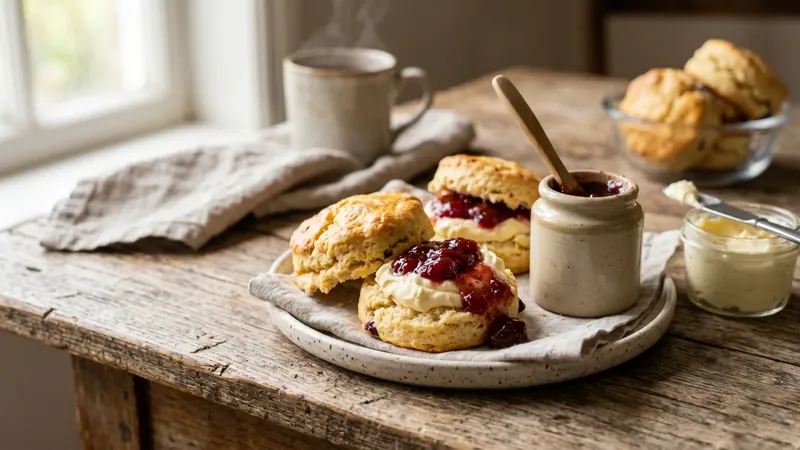
A good scone is a quick triumph, and browning the butter first turns a familiar bake into something quietly more interesting. The toasted, nutty notes carry right through the crumb, deepening the flavour without making the scones heavy or rich. They still rise tall and pull apart in flaky layers, ready for clotted cream and jam. Best eaten warm, the day they are made.
Brown Butter Scones
Ingredients
- 100g unsalted butter
- 450g self-raising flour, plus extra to dust
- 1 tsp baking powder
- 0.5 tsp fine salt
- 50g caster sugar
- 175ml whole milk, cold
- 1 large egg
- 1 tsp vanilla extract
- 1 egg yolk beaten with 1 tbsp milk, to glaze
Method
- Brown the butter in a small pan over a medium heat until golden and nutty, then chill until solid.
- Heat the oven to 200C fan and line a baking tray.
- Whisk the flour, baking powder, salt and sugar in a large bowl.
- Grate or rub the cold browned butter into the flour until it resembles breadcrumbs.
- Beat the milk, egg and vanilla together, then stir into the dry mixture to form a soft, shaggy dough.
- Tip onto a floured surface and pat out to 3cm thick, then fold in half and pat out again.
- Cut straight down with a 6cm cutter, without twisting, and place close together on the tray.
- Brush the tops only with the egg-yolk glaze, then bake for 12 to 15 minutes until risen and golden. Cool slightly before serving.
3 The Story
The scone is one of Britain’s most argued-over baked goods, from how to pronounce its name to the proper order of cream and jam. Its origins are usually placed in Scotland, where early versions were large, flat griddle cakes cut into wedges and cooked on a hot stone or pan rather than in an oven. The word itself is often linked to the Stone of Scone, the ancient coronation stone, though the connection is more poetic than proven. Over time the scone shrank, rose, and moved indoors to the oven, becoming the small, light bake that anchors an afternoon tea.
The texture every scone-maker chases is tall and tender, with distinct flaky layers that pull apart cleanly. That comes down to keeping the butter cold and the handling light. Cold fat stays in small pieces through the dough, and when the scones hit a hot oven those pieces melt and steam, pushing the layers apart and lifting them up. Overworking the dough develops the gluten and turns a fluffy scone tough and dense, which is why the mixing is done with a knife and the kneading skipped entirely.
The twist here is browning the butter before it goes in. Heating butter gently toasts the milk solids until they turn golden and develop deep, nutty, almost caramel notes. The French call it beurre noisette, and it is a small act of cooking that delivers a lot of flavour. The browned butter is chilled until solid again so it still works the way cold butter should in the dough, keeping the all-important flake while threading toasted flavour through every bite.
A couple of small habits make a real difference. Cutting straight down without twisting the cutter leaves the edges clean, so the scones rise evenly rather than tilting to one side. Setting them close together on the tray means they support one another as they bake, climbing upward instead of spreading outward. And glazing only the tops keeps the cut sides free to open up.
Scones are at their best within hours of baking, warm enough to soften the cream. They keep poorly, staling fast as the day goes on, which is no real hardship: a batch this size rarely lasts long enough to find out.
Related Content