Breakfast Burrito with Crispy Potato and Chipotle
A properly wrapped morning burrito with crisp potato, soft eggs and smoky chipotle
Contents
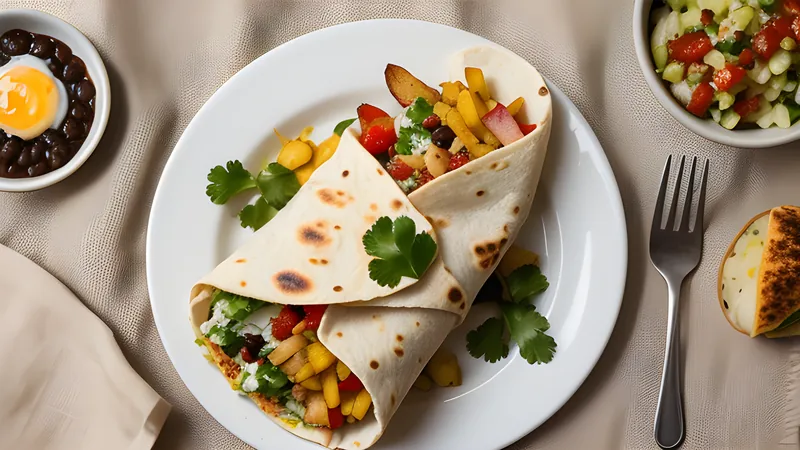
↓ Jump to recipeThe breakfast burrito is a border creation, born where the burritos of northern Mexico met the American diner, and it has become one of the most quietly perfect ways to eat eggs. Everything you want in a morning plate goes into a single warm parcel: soft scrambled egg, crisp potato, beans, melted cheese and something with a bit of chilli heat, wrapped in a flour tortilla you can carry out the door. Done well it is a small piece of engineering, each bite delivering a bit of everything.
Done badly it is a soggy disappointment, and the difference comes down to a handful of decisions about texture and moisture. A great breakfast burrito is a study in contrast: the potato has to stay crisp against the soft egg, the tortilla has to hold without turning to paste, and the whole thing needs seasoning that carries through every layer. Get those right and you will stop buying them from cafés, because the homemade version is better and costs a fraction as much.
Breakfast Burrito with Crispy Potato and Chipotle
Ingredients
- 500 g waxy potatoes, cut into 1.5 cm dice
- 3 tbsp neutral oil
- 1-2 chipotles in adobo, finely chopped, plus 1 tbsp of the adobo sauce
- 8 large eggs
- 30 g butter
- 1 x 400 g tin black beans, drained and rinsed
- 1/2 tsp ground cumin
- 150 g mature Cheddar or Monterey Jack, grated
- 4 large (25 cm) flour tortillas
- 1 ripe avocado, sliced
- 4 tbsp soured cream
- Small bunch coriander, roughly chopped
- 1 lime, cut into wedges
- Salt and black pepper
Method
- Put the diced potatoes in a pan of cold salted water, bring to the boil and simmer for 6 minutes until just tender. Drain well and leave to steam-dry for 5 minutes.
- Heat 3 tbsp oil in a large frying pan over a medium-high heat. Add the potatoes in a single layer and fry, turning occasionally, for 10-12 minutes until deeply golden and crisp.
- Add the chopped chipotle and adobo sauce to the potatoes with a good pinch of salt, toss for 1 minute to coat, then tip into a bowl and keep warm.
- Warm the black beans in a small pan with the cumin and a splash of water, then roughly mash half of them for a spreadable texture. Season and keep warm.
- Beat the eggs with a pinch of salt. Melt the butter in a non-stick pan over a low heat, add the eggs and scramble slowly, stirring, until just set and still glossy. Remove from the heat.
- Warm each tortilla in a dry pan for 20 seconds a side to make it pliable. Down the centre, layer beans, eggs, crispy potato, cheese and avocado, leaving borders clear.
- Fold the two sides in over the filling, then roll up tightly from the bottom into a firm cylinder, tucking as you go.
- Wipe the pan, set it over a medium heat, and sear each burrito seam-side down for 1-2 minutes a side until golden and sealed. Serve with soured cream, coriander and lime.
Where it comes from
The flour tortilla is the key that unlocks this dish, and it is a northern-Mexican and borderlands thing. Wheat grows well in the arid north of Mexico where maize struggles, so the states of Sonora and Chihuahua built their tortilla tradition on flour, producing the large, soft, foldable rounds that a burrito needs. The word burrito, “little donkey”, is of uncertain and much-debated origin, but the wrapped, hand-held format spread north into the American Southwest through the twentieth century.
The breakfast burrito specifically is usually credited to New Mexico, where Santa Fe cooks in the 1970s put eggs, potato and chilli into a tortilla and a genre was born. It travelled fast, picking up regional habits along the way: the hefty, foil-wrapped versions of Texas, the fresh-salsa-and-avocado style of California, the green-chile devotion of New Mexico itself. What runs through all of them is the same satisfying architecture of egg, starch and heat.
Crisp potatoes: the two-stage method
The potato is where most home versions fall down, coming out either raw in the middle or greasy and soft. The reliable fix is to cook them in two stages. First parboil the diced potato in salted water until barely tender, which cooks it through gently and evenly. Then drain it and let it steam-dry for five minutes so the surface moisture evaporates, because a dry surface is what crisps. Waxy potatoes hold their shape through both stages and give you distinct, golden cubes rather than a mash.
The second stage is a proper fry in a hot pan with enough oil, spread in a single layer and left largely alone so each face can colour. Resist the urge to stir constantly; contact with the hot metal is what browns them. Ten to twelve minutes gets you a crust with a fluffy centre. Waxy potatoes such as Charlotte or a firm salad variety work better here than a floury baking potato, which tends to break apart.
The chipotle twist
Here is the small move that gives the burrito its smoky spine. Rather than reaching for a bottled hot sauce at the table, toss the just-fried potatoes with finely chopped chipotle in adobo and a spoon of the tinned sauce while they are still sizzling. Chipotles are smoke-dried, ripe jalapeños steeped in a tangy tomato-and-vinegar adobo, and their smoke clings to the crisp potato and works its way through the whole burrito. A minute in the pan is all it takes for the coating to caramelise slightly and grip.
Chipotles in adobo come in small tins and freeze well, so an opened tin need not go to waste; spoon the leftovers into a freezer bag and break off a chilli when you need one. Start with one chipotle if you are unsure of the heat, and remember the smoke registers as much as the burn. The adobo sauce alone, without the chilli flesh, gives a gentler smoky sweetness if you are cooking for tender palates.
Soft eggs and the moisture problem
Scrambled eggs for a burrito should be soft and just set, cooked slowly in butter over a low heat and pulled off while they still look glossy, because they carry on cooking in the warm parcel. Overcooked, dry eggs make a dull burrito. The larger enemy, though, is moisture: wet fillings steam the tortilla from the inside and turn it to mush. This is why the beans get partly mashed and only lightly moistened, and why the eggs come off the heat on the soft side of set rather than weeping liquid.
Everything that goes in should be warm but not soaking. Drain the beans well, keep the eggs loose but not runny, and put the wet elements like soured cream and salsa on the side or in a thin stripe rather than a flood. The avocado adds richness without water. Think of the tortilla as a structure you are trying to keep dry from within.
Wrapping, and the seared seam
A burrito that unravels is a sad thing, and rolling it tightly is a skill worth two minutes of attention. Warm the tortilla first so it folds without cracking. Pile the filling in a compact line down the middle, leaving clear borders. Fold the two ends in over the filling, then roll up from the bottom, keeping firm tension so the parcel is tight and the tucked-in ends stay put. A loose burrito falls apart; a tight one holds.
The finishing touch, and the thing café versions do that home cooks often skip, is to sear the wrapped burrito seam-side down in a dry pan. A minute or two a side toasts the tortilla to golden, crisps the outside, and, crucially, welds the seam shut so it stays rolled. It also melts the cheese fully and warms the whole thing through. This is the step that makes a homemade burrito feel finished.
Variations and make-ahead
Chorizo, fried until crisp, is a classic addition, its rendered orange fat carrying the same smoky register as the chipotle; add a little green salsa if you like it sharp. A scatter of quick-pickled red onion, soused in lime juice for ten minutes, cuts through the richness and adds a welcome acidic snap. For a vegetarian plate the beans and potato carry it easily, and a handful of wilted spinach folded through the eggs bulks it out without adding water. These wrap and freeze beautifully: roll them, wrap each in foil, and freeze for up to a month, then reheat from frozen in a low oven for twenty-five minutes or so, which makes them a genuine grab-and-go breakfast. Let a frozen one thaw in the fridge overnight first and it will crisp up faster the next morning.
If it is the Mexican breakfast table you are exploring, the tomato-and-chilli morning eggs of Huevos Rancheros with Charred Salsa and Refried Beans share this burrito’s beans and heat, while Chilaquiles Verdes with a Fried Egg turns yesterday’s tortillas into a saucy, tangy plate. For the crisp-tortilla-and-chorizo idea taken in another direction, Migas with Tortilla, Egg and Chorizo is the natural next cook.
Related Content