Bread-and-Butter Pickles
Sweet-sour cucumber crisps, with the spices toasted first
Contents
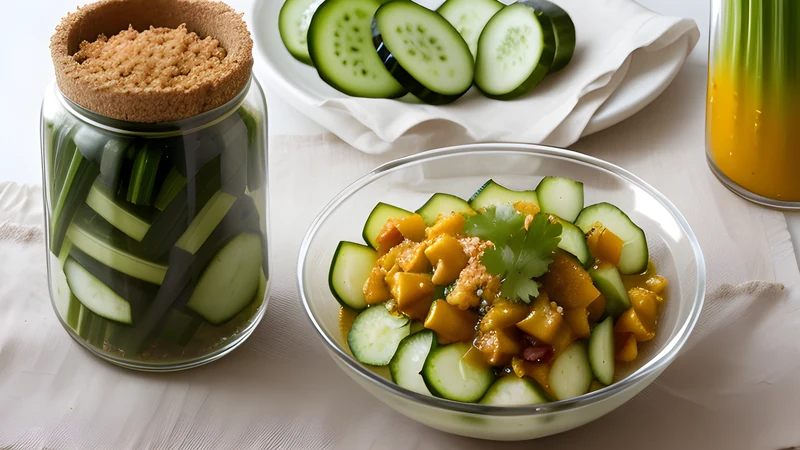
↓ Jump to recipeThere is a particular kind of pickle that lives in the door of American fridges: wavy-cut, sunshine-yellow, sweet and sour at once, sharp enough to cut through a cheese sandwich and sweet enough that children eat them straight from the jar. Bread-and-butter pickles are the sweet cousin of the dill, and for a long time I dismissed them as a bit childish. Then I made a batch properly, toasted the spices first, and understood why they have survived a hundred years of industrial imitation.
Bread-and-Butter Pickles
Ingredients
- 1kg small ridge or Lebanese cucumbers, sliced 4–5mm thick
- 1 large onion (about 250g), halved and thinly sliced
- 30g fine sea salt
- A tray of ice cubes
- 500ml cider vinegar
- 300g granulated sugar
- 50g dark muscovado sugar
- 2 tsp yellow mustard seeds
- 1 tsp brown mustard seeds
- 1 tsp celery seeds
- 1 tsp coriander seeds
- 1/2 tsp ground turmeric
- 1/4 tsp ground allspice
- 1/2 tsp cracked black pepper
Method
- Toss the sliced cucumbers and onion with the salt in a large bowl, then scatter a tray of ice cubes over the top and press down. Leave for 2–3 hours; the salt and ice firm the cucumbers and draw out water.
- Tip into a colander, rinse very briefly under cold water, and drain well, pressing gently to release excess liquid. Pat down with a clean tea towel.
- Toast the yellow and brown mustard seeds, celery seeds and coriander seeds in a dry pan over medium heat for 60–90 seconds, until fragrant and the mustard seeds begin to pop. Tip out immediately so they stop cooking.
- In a large non-reactive pan, combine the cider vinegar, both sugars, the toasted seeds, turmeric, allspice and black pepper. Bring to a simmer, stirring until the sugar dissolves.
- Add the drained cucumbers and onion. Bring back to a bare simmer and cook for just 2–3 minutes, until the slices turn from bright to olive green at the edges but still feel firm.
- Using a slotted spoon, pack the cucumbers and onion into warm sterilised jars, then pour over the hot brine to cover, leaving 1cm headspace. Tap out air bubbles and seal.
- Cool, then refrigerate for at least 48 hours before eating; the flavour deepens over a week. Store in the fridge for up to 2 months.
Where the name comes from
The story most often told points to Omar and Cora Fanning, cucumber farmers in Illinois in the 1920s who were reportedly growing a crop of small, misshapen cucumbers that were hard to sell whole. They turned them into a sweet-sour pickle and, so the account goes, traded jars with their grocer for the staples a farming family needed through lean years: bread and butter among them. The Fannings trademarked “Fanning’s Bread and Butter Pickles” in 1923, and the name stuck to the whole style, whoever actually invented it first.
Like most tidy origin stories, it is probably part truth and part folklore. Sweet cucumber pickles preserved in a spiced, sugared vinegar existed well before the Fannings put a label on them; American and northern European cooks had been “putting up” cucumbers this way for generations, and the technique travelled with German and Dutch settlers who brought a taste for sweet-sour preserving with them. What the Fannings did, and did brilliantly, was give a homely thing a name that told you exactly when to eat it: the pickle you kept in the larder to make a plain bread-and-butter meal worth eating. That framing survived the Depression and turned into an American staple, sold today by the tanker-load and rarely made at home, which is a shame, because the homemade version is in a different league.
Why you ice the cucumbers
The single most important step here has nothing to do with flavour and everything to do with texture. Cucumbers are more than 95 per cent water, and if you pour hot brine over raw slices they go limp and sad within a day. Salting them first, then packing them under ice for a couple of hours, does two useful things at once. The salt draws water out of the cells by osmosis, concentrating what remains, and the cold keeps the pectin in the cucumber walls firm so the slices hold their snap even after a hot brine.
Rinse only briefly afterwards, and drain hard. You want most of the surface salt gone but the firming effect kept, and any water clinging to the slices will dilute your carefully balanced brine once they go in the jar. I press mine gently in a colander and then roll them in a tea towel, which feels fussy but is the difference between a pickle that crunches and one that flops.
The second texture rule is to barely cook them. The cucumbers go into the simmering brine for two or three minutes, no more, just until the edges shift from vivid green to the duller olive that tells you the heat has penetrated. Push past that and you are boiling cucumbers, which is a dispiriting thing to do. The residual heat in the jar finishes the job gently overnight.
The twist: toast the spices
The classic brine leans on yellow mustard seed, celery seed and turmeric, and it works. What lifts a homemade batch above the shop version is toasting the whole spices in a dry pan for barely a minute before they hit the vinegar. Mustard and coriander seeds are full of aromatic oils locked inside the seed coat, and a short toast until the mustard seeds start to pop cracks them open and turns their raw, one-note pungency into something rounder and nuttier. You can smell the change happen in the pan.
I also swap a spoonful of the white sugar for dark muscovado. Bread-and-butter pickles are traditionally made with plain granulated sugar, which gives a clean sweetness, and the small addition of muscovado brings a molasses depth that sits under the vinegar like a bass note, warming the whole jar without making it taste of treacle. Add a pinch of ground allspice and a little cracked black pepper and you have a brine with genuine complexity, the sort that makes people ask what is in it.
Getting the sweet-sour balance right
The defining tension of this pickle is sugar against acid, and it is worth understanding rather than guessing. Cider vinegar sits around five per cent acidity and brings its own faint apple sweetness, which suits these pickles better than harsh distilled malt. The sugar has to be generous enough to read as genuinely sweet on first bite, because that first-bite sweetness is the whole point of the style, but the vinegar has to snap back immediately afterwards or the thing tastes cloying. My ratio of roughly 350g total sugar to 500ml vinegar lands where I like it; if you prefer a sharper pickle, drop the sugar to 300g, and if you like the properly candied American version, push it up towards 400g.
Salt earns its place here beyond the icing step as well. A brine with no salt tastes flat however much spice you add, so the residual salt left on the drained cucumbers seasons the finished pickle from within. Taste the cold brine before you pour it: it should make you wince slightly with sweetness and acidity together, because a hot brine always tastes stronger than the cool, mellowed pickle it becomes.
Tips, storage and variations
These are fridge pickles, quick-process and not sealed for the cupboard, so keep them cold and eat them within about two months; the crunch slowly softens after that even in the fridge. If you want shelf-stable jars for the larder, you will need to process the filled, sealed jars in a boiling water bath for ten minutes, though the extra heat costs you some of the crispness, which is the trade-off you make for a year of storage.
Wait at least 48 hours before opening the first jar. The spices need time to move from the brine into the cucumbers, and a pickle eaten the same day tastes thin and separate, the vinegar and the vegetable not yet on speaking terms. By day five they have married, and by day ten they are at their best.
For variations, a couple of thinly sliced fresh chillies in the brine turns these into a gentle hot-sweet pickle that is very good with cold roast pork. A teaspoon of ground turmeric is standard for the colour, but a little extra will push the yellow towards gold if you like the look. And if you have a mandoline, a wavy blade gives you the ridged cut of the shop version, which holds more brine in its grooves and looks the part in a jar.
They belong on any plate that needs a sharp, sweet counterpoint: a proper cheese sandwich, a burger, a wedge of cheddar. I keep a jar next to the caramelised onion marmalade for exactly that reason, one sweet-sharp and one deep-savoury, and if you are in a preserving mood they pair naturally with a batch of piccalilli with mustard and turmeric, which shares the same mustard-and-turmeric backbone. Make all three in an afternoon and your cheeseboard is sorted until Christmas.
Related Content