Borscht with Fire-Roasted Beetroot and Dill
Ukraine's ruby soup, deepened by roasting the beetroot instead of boiling it
Contents
↓ Jump to recipeBorscht is beetroot’s finest hour, and most versions sell the beetroot short by boiling it. Simmer raw beetroot in a pot of stock and its sugars leach out and dilute; roast it whole in its skin first and those sugars stay put and concentrate, so the finished soup tastes deeper, earthier and sweeter with no sugar added to fake it. The other two things that make or break a bowl are colour and finish. A splash of vinegar at the end snaps the soup back from a sad grey-purple to a vivid ruby, and a spoon of cold soured cream and a fistful of dill turn it from a good beetroot soup into borscht proper. It is a peasant soup that happens to be beautiful, which is a large part of why it matters as much as it does.
Borscht with Fire-Roasted Beetroot and Dill
Ingredients
- 700g raw beetroot (about 4 medium), scrubbed
- 2 tbsp sunflower or vegetable oil, plus extra for roasting
- 1 large onion, finely chopped
- 2 carrots, coarsely grated
- 1 white potato, peeled and diced
- 1/4 small white cabbage (about 250g), finely shredded
- 3 garlic cloves, minced
- 2 tbsp tomato purée
- 1.5 litres beef or vegetable stock
- 2 bay leaves
- 1.5 tbsp red wine vinegar, plus more to taste
- 1 tsp caster sugar
- 1.5 tsp salt, plus more to taste
- Black pepper
- Large handful fresh dill, chopped
- Soured cream (smetana), to serve
Method
- Heat the oven to 200°C fan. Rub the whole beetroot with a little oil, wrap each in foil, and roast on a tray for 60 to 75 minutes until a knife slides in easily. Leave until cool enough to handle, then slip off the skins and coarsely grate the flesh.
- Heat the 2 tbsp oil in a large pot over medium heat. Add the onion and cook for 8 minutes until soft, then add the grated carrot and cook for a further 5 minutes.
- Stir in the tomato purée and garlic and cook for 2 minutes until the purée darkens slightly.
- Add the stock, potato, cabbage and bay leaves. Bring to a simmer and cook, partially covered, for 20 minutes until the potato and cabbage are tender.
- Stir in the grated roasted beetroot and simmer gently for a further 10 minutes.
- Add the vinegar, sugar and salt. The vinegar will brighten the colour from a dull purple back to vivid ruby-red — add a little more, a teaspoon at a time, if the colour still looks muddy.
- Taste and balance the salt, sweetness and acidity until the soup tastes rounded and lively. Season with black pepper.
- Take off the heat, stir in most of the dill and let the soup sit for 10 minutes so the flavours settle.
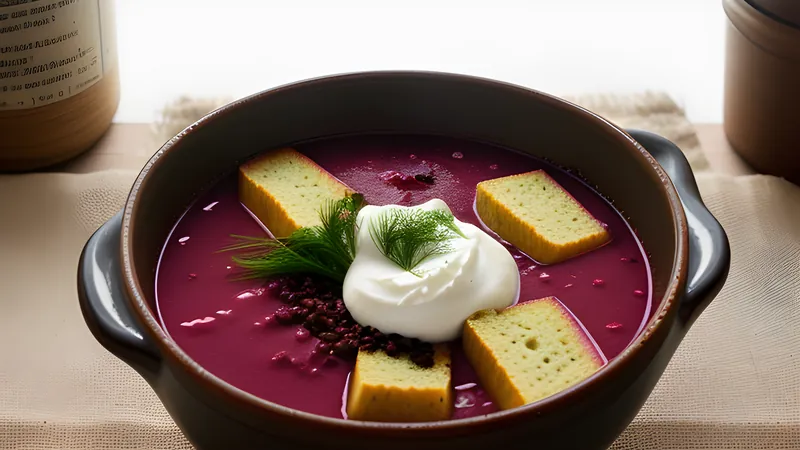
- Serve hot, each bowl topped with a generous spoon of soured cream and the remaining dill.
Where borscht comes from
Borscht is Ukrainian, and in July 2022 UNESCO recognised it as such, inscribing “the culture of Ukrainian borscht cooking” on its list of intangible cultural heritage in need of urgent safeguarding — a listing given added weight by the war, since the nomination was fast-tracked over concerns that the conflict threatened the tradition. The decision drew a sharp response from Russia, where borscht is also cooked and loved, and the row over whose soup it is became a small, telling front in a much larger argument about Ukrainian identity. UNESCO’s point was narrow and specific: the recognition was of the Ukrainian culture and community practice around borscht, not a claim that no one else may make a beetroot soup.
The dish is far older than the argument. The name descends from an old Slavic word for hogweed, a wild plant whose fermented stems soured the earliest versions of the soup long before beetroot took over as the defining ingredient. That sourness is the through-line of borscht’s whole history — the soup has always been about a bright, acidic edge, whether it came from fermented hogweed, from soured beetroot brine (kvas) left to ferment for the purpose, or, as here, from a practical splash of vinegar. There are hundreds of regional and household versions across Ukraine and the wider region: green borscht made with sorrel in spring, cold borscht served chilled and shocking-pink in summer, and the deep red winter version with beef, cabbage and beans that most people picture. This recipe is a straightforward red borscht, built to show off the roasted-beetroot trick.
Every Ukrainian family cooks borscht slightly differently, and the variations are held with real feeling — the balance of sweet and sour, whether there is beef in it, how much cabbage, whether beans go in, whether it is served with garlicky pampushky bread rolls on the side. That domestic depth is exactly what UNESCO meant to protect: a soup that is genuinely part of how a culture marks ordinary days and special ones.
Why roast the beetroot
Beetroot is unusually high in sugar for a vegetable — it is the same species farmed for sugar beet — and how you cook it decides whether that sweetness ends up in the beetroot or in the cooking water. Boil raw beetroot and a good share of its sugars and its water-soluble red pigment, betanin, bleed straight out into the pan. Roast it whole in its skin, and the skin acts as a seal: almost no moisture escapes, the natural sugars stay locked in the flesh and concentrate as some water evaporates, and gentle caramelisation at the edges adds a mellow, earthy depth that boiled beetroot never develops. Grate the roasted flesh into the soup near the end and you fold in that concentrated sweetness whole, which is why this version needs barely any added sugar to taste rounded.
Roasting whole in foil is also simply tidier than the alternative. Beetroot stains everything it touches, and peeling it raw is a bloody-fingered business; roast it first and the skins slip off in your hands once it has cooled, taking most of the mess with them.
Fixing the colour with acid
Here is the bit of kitchen chemistry that makes borscht look the part. Betanin, the pigment that makes beetroot red, is sensitive to heat and pH. Simmer beetroot for a long time in a neutral or slightly alkaline liquid and the pigment degrades, and the vivid red slides toward a dull brownish-purple — appetising is not the word. Acid stabilises it. A splash of vinegar (or lemon juice) near the end of cooking lowers the pH, protects the betanin, and visibly snaps the soup back to a bright, clear ruby in front of you. This is why you always add the beetroot late and the acid later still, and why borscht that has been boiled hard for an hour with the beetroot in from the start so often looks muddy. Add the vinegar a little at a time and watch the colour lift; it seasons the soup and fixes its looks in the same move.
The finish: dill and smetana
The cold spoon of soured cream on hot red soup is the image everyone knows, and it earns its place. Smetana, the cultured soured cream of the region, adds a cool, tangy richness that balances the earthy sweetness of the beetroot and the acidity of the vinegar, and as it melts into the surface it softens and rounds the whole bowl. Dill is the herb of the region and the right one here — grassy, faintly aniseed, stirred in at the very end so its fresh top-notes survive rather than cooking away. Add most of the dill off the heat and keep a little back to scatter on top with the cream.
The recipe
Roast whole beetroot in foil until tender, then peel and grate. Soften onion and carrot in oil, add tomato purée and garlic, then stock, potato, cabbage and bay, and simmer until the vegetables are tender. Stir in the grated roasted beetroot and simmer briefly. Season with vinegar, sugar and salt, adding the vinegar a little at a time until the colour brightens to ruby and the soup tastes lively. Stir in most of the dill off the heat, rest ten minutes, and serve with a spoon of soured cream and the rest of the dill.
Tips, substitutions and storage
For a heartier winter bowl, start with a proper beef broth: simmer 500g of beef shin in the stock for two hours before you build the soup, then shred the meat back in — this is how many Ukrainian households cook it, and it turns borscht into a full meal. A drained tin of cannellini or borlotti beans added with the beetroot is common and welcome. Keep it vegetarian by using a good vegetable stock; the roasted beetroot carries so much flavour that it stands up well without meat. Wear an apron and, if you mind stained hands, gloves for the grating — beetroot juice is tenacious.
Borscht genuinely improves overnight, when the flavours marry and the sourness mellows, and many cooks insist it is better on the second or third day. It keeps in the fridge for up to 4 days and freezes well for 3 months; add a fresh splash of vinegar and a little chopped dill when you reheat, to wake the colour and the herb back up. If you like beetroot’s earthy sweetness in less obvious places, chocolate and beetroot cake uses the same roasted-and-grated technique to keep a bake moist, and for another dill-and-soured-cream classic of the region, smoked salmon and dill blinis share borscht’s whole flavour palette. If you simply want to understand how far you can push a humble vegetable soup with patience and good technique, a slow French onion soup is built on the same lesson.
Related Content