Bò Kho: Vietnamese Beef and Lemongrass Stew
A fragrant beef stew of lemongrass, star anise and annatto, thickened by patience
Contents
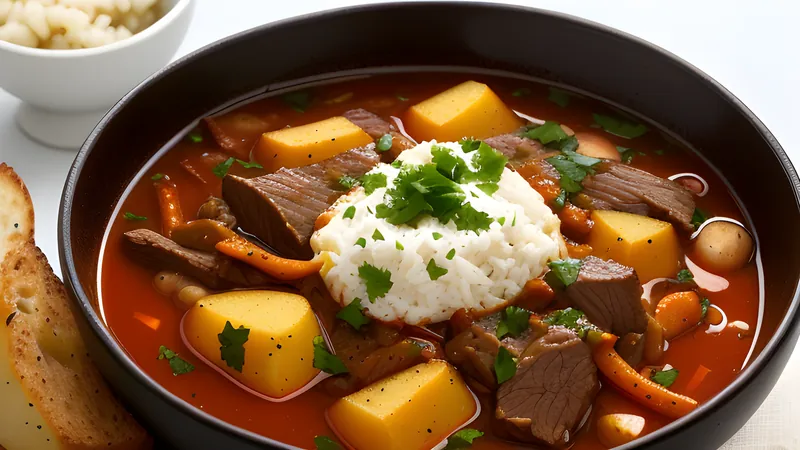
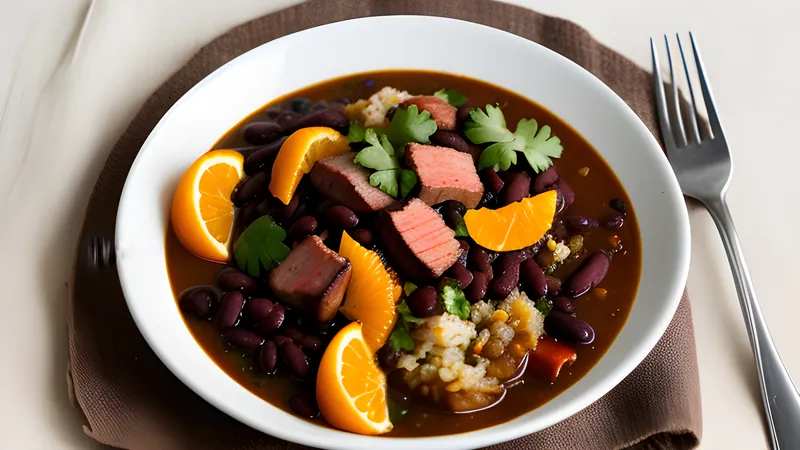
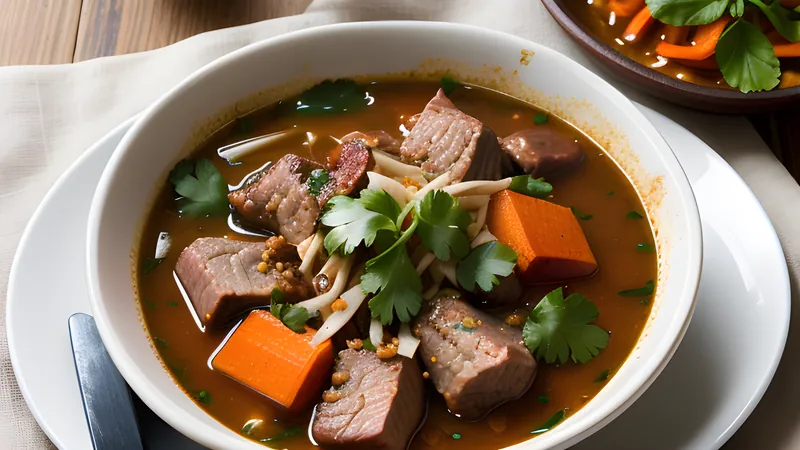
↓ Jump to recipeBò kho is what happens when a French pot-au-feu moves to Saigon and grows up eating lemongrass. It is a beef stew, unmistakably, with the long slow logic of a European braise, and yet one mouthful tells you exactly where you are: the perfume of lemongrass, the warm liquorice of star anise, the low hum of cinnamon, and that startling brick-red broth that looks like it should be spicy but is actually gentle and fragrant. It is a breakfast dish and a late-night dish and a Sunday dish, sold from steam carts and served in homes, and it is one of the most rewarding things you can braise on a cold afternoon.
Bò Kho: Vietnamese Beef and Lemongrass Stew
Ingredients
- 1.2 kg beef shin or brisket, cut into 4 cm cubes
- 3 stalks lemongrass, bruised, 2 left whole and 1 finely minced
- 1 large onion, halved
- 6 garlic cloves, minced
- 1 thumb (30 g) ginger, minced
- 3 tbsp fish sauce
- 1 tbsp soft brown sugar
- 2 tbsp annatto (achiote) seeds
- 3 tbsp neutral oil
- 2 tbsp tomato purée
- 2 star anise
- 1 cinnamon stick
- 2 bay leaves
- 1 tbsp curry powder
- 3 large carrots, cut into chunks
- 1 litre beef stock or water
- 1 small bunch Thai basil and coriander, to serve
- 1 fresh baguette, to serve
Method
- Marinate the beef with the minced lemongrass, garlic, ginger, fish sauce, brown sugar and curry powder for at least 30 minutes.
- Char the whole lemongrass stalks and halved onion directly over a flame or under the grill until blackened in patches.
- Warm the oil gently with the annatto seeds for 2 minutes until the oil turns deep red, then strain out and discard the seeds.
- Sear the marinated beef in the annatto oil in batches over high heat until well browned, then set aside.
- Fry the tomato purée in the same pot for 1 minute, add the star anise, cinnamon and bay, then return the beef.
- Add the charred lemongrass and onion and pour in the stock to just cover. Bring to a simmer.
- Cover and braise gently for 1 hour 30 minutes, then add the carrots and cook a further 40 minutes until the beef is tender and the broth is glossy.
- Fish out the aromatics, taste for salt and sugar, and serve with torn Thai basil, coriander and warm baguette.
A stew with two grandparents
The dish carries its own history in its ingredients. Beef itself arrived on the Vietnamese table in earnest during the French colonial period, and so did the technique of the long braise and the habit of mopping up sauce with a crisp baguette, which the Vietnamese made their own as bánh mì. But the seasonings are entirely Southeast Asian: fish sauce for salt and depth, lemongrass and ginger for perfume, and the whole spices that travelled the region’s trade routes. The word kho refers to a category of Vietnamese cooking in which food is simmered in seasoning until deeply flavoured, usually with fish sauce and often with a caramel; bò is beef. So bò kho is, at heart, beef simmered slowly until it gives everything up.
What makes it look so dramatic is annatto, the small rust-red seeds also called achiote. They carry almost no flavour, just a faint earthiness, but bloomed in warm oil they release a vivid orange-red colour that stains the whole broth. It is the same trick that colours much of the food of Latin America and the Philippines, and it is worth the ten minutes it takes.
My one small change
The classic bò kho is built on raw lemongrass and onion dropped straight into the pot. My twist is to char them first, blackening the whole lemongrass stalks and the halved onion over a naked flame or under a hot grill until they are patchy and smoky. That char adds a savoury, bonfire edge underneath the fragrance, the same way a charred onion transforms a bowl of pho. It costs you five minutes and a bit of washing up, and it makes the broth taste like it has been simmering since dawn.
Choosing your cut
Bo kho lives or dies on gelatine, so choose a cut that is rich in connective tissue and be suspicious of anything too lean. Beef shin is my first choice: it is threaded with silverskin and collagen that melt into the broth and give it that faintly sticky, spoon-coating body. Brisket works well too, especially the fattier point end, as does chuck or oxtail if you want something even more luxurious. Whatever you use, cut it into generous four-centimetre cubes, because smaller pieces overcook and shred before the broth has had time to develop. A little marbling is your friend here; a lean fillet would be a waste and would end up dry and stringy no matter how gently you cook it.
Building the pot
Marinate first. Cut the beef shin or brisket into generous cubes and toss it with minced lemongrass, garlic, ginger, fish sauce, sugar and a spoon of curry powder. Half an hour is enough; overnight is better if you have the fridge space. The curry powder is not a mistake or a shortcut, incidentally, but a genuine feature of southern Vietnamese bò kho, a legacy of the region’s Indian and Malay trade.
While that sits, make your annatto oil by warming the seeds gently in the neutral oil for a couple of minutes until it glows deep red, then strain the seeds out. Sear the marinated beef in that red oil in batches, letting each side take on real colour before you turn it. Crowd the pan and the meat steams; give it room and it browns, and browning is flavour you cannot get any other way.
Once the beef is out, fry the tomato purée in the pot for a minute to take off its raw edge, then add the whole spices and return the meat. In go the charred lemongrass and onion, and enough stock to just barely cover. Bring it to the gentlest simmer, put on the lid, and leave it alone for an hour and a half. Add the carrots for the final forty minutes so they hold their shape rather than dissolving. You are done when a spoon presses through the beef with no argument and the broth clings to it, faintly glossy from all that dissolved collagen.
What can go wrong
The most common problem is a thin, watery broth, and it almost always comes from adding too much liquid at the start. The beef and vegetables release their own moisture, so start with stock that just covers the meat and let evaporation and gelatine do the thickening. If it is still loose at the end, lift out the meat and reduce the broth hard for ten minutes.
The second issue is a broth that tastes flat despite all those spices. That is usually a fish sauce problem. Fish sauce is your salt here, and it needs adjusting at the end because its flavour changes as it cooks. Taste, add a splash more, add a pinch of sugar to balance, and the whole pot will suddenly come into focus. Finally, do not let it boil hard. A rolling boil turns beef shin into dry threads and clouds the broth; you want lazy bubbles breaking the surface, no more. If your hob will not go low enough to hold a bare simmer, move the whole covered pot into a 150C oven, where the even, all-round heat makes gentle braising almost foolproof.
Serving, keeping and turns on the theme
The default and best way to eat bò kho is with a torn-up crusty baguette for dunking, plus a fistful of Thai basil and coriander thrown over each bowl, a wedge of lime and a little dish of sliced red chilli for those who want it. The bread should be properly crusty so it holds up to the dunking without collapsing. It is equally happy poured over rice noodles for a more substantial meal, at which point it edges towards a cousin of Vietnamese crispy egg noodles, the crackle of the noodles catching the fragrant sauce.
It keeps in the fridge for four days and freezes for three months, and like most braises it is better the next day once the fat has set and can be lifted off and the spices have married. Make it ahead without a second thought.
For variations, a bird’s-eye chilli or two in the pot pushes it towards heat if you like; a stick of sugar cane simmered in the broth is a traditional southern touch that adds a clean, vegetal sweetness quite different from ordinary sugar. Some cooks add a splash of coconut water in place of some of the stock for a rounder, softer background, which suits the annatto beautifully. And if this style of slow, aromatic beef appeals, the same patience underpins a very different but equally rewarding pot of pappardelle with beef-shin ragù or a European red-wine short rib braise. The seasonings change; the collagen, and the reward for waiting, stay exactly the same.
Related Content