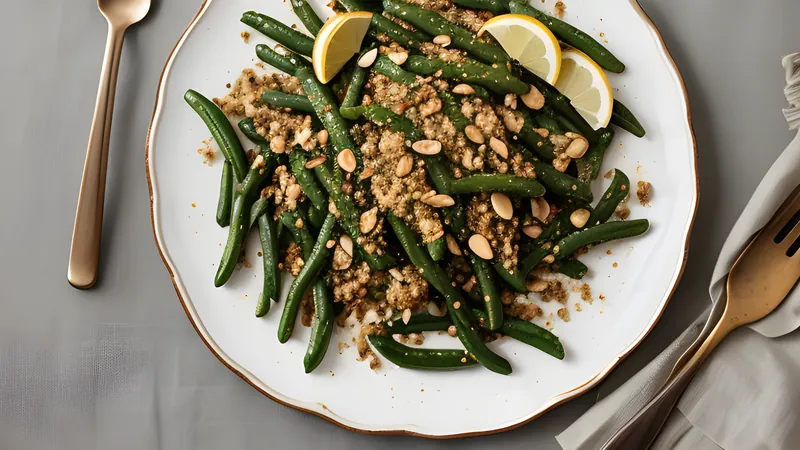
Blistered Green Beans with Garlic and Almond
Beans seared until they wrinkle, then slicked in brown butter and garlic
Contents
↓ Jump to recipeFor most of my cooking life I treated green beans the way everyone is taught to: plunged into furiously boiling salted water, timed to the minute, drained and buttered. That method makes a perfectly nice bean. But it also makes a slightly anonymous one, all clean grassy flavour and squeak, and it involves a big pan of water coming to the boil for what is meant to be a quick side. Blistering changes the whole proposition. You cook the beans hard and dry in a hot pan until their skins wrinkle and char in blackened patches, and that scorching turns them sweet, savoury and faintly smoky. It is the difference between a bean that fills the plate and a bean that people reach across the table for.
Where blistering came from
The technique of cooking beans in a screaming-hot, near-dry pan owes a large debt to Sichuan cooking, and specifically to gan bian si ji dou, dry-fried green beans, one of the great dishes of that repertoire. Traditionally the beans are deep-fried until their skins pucker and blister before being stir-fried with pork, preserved mustard greens and plenty of chilli and Sichuan pepper. That blistering step, driving off the beans’ surface moisture and letting the skins scorch, is what gives the dish its characteristic wrinkled texture and concentrated flavour, and it is the idea I have borrowed and simplified here for a Western table.
You do not need a wok or a vat of oil to get the effect. A heavy frying pan, a high heat and a little patience will blister beans beautifully in a spoonful of oil. What matters is heat and dryness: enough heat to char the skins before the insides overcook, and a dry enough pan that the beans sear rather than steam. Once you have that, the flavour transformation is dramatic, and it works on any green bean you can buy, from thin French haricots verts to fat runner beans sliced on the diagonal.
The clever bit: brown butter and toasted almonds
Haricots verts amandine, green beans with almonds and butter, is a French bistro classic, and this dish is its slightly wilder cousin. The refinement here is to take the butter past melting into beurre noisette, brown butter, letting the milk solids toast to a deep gold before the garlic and almonds go in. Browned butter carries a nutty, toffee-edged depth that plain butter never reaches, and it doubles down on the toasted flavour of the almonds. Fry the almonds directly in that brown butter and they pick up the same quality, so the whole dish tastes richer and more considered than the fifteen minutes it takes suggests. It is the same trick I lean on in my Tenderstem with garlic, chilli and lemon, where a knob of browned butter does the heavy lifting.
Blistered Green Beans with Garlic and Almond
Ingredients
- 400g green beans, topped but not tailed
- 1 tbsp neutral oil, such as rapeseed
- 40g unsalted butter
- 3 garlic cloves, thinly sliced
- 40g flaked almonds
- 0.5 tsp flaky sea salt
- 0.25 tsp black pepper
- 0.5 lemon, zest and juice
- A pinch of dried chilli flakes (optional)
Method
- Wash the beans and dry them thoroughly, as any water will steam them instead of blistering them.
- Heat the oil in a large frying pan over a high heat until almost smoking. Add the beans in a single layer and leave undisturbed for 2 minutes.
- Toss and continue cooking, turning every minute or so, for 5 to 6 minutes until the skins blister, wrinkle and char in patches. The beans should still have a slight bite.
- Turn the heat to medium, push the beans aside and add the butter. Let it foam and turn golden brown, about 45 seconds.
- Add the sliced garlic and flaked almonds to the butter and stir for 60 to 90 seconds until both are pale gold and fragrant.
- Toss everything together with the salt, pepper and chilli flakes if using.
- Off the heat, add the lemon zest and a squeeze of juice, toss once more and serve straight away.
Getting the blister, avoiding the steam
The two enemies of a good blister are water and crowding, and they are really the same enemy. Beans hold surface moisture from washing, and they release their own moisture as they cook; if the pan is too full or too cool, that moisture pools and the beans stew in it, coming out limp and grey-green with no colour. Dry the beans well, use a properly hot pan, and give them room. If your pan will not hold 400g in a rough single layer, do them in two batches, because a crowded pan is the single most common reason blistering fails.
The other judgement call is doneness. Blistered beans should keep a little bite, a fresh snap under the char. Cook them until the skins are wrinkled and spotted but the beans still have some spring; a full seven or eight minutes of high heat is usually plenty for standard beans, a little less for slim haricots verts. If you prefer them softer, add a tablespoon of water to the pan after blistering and cover for a minute to steam them through, then finish as written.
Substitutions, storage and variations
Flaked almonds are the classic, but toasted hazelnuts, pine nuts or chopped walnuts all work, and a scatter of sesame seeds takes the dish in a more Asian direction, especially if you swap the lemon for a splash of soy and rice vinegar. For a vegan version, drop the butter and use a good olive oil; you lose the browned-butter depth but gain a cleaner, greener dish, and a final scatter of nutritional yeast adds a savoury edge. A little grated Parmesan or a crumble of feta over the top turns it more substantial.
These are best eaten straight from the pan while the almonds are crisp and the beans still have their char, so I would not make them far ahead. If you need to get ahead, blister the beans, spread them on a tray to stop cooking, and finish with the butter, garlic and almonds just before serving. Leftovers keep a day in the fridge and are good cold, chopped through a salad or grain bowl. They belong on any table where you would serve my charred hispi cabbage with anchovy butter or a plate of roasted carrots with honey, cumin and yoghurt, and they sit especially well beside roast chicken, a piece of grilled fish or a Sunday leg of lamb.
Related Content