Blackberry and Brown Butter Clafoutis
A rustic French baked custard with autumn berries
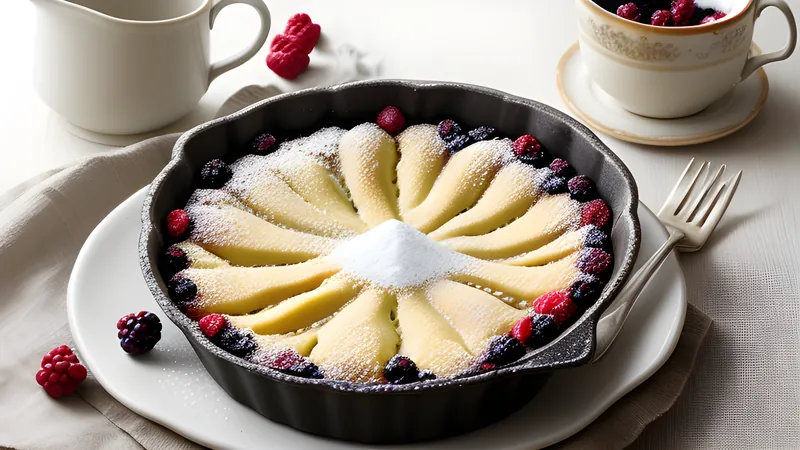
Blackberry and Brown Butter Clafoutis
Ingredients
- 60g unsalted butter, plus extra for the dish
- 300g blackberries
- 3 large eggs
- 100g caster sugar, plus 1 tbsp for the dish
- 70g plain flour
- 0.25 tsp fine salt
- 300ml whole milk
- 1 tsp vanilla extract
- Finely grated zest of 1 lemon
- Icing sugar, for dusting
Method
- Heat the oven to 180C fan and butter a 24cm round baking dish, then dust it with the tablespoon of caster sugar.
- Brown the 60g butter in a small pan until it foams, smells nutty and turns deep gold, then set aside to cool slightly.
- Scatter the blackberries evenly over the base of the dish.
- Whisk the eggs with the 100g caster sugar and salt until pale and slightly frothy.
- Whisk in the flour until smooth, then gradually whisk in the milk, vanilla, lemon zest and the warm brown butter.
- Pour the batter gently over the blackberries.
- Bake for 35 to 40 minutes until puffed, golden and just set with a slight wobble at the centre.
- Cool for 10 minutes, dust generously with icing sugar and serve warm.
Clafoutis is the pudding to make when you want something that feels both effortless and a little bit special. It is essentially a thick, sweet batter poured over fruit and baked until it sets into something between a custard, a flan and a baked pancake, with puffed golden edges and a soft, trembling middle. Traditionally it is made with cherries, but blackberries are wonderful here, their dark juice bleeding into the pale custard as they bake. The twist that gives it real character is brown butter, whisked into the batter so the whole thing carries a nutty, toasted warmth beneath the fruit.
1 A pudding from the French countryside
Clafoutis comes from the Limousin region in central France, where it has long been a homely, frugal dessert thrown together when cherries were in season. The name is thought to derive from an Occitan word meaning to fill or to fix in place, which describes exactly what the batter does: it holds the fruit suspended in a soft custard. In its homeland, purists insist the cherries are left unstoned, the argument being that the pits release a faint almond-like flavour during baking, though most home cooks sensibly stone them to spare their guests’ teeth.
When the fruit is anything other than cherries, the French sometimes call it a flaugnarde, but clafoutis is the name that has travelled, and it now welcomes plums, apricots, berries and pears with equal grace. Its appeal is its honesty: there is no pastry to make, no layers to assemble, just a batter, some fruit and a hot oven. It is a country dessert in the best sense, the kind of thing made quickly after a meal and eaten warm straight from the dish.
That humility is precisely why it has endured. A clafoutis asks for no special equipment and no real skill, only a whisk and an ovenproof dish, which makes it the ideal pudding for a weeknight when you fancy something homemade but have no appetite for fuss. Blackberries, gathered free from a hedgerow in late summer or pulled from the freezer in the depths of winter, suit it perfectly.
2 How it comes together
The method could hardly be simpler, but a couple of small steps lift it. First, butter the baking dish and dust it with sugar, which gives the edges a delicate, crisp, caramelised crust as they bake. Scatter the blackberries over the base so they are evenly distributed and you get fruit in every spoonful.
The batter is whisked together much like a pancake batter: eggs and sugar first, then flour, then milk loosened in gradually to avoid lumps. The brown butter goes in last, still warm, carrying its toasted aroma through the whole mixture, along with a little lemon zest to keep things bright. Pour it gently over the fruit so the berries stay roughly in place rather than all rushing to one side.
Then it is simply a matter of baking until the clafoutis puffs dramatically and turns golden, with a centre that still wobbles slightly when you nudge the dish. It will sink a little as it cools, which is entirely normal and part of its rustic charm. A heavy dusting of icing sugar over the warm top is the traditional finish.
3 Tips, make-ahead and variations
The most common worry is a clafoutis that is too wet or too dense. The batter should be thin, more like cream than cake batter, so resist the urge to add extra flour. Bake until the centre is just set; a clafoutis pulled too early stays sloppy, while one left too long turns rubbery, so watch for that gentle wobble as your cue.
Clafoutis is at its very best warm from the oven, when the contrast between crisp edge and soft centre is sharpest, so it is not really a make-ahead pudding. That said, you can mix the batter an hour ahead and keep it in the fridge, then pour and bake when you want it. Leftovers are pleasant cold the next day, rather like a baked custard tart without the pastry.
For variations, swap the blackberries for raspberries, halved plums, apricots or the traditional cherries, adjusting the bake slightly for juicier fruit. A splash of kirsch or brandy in the batter is lovely with stone fruit, and a pinch of ground almonds folded in deepens the nutty note. Serve it as it is, or with a spoonful of cold crème fraîche to play against the warm, fragrant custard.
Related Content