Black Forest Gateau, Reconsidered
Bitter chocolate sponge, kirsch-soaked sour cherries roasted first, and barely sweetened cream
Contents
↓ Jump to recipeThe Black Forest gateau has an image problem, and it is not really the cake’s fault. Most of us met it as a sad wedge from a chilled cabinet in the 1970s and 80s: fluorescent glacé cherries, aerosol cream, a sponge that tasted of not much and a sweetness that flattened everything. That version deserves its bad reputation. The actual cake it was a bad photocopy of — Schwarzwälder Kirschtorte, from the Black Forest region of south-western Germany — is a genuinely great thing, and it is worth rescuing. This is my attempt to do exactly that.
The rescue is not complicated. It comes down to three moves: a properly dark, faintly bitter chocolate sponge instead of a pale sweet one; real sour cherries and real kirsch instead of the neon and the syrup; and cream that is barely sweetened, whipped soft, so it reads as cool relief rather than more sugar. Do those three things and the gateau stops being a punchline and becomes the sort of cake people go quiet over.
Black Forest Gateau, Reconsidered
Ingredients
- 200g plain flour
- 50g cocoa powder (Dutch-processed)
- 1 1/2 tsp bicarbonate of soda
- 1/2 tsp fine salt
- 250g caster sugar
- 2 large eggs
- 120ml neutral oil
- 250ml buttermilk
- 1 tsp vanilla bean paste
- 150ml hot strong coffee
- 600g frozen or jarred sour (morello) cherries, drained, juice reserved
- 80g caster sugar, for the cherries
- 5 tbsp kirsch
- 1 tbsp cornflour
- 600ml double cream, very cold
- 2 tbsp icing sugar
- 100g dark chocolate (70%), for shavings
Method
- Heat the oven to 160C fan. Grease and line two 20cm round tins. Whisk the flour, cocoa, bicarb, salt and 250g sugar in a large bowl.
- Whisk the eggs, oil, buttermilk and vanilla together, pour into the dry ingredients and mix until smooth. Stir in the hot coffee; the batter will be thin. Divide between the tins.
- Bake for 30-35 minutes until a skewer comes out clean. Cool 10 minutes in the tins, then turn out and cool completely.
- Roast the cherries: spread the drained cherries in a baking dish with the 80g sugar and 2 tbsp of the kirsch. Roast at 200C for 15-20 minutes until they darken and their juices thicken and caramelise at the edges. Cool.
- Make the cherry syrup: simmer 150ml of the reserved cherry juice with the cornflour until thickened and glossy, then stir in the remaining 3 tbsp kirsch. Cool. This is both your soaking syrup and the glaze between layers.
- Slice each cake in half horizontally to give four thin layers. Brush every cut face generously with the kirsch cherry syrup and let it soak in.
- Whip the cold cream with the icing sugar to soft, spoonable peaks; do not take it to stiff or it will grain.
- Layer up: cake, a scrape of syrup, a layer of cream, a scatter of roasted cherries, repeat. Keep a few cherries back for the top. Coat the outside in a thin layer of cream.
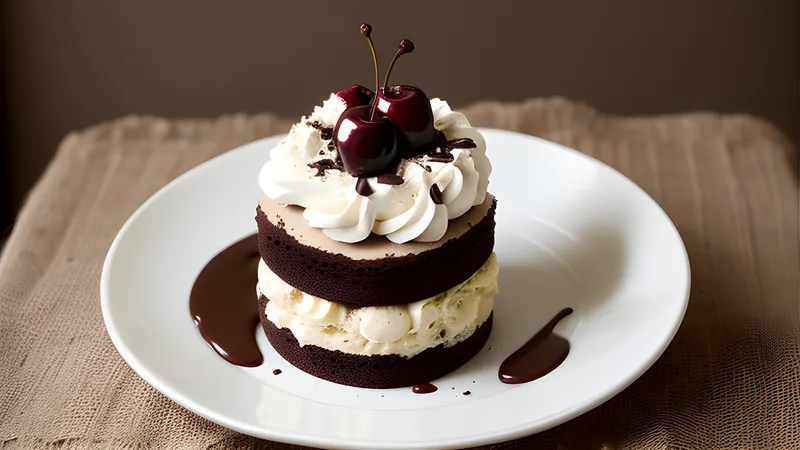
- Finish with rough dark chocolate shavings pressed onto the sides and piled on top, and crown with the reserved roasted cherries. Chill for at least an hour before slicing.
What the original actually is
Schwarzwälder Kirschtorte is a protected part of German baking heritage, and the clue to its soul is in the name: Kirsch, the clear, fierce cherry brandy distilled in the Black Forest from the region’s morello cherries. The cake is a showcase for that spirit as much as for chocolate. Traditional versions layer chocolate sponge with kirsch-soaked sour cherries and cream, and German law is serious enough about it that a cake sold under the name in Germany must, in some states, contain a minimum amount of kirsch to qualify. The lurid glacé cherry has no place in it; the cherries should be dark, tart Sauerkirschen, and the alcohol should be assertive enough to sting pleasantly.
The cake most likely took its modern form in the early twentieth century — a confectioner named Josef Keller is often credited with an influential 1915 version — and it spread across Germany and Austria as a café classic before crossing the Channel and being thoroughly mistranslated. Reunited with its proper ingredients, it belongs in the same company as the other great café tortes, the Sachertorte with apricot and dark chocolate glaze and the honey-layered Russian honey cake (medovik) with sour cream layers: serious, spirit-scented, built for slow eating with strong coffee.
The clever bit: roast the cherries first
Here is my one real intervention, and it is the thing that lifts this above a merely faithful reconstruction. Before the sour cherries go anywhere near the cake, I roast them hot with a little sugar and a splash of kirsch until they darken, slump and their juices caramelise at the edges.
Cherries simmered in syrup, the usual method, stay bright, wet and one-dimensionally sweet-sour. Roasting drives off water and concentrates them, pushing the flavour towards something jammy, winey and almost savoury, with a faint bittering at the edges where the sugars catch. That intensity is what stands up to a dark sponge and cuts through the cream, and it is what stops the finished cake sliding into sweetness. It is the same principle as charring fruit on a grill for grilled peaches with amaretti and mascarpone: heat concentrates and complicates fruit sugar, and a cake full of roasted cherries has a depth a cake full of poached ones simply cannot reach. Use frozen or jarred morello cherries, which are far more reliable than fresh for this and available all year; drain them well and keep the juice, because it becomes your soaking syrup.
The sponge: dark, moist and slightly bitter
I have abandoned the traditional dry, whisked genoise in favour of an oil-and-buttermilk chocolate cake, and I make no apology for it. A genoise soaked in kirsch syrup is authentic, but it is also easy to get wrong and prone to dryness. An oil-based sponge is reliably moist, keeps well, and takes the cherry syrup beautifully without turning to sludge.
Two things make the sponge taste properly of chocolate. The first is Dutch-processed cocoa, which is darker, mellower and less acidic than natural cocoa, giving a deeper colour and a rounder flavour. The second is the hot coffee stirred into the batter at the end. As with the espresso in a Sachertorte, the coffee is there to amplify the chocolate rather than to be tasted; it blooms the cocoa and pushes the whole sponge towards bitter-dark. The batter will look alarmingly thin once the coffee goes in, and that is correct; thin batter is what gives you a tender, moist crumb. A touch less sugar than you might expect keeps the sponge on the bitter side of the ledger, which is exactly where it needs to sit to balance the cream and cherries.
Assembly, and the cream that matters
Slice each cooled cake in half to give four thin layers, and brush every cut surface generously with the thickened kirsch and cherry-juice syrup. This is the step that carries the alcohol and the moisture through the whole cake, so be generous; the sponge should be damp and fragrant right through, so brush it well.
The cream is the last place the old version went wrong. Whip your double cream cold, with only a modest amount of icing sugar, and stop at soft, spoonable peaks. Overwhipped cream turns grainy and eventually to butter, and the moment cream goes past soft peaks it also starts to taste heavy. Soft, loose cream reads as coolness and relief against the dark sponge and the intense cherries, and it is the element that makes a slice feel refreshing rather than rich. Build the cake in the classic way — sponge, syrup, cream, roasted cherries, and up again — keeping a few of the best cherries back for the top.
Finishing, storage and variations
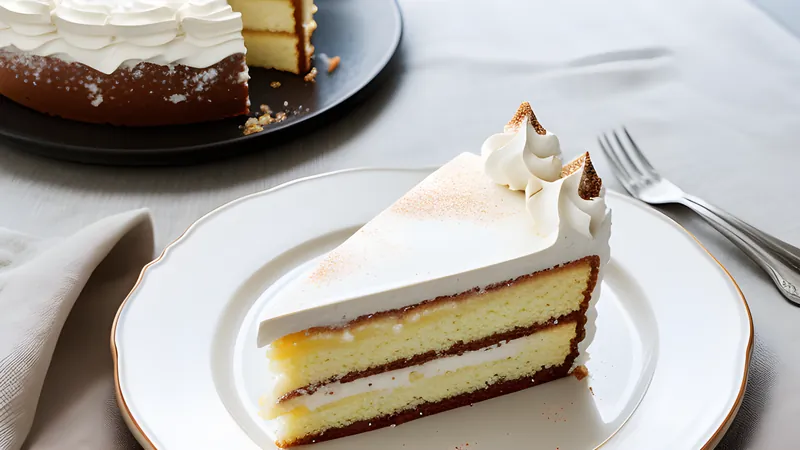
For the outside, a thin, slightly rough coat of cream and a generous quantity of dark chocolate shavings is the traditional look, and it forgives an imperfect crumb coat, which is a mercy. Make the shavings by dragging a vegetable peeler down the side of a slightly warm block of 70% chocolate; keep them coarse and irregular. Press them onto the sides, pile more on top, and crown the cake with the reserved roasted cherries. If you want the full retro flourish, twelve neat rosettes of cream around the top, each holding a cherry, mark the slices for you.
The cake is better after a few hours in the fridge, and genuinely excellent the next day, once the syrup has fully penetrated the sponge and the flavours have married. It keeps for three days, covered, in the fridge; bring slices back to cool room temperature before serving so the cream is soft and the sponge is not fridge-cold and firm.
For a non-alcoholic version, replace the kirsch with a little more cherry juice sharpened with a squeeze of lemon and a drop of almond extract, which gives a comparable perfume, though it will lack the spirit’s warmth. For a more adult one, a small glass of kirsch alongside each slice is the way they do it at home in the Black Forest, and I am not inclined to argue with them.
Related Content