Bircher Muesli with Apple, Toasted Hazelnuts, and Honey
Overnight oats, the original Swiss way
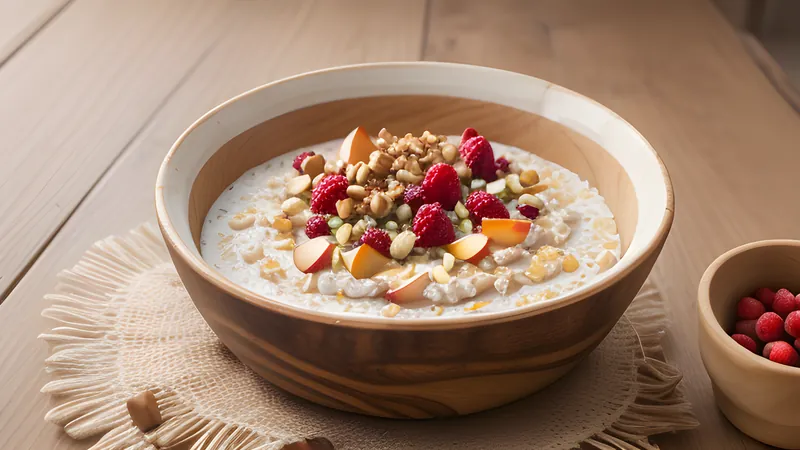
Long before overnight oats became a hashtag, there was Bircher muesli: cool, creamy, apple-scented and quietly civilised. It is the breakfast I make on a Sunday night when I want my Monday self to feel looked after, and the version I keep coming back to is built on a simple idea: not all the apple goes in the night before. Some is grated in to soften and sweeten the oats as they soak, but a generous handful of fresh, crisp apple is added in the morning, along with hazelnuts toasted until they smell of biscuits. The contrast between the silky soaked oats and the bright, crunchy toppings is the whole point, and it is what lifts this far above a sad tub of plain soaked oats.
Bircher Muesli with Apple, Toasted Hazelnuts, and Honey
Ingredients
- 200g rolled porridge oats
- 300ml whole milk
- 150ml apple juice
- 100g natural yoghurt, plus extra to serve
- 2 sweet apples, such as Gala or Braeburn
- 1 tbsp runny honey, plus extra to drizzle
- 0.5 tsp ground cinnamon
- 60g blanched hazelnuts
- 1 lemon, zest and a squeeze of juice
- Pinch of salt
- Fresh berries, to serve
Method
- Combine the oats, milk, apple juice, yoghurt, honey, cinnamon, lemon zest and a pinch of salt in a large bowl and stir well.
- Coarsely grate one of the apples, including the skin, and stir it through with a squeeze of lemon juice to stop it browning.
- Cover and refrigerate overnight, or for at least 4 hours, so the oats soften and swell.
- Toast the hazelnuts in a dry pan over a medium heat for 4 to 5 minutes until golden and fragrant, then roughly chop.
- In the morning, loosen the muesli with a splash more milk if it has thickened too much, and stir to combine.
- Grate or thinly slice the second apple and fold half through the muesli.
- Spoon into bowls, top with the remaining apple, the toasted hazelnuts, a spoonful of yoghurt and a handful of berries.
- Finish with an extra drizzle of honey and serve.
3 The Story
Bircher muesli is one of those dishes with a genuinely surprising origin. It was devised around 1900 by a Swiss physician named Maximilian Bircher-Benner, who ran a sanatorium in Zurich and was an early evangelist for raw food and what we would now call a whole-food diet. The story goes that he encountered a similar dish eaten by shepherds in the Alps and adapted it for his patients, serving it not as a breakfast but as a starter before every meal. His original was actually heavier on apple than oats, with the grain softened in a little water and lemon juice, then enriched with sweetened condensed milk and grated nuts. The cereal-forward bowl we know today is a later, more breakfast-friendly evolution.
What has survived intact is the central technique of soaking, and it is worth understanding why it matters. Rolled oats are essentially raw when they come out of the packet, and left to sit overnight in liquid they soften, swell and turn creamy without any cooking. The result is gentler and lighter than hot porridge, refreshing rather than stodgy, which is exactly what you want on a warm morning. The apple juice and lemon keep things bright, while the yoghurt brings a welcome tang and a little body.
The grated apple does double duty. The portion stirred in before soaking practically dissolves overnight, releasing its sweetness and pectin into the mixture so the whole bowl tastes faintly of apple without any added sugar. The portion added fresh in the morning is there for texture and that clean, juicy crunch. Use a sweet, crisp eating apple rather than a soft or floury one; Gala, Braeburn and Pink Lady all work beautifully, and you want to leave the skin on for colour and bite.
My one small twist, and the thing I would never skip, is toasting the hazelnuts. Raw nuts scattered on top are fine, but a few minutes in a dry pan transforms them entirely, deepening their flavour into something rich and almost chocolatey and giving them an audible snap. Watch them closely, because they go from golden to bitter in a matter of seconds, and toss them often so they colour evenly. Chopping them while still warm releases even more of their aroma. If you can find skin-on hazelnuts, toasting them in the oven and rubbing off the papery skins in a clean tea towel is a small faff that rewards you handsomely.
A word on the soaking liquid, because it shapes the final texture more than people expect. I use a mixture of milk and apple juice rather than milk alone, which keeps the muesli from tasting heavy and reinforces that orchard sweetness without any refined sugar. If you like a looser, more pourable bowl, hold back some of the liquid and add it in the morning; if you prefer a thick, almost set spoonful you can scoop and stand a spoon up in, soak it as written and resist the urge to thin it. The oats will keep drinking up moisture for the first day or two in the fridge, so a splash more milk to loosen is almost always welcome by the second morning.
This recipe is really more of a template than a fixed formula, and that is its quiet genius. Swap the apple juice for cloudy pear juice; use a mix of oats and a little barley or buckwheat for texture; stir through dried fruit such as sultanas or chopped apricots to soak and plump alongside the oats. In summer I pile on raspberries and a few toasted flaked almonds; in autumn I lean into the apple and add a pinch more cinnamon and some chopped toasted walnuts. For a dairy-free version, oat milk and a coconut yoghurt work seamlessly, and maple syrup stands in nicely for the honey. Make a big bowl on Sunday, keep it covered in the fridge, and you have looked after your weekday mornings before they have even begun.
Related Content