Bigos: Poland's Hunter's Stew, Better on Day Three
Sauerkraut, fresh cabbage, three meats and dried mushrooms, simmered slow and reheated for days
Contents
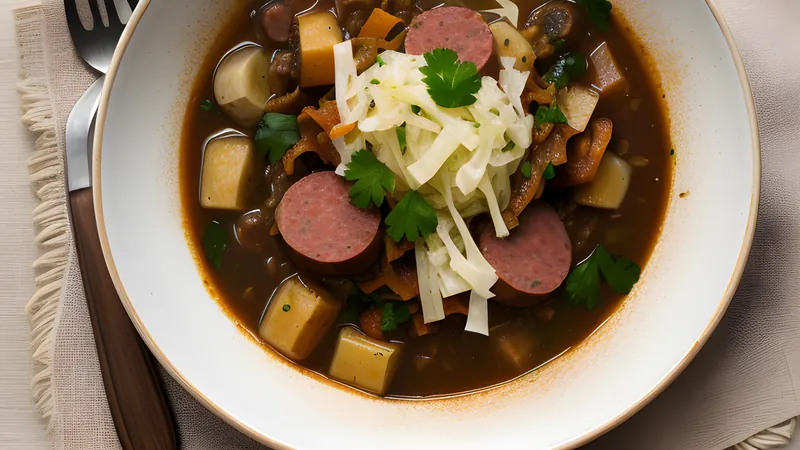
↓ Jump to recipeBigos is the dish Poles argue about with more conviction than almost anything else in the national repertoire, and the argument is never really about the recipe. Everyone agrees on the basic shape — sauerkraut, cabbage, more than one kind of meat, mushrooms, a long simmer — and then defends their family’s specific combination as the only correct one, usually while insisting the version made a few days ago and reheated is better than anything served fresh. That last part, unusually for a food myth, happens to be true, and it’s the reason bigos exists in the form it does.
I made three batches of this back to back to test the reheating claim properly, tasting a bowl on day one, day two and day three from the same pot. By day three the difference wasn’t subtle. The cabbage had softened further, the meats had given up more of themselves into the liquid, and everything tasted like it had settled into a single flavour rather than a collection of ingredients cooked in the same pot. This is a stew designed around the idea that time is an ingredient, and treating it as a same-day dinner misses most of the point.
Bigos: Poland's Hunter's Stew, Better on Day Three
Ingredients
- 25g dried porcini mushrooms
- 500g sauerkraut, drained, liquid reserved
- 500g white cabbage, shredded
- 300g pork shoulder, cut into 2cm chunks
- 300g smoked kielbasa, sliced into rounds
- 150g smoked streaky bacon, diced
- 2 large onions, sliced
- 3 garlic cloves, sliced
- 150g pitted prunes, roughly chopped (the twist)
- 2 bay leaves
- 6 juniper berries, lightly crushed
- 1 tsp caraway seeds
- 2 tbsp tomato paste
- 250ml dry red wine
- 500ml beef or chicken stock
- Salt and black pepper, to taste
- 2 tbsp lard or oil, for browning
Method
- Soak the dried porcini in 250ml just-boiled water for 20 minutes. Lift out and chop, and keep the soaking liquid, straining it through a fine sieve or muslin to remove grit.
- Render the bacon in a large, heavy pot over medium heat until crisp. Lift out with a slotted spoon and set aside.
- Brown the pork shoulder in the bacon fat, in batches, until deeply coloured on all sides. Set aside with the bacon.
- Add the lard if needed, then soften the onions and garlic for 8-10 minutes until translucent.
- Stir in the tomato paste and cook for 1 minute, then add the wine and let it bubble for 2 minutes, scraping up anything stuck to the base of the pot.
- Return the bacon and pork to the pot. Add the sauerkraut with a splash of its liquid, the shredded fresh cabbage, chopped porcini and their strained soaking liquid, bay leaves, juniper, caraway and stock.
- Bring to a simmer, cover, and cook gently for 1.5 hours, stirring occasionally, until the pork is tender.
- Stir in the sliced kielbasa and chopped prunes and simmer uncovered for a further 45 minutes to 1 hour, until the liquid has reduced and the stew looks glossy rather than soupy.
- Season with salt and pepper — go easy on salt until the end, since the sauerkraut and kielbasa both carry a good amount already.
- Cool, then refrigerate for at least a day, ideally two, before reheating gently to serve.
Hunter’s stew, and what that actually meant
Bigos translates loosely to “hunter’s stew,” and the name reflects its origin as food carried and reheated over several days by Polish hunting parties in the forests of the eastern reaches of the old Polish-Lithuanian Commonwealth, sometime around the fourteenth or fifteenth century by most accounts, though the dish as we’d recognise it today likely solidified later. A pot of meat, cabbage and whatever else was on hand would travel with the hunters, get reheated each evening over a fire, and pick up new scraps and additions along the way — a bit more meat from the day’s hunt, whatever mushrooms had been foraged, more cabbage if it was available.
That practical origin explains bigos’s defining trait directly: it was never meant to be a single-cook, single-serving dish. It was a pot that lived for days, improved by every reheating, and the modern version — made deliberately over one long afternoon rather than accumulated over a week in the woods — still carries that logic in how it’s meant to be eaten.
By the nineteenth century bigos had moved from hunting camps into Polish noble and peasant kitchens alike, appearing in early Polish cookbooks and eventually becoming the dish most associated with Christmas Eve, New Year and other long winter gatherings, where a big pot made in advance and reheated over several days of visiting relatives was, and still is, entirely the point.
Sauerkraut and fresh cabbage, together
Recipes vary enormously on ratios, but using both sauerkraut and fresh white cabbage rather than only one gives you two things a single cabbage can’t: sauerkraut brings tang, funk and a meaty depth from its own fermentation, while fresh cabbage sweetens as it cooks down and adds bulk without turning the whole pot sour. Using only sauerkraut makes an aggressively tangy stew that some traditionalists prefer, but the fresh cabbage balance is the more common approach and, to my palate, the better-rounded one for a first attempt. Drain the sauerkraut but keep its liquid — a splash goes back in for acidity, and you can adjust the final tang up or down by how much of that reserved liquid you add near the end.
Building the meat properly
Three meats, each doing a different job, is traditional and worth keeping rather than simplifying down to one. Pork shoulder, browned hard before it goes in, gives the stew its base of meaty richness and stays succulent through the long simmer thanks to its fat content. Smoked bacon renders out fat used to brown everything else and leaves crisp little pieces that stay distinct in the finished stew. Kielbasa goes in later than the pork, since it’s already cooked and smoked and only needs warming through and a chance to flavour the liquid around it — added too early, it turns rubbery and loses the snap that’s a large part of its appeal.
Dried porcini, soaked and chopped, adds a savoury depth that fresh mushrooms can’t quite replicate; the soaking liquid, strained of grit and added to the pot, is doing as much flavour work as the mushrooms themselves and shouldn’t be poured away.
The clever bit: prunes stirred in with the kielbasa
Some Polish families already add prunes to bigos, so this isn’t an invention, but it’s far from universal and it’s the addition that most reliably surprises people who’ve only had a plainer version. Chopped prunes, stirred in during the final hour alongside the kielbasa, break down slightly as they cook and lend a dark, jammy sweetness that plays directly against the sauerkraut’s sourness and the smoked meats’ salt. The effect is closer to what dried fruit does in a good tagine than anything typically associated with Eastern European cooking, and it rounds the whole stew out in a way that’s hard to place on a first bite. Don’t skip it thinking it’s optional flourish — it’s doing real structural work against the sourness of the kraut.
Why the third day is the good day
The science here is straightforward and applies to most long-simmered stews, but it’s especially pronounced in bigos because of how much is happening in the pot. Overnight in the fridge, the fats redistribute and firm up, the cabbage continues to soften and release liquid, and the flavours from the meats, mushrooms, prunes and spices — which start out sitting somewhat separately in the broth right after cooking — have time to properly diffuse through the whole pot rather than staying near where they were added. Reheat gently, never at a hard boil, stirring occasionally so nothing catches on the base.
Make bigos at least a day, ideally two, before you plan to serve it. It keeps well in the fridge for up to a week and freezes excellently for up to three months, which fits the original logic of the dish rather neatly — a pot made once, portioned out over several sittings, tasting better each time it comes back to the stove.
What goes wrong, and why
A thin, watery bigos almost always means the final uncovered simmer got cut short. Once the kielbasa and prunes go in, the pot needs the full 45 minutes to an hour uncovered for enough liquid to evaporate and the whole stew to turn glossy rather than soupy — pulling it off the heat early because it “looks about right” leaves a stew that separates into broth and solids again once it’s chilled and reheated. If a batch turns out this way, simply simmer it uncovered again the next day rather than adding thickener, since the extra time does exactly the reduction it missed the first time round.
The opposite problem — a stew that catches and scorches on the base during the long simmer — comes from too high a heat rather than too little liquid. Sauerkraut and cabbage release sugars as they break down, and those sugars will stick and burn on a pot bottom kept at anything more than a gentle, barely-there simmer. A heavy-based pot helps considerably; a thin one needs a diffuser or a lower flame than feels intuitive.
An overly sour finished pot usually traces back to sauerkraut with a very assertive brine added without tasting as you go. Because that sourness mellows and integrates over the following days in the fridge, it’s worth holding back a little of the reserved sauerkraut liquid at the cooking stage and adding it only at the very end, once you can taste how sharp the stew already is — you can always add more sourness on day two, but you cannot easily remove it once it’s in.
Variations across Polish kitchens
Game meat is the most traditional variation and the one that gives bigos its hunter’s-stew name the most literal meaning: venison, wild boar or even hare, browned the same way as the pork shoulder, in a mix with the smoked meats rather than as a full replacement, since game alone can dry out over the long simmer without the pork’s fat content to carry it. Some regions add a splash of Madeira or a spoonful of honey alongside the tomato paste for extra depth, echoing the prune’s sweetness from a different angle; use one or the other rather than both, since bigos should stay a savoury dish with sweetness at the edges, not a dessert-adjacent stew. A bay-leaf-and-allspice combination, more common in some regional versions than the juniper and caraway used here, is worth trying as a straight swap if you have allspice berries on hand and want a slightly warmer, more clove-like background note.
Vegetarian versions do exist, built on a mix of mushrooms — porcini, chestnut and a meaty variety like king oyster, torn into chunks and browned hard before it goes in — with smoked paprika standing in for some of the flavour the bacon and kielbasa would otherwise carry. It won’t taste identical, but the sauerkraut, cabbage and long simmer still do most of the dish’s real work, and a well-seasoned mushroom version holds its own at a table where not everyone eats meat.
Freezing, portioning and reheating properly
Bigos freezes about as well as any stew can, and portioning it into individual containers before freezing, rather than one large block, means you can pull out exactly one day’s serving and let the rest keep improving in the fridge undisturbed. Thaw overnight in the fridge rather than at room temperature, then reheat slowly in a pot over low heat with a splash of water or stock if it looks tight — sauerkraut-based stews thicken considerably as they chill, and a little extra liquid brings the texture back without diluting the flavour built up over the previous days. Avoid the microwave for reheating if possible; the uneven heat tends to overcook the kielbasa slices before the rest of the pot is properly hot.
Serving
Serve bigos in deep bowls with dark rye bread for mopping up the liquid, and a glass of something dry to cut the richness — a cold beer or a glass of the same red wine used in the pot both work. If you’re building a wider Polish spread, it sits well alongside Potato and Cheese Pierogi with Browned-Butter Onions, which brings a soft, comforting counterpoint to bigos’s meatier depth. For a stew from a neighbouring culinary tradition that shares the same instinct for long braising and rich, meaty depth, Beef Stroganoff with Smoked Paprika and Cornichons makes a good comparison, though it’s built for a single sitting rather than bigos’s patient, multi-day life in the fridge.
Related Content