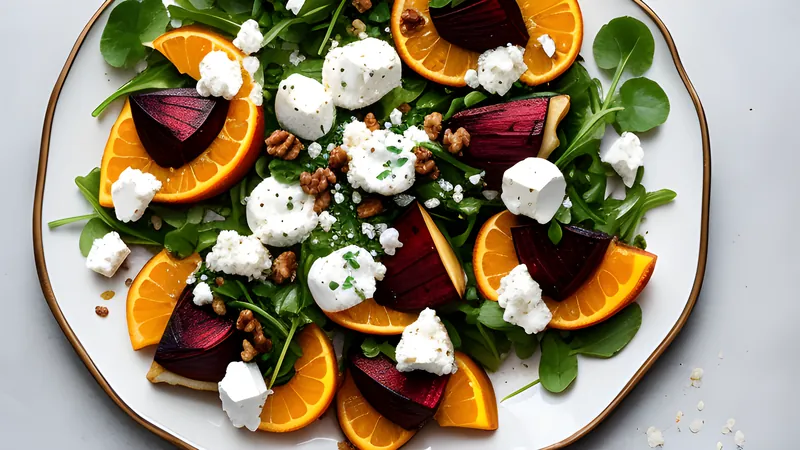
Beetroot, Goat's Cheese and Candied Walnut
Roasted beets, tangy cheese and walnuts candied with rosemary and black pepper
Contents
↓ Jump to recipeBeetroot, goat’s cheese and walnuts is a dinner-party salad that has been done to death, usually with vacuum-packed beets and bought candied nuts that taste of nothing but sugar. Roasting the beetroot yourself concentrates its earthy sweetness in a way boiling never will, and candying the walnuts in a hot pan takes minutes. My twist lives in those nuts: a hit of finely chopped rosemary, cracked black pepper and flaky salt stirred into the caramel at the last second, so the sweetness arrives with a savoury, resinous edge that stops the salad reading like a pudding.
Beetroot, Goat's Cheese and Candied Walnut
Ingredients
- 600g raw beetroot (a mix of red and golden if you can), scrubbed
- 2 tbsp olive oil, for roasting
- 2 sprigs thyme
- Flaky salt and black pepper
- 100g walnut halves
- 3 tbsp caster sugar
- 1 small sprig rosemary, needles very finely chopped
- 1/4 tsp coarsely cracked black pepper, for the walnuts
- 1/2 tsp flaky salt, for the walnuts
- 120g soft rindless goat's cheese (chèvre)
- 100g mixed peppery leaves (rocket, watercress, baby chard)
- Zest and juice of 1 small orange
- 1 tbsp sherry vinegar
- 3 tbsp extra-virgin olive oil, for the dressing
- 1 tsp runny honey
- 1 tsp Dijon mustard
Method
- Heat the oven to 200°C fan. Wrap the scrubbed beetroot loosely in a foil parcel with the thyme, 2 tbsp olive oil and a good pinch of salt. Roast for 60 to 75 minutes until a knife slides into the centre with no resistance.
- Once cool enough to handle, rub the skins off with kitchen paper (wear gloves for the red ones) and cut into wedges. Keep red and golden beets in separate bowls so the colours don't bleed.
- For the walnuts, warm a dry non-stick pan over a medium heat, add the walnuts and sugar and stir constantly. The sugar will clump, then melt into an amber caramel that coats the nuts, 4 to 6 minutes.
- Off the heat, quickly stir in the chopped rosemary, cracked pepper and 1/2 tsp flaky salt, then tip onto a lined tray and spread apart. Leave to set hard, then break into clusters.
- Whisk the orange zest and juice, sherry vinegar, olive oil, honey and mustard with a pinch of salt to a thick dressing.
- Toss the beetroot wedges (reds and golds separately) with a spoonful of dressing each. Dress the leaves lightly with more.
- Spread the leaves on a platter, arrange the beetroot over them, dot with torn pieces of goat's cheese, scatter the candied walnuts and finish with flaky salt and a last drizzle of dressing.
The Story
The pairing of beetroot with a soft, acidic cheese and a bitter nut is old and logical, and it turns up across the whole of temperate Europe wherever all three are grown together. Beetroot is a cool-climate root that stores well through winter, walnuts drop in autumn and keep for months, and fresh goat’s cheese is at its most plentiful in spring and summer when the does are in milk, so a cook working through a larder finds these ingredients overlapping for a good stretch of the year. The particular arrangement most of us recognise, warm or room-temperature beets against cold cheese and sweet nuts on peppery leaves, is a product of bistro cooking that spread widely through the 1980s and 1990s and never quite left.
Beetroot’s flavour comes chiefly from geosmin, the same earthy compound that gives freshly turned soil and rain-on-dry-ground its smell, and from a high natural sugar content that makes it the sweetest of all the common root vegetables. That combination of earth and sugar is what a good beetroot salad plays with: the sweetness wants an acid to cut it and the earthiness wants a sharp, tangy partner, which is exactly what a fresh goat’s cheese and a citrus dressing provide. Golden beetroot, if you can find it, is milder and less earthy than the red, with a cleaner sweetness, and mixing the two gives the plate both a range of flavour and a proper visual lift.
Why roasting beats boiling
Boiled beetroot is fine, but a good deal of its sugar and colour leaches into the water and goes down the sink, leaving the roots watery and faintly bland. Roasting in a foil parcel does the opposite: it traps the beetroot’s own steam so it cooks through gently while none of its flavour escapes, and the trapped heat concentrates the sugars as the moisture reduces. The result is denser, sweeter and more intensely coloured, with a texture closer to a firm roasted carrot than the soft, wet slither of a boiled beet.
Wrapping the beets whole and unpeeled is the key. The skin protects the flesh, keeps every drop of juice inside, and then slips off easily once the beets are cooked and cooled, saving you the messy job of peeling raw beetroot. Test them with a thin knife rather than a fork; they are ready when the blade meets no resistance at the centre. Larger beets can take well over an hour, so start them early and let them cool in their foil, where they will carry on steaming.
The candied walnuts
Candying nuts in a dry pan, the French pralin method, is quicker and cleaner than any wet-caramel or oven approach, and it gives you complete control. Sugar and nuts go into the pan together over a medium heat, and with constant stirring the sugar first crystallises into a sandy coating, then melts into a clear amber caramel that clings to the nuts. The moment it turns golden it is done, and it must come off the heat at once, because caramel goes from perfect to acrid in seconds.
The savoury additions go in off the heat, when the caramel is still molten but no longer cooking. Rosemary against sugar sounds odd until you taste it: the herb’s pine-resin oils are drawn out by the warmth and read as almost floral against the sweetness, while the cracked pepper adds a slow heat and the flaky salt keeps the whole thing from cloying. Spread the nuts out fast on a lined tray before they set into one solid sheet, then break them into rough clusters once hard.
What can go wrong
Bleeding colour is the classic beetroot-salad problem, and the fix is discipline: keep the red and golden beets apart, dress them separately, and add the goat’s cheese only at the very end so it stays white and doesn’t turn a muddy pink. Dressing the beets in their own bowls before they hit the plate also stops the leaves underneath from staining.
The walnut caramel is the other place things go wrong, in both directions. Take it off too early and the sugar stays sandy and grainy rather than glossy; leave it too long and it burns and turns bitter. Keep the heat moderate and the spoon moving, and trust the colour cue rather than the clock. If it does seize into grains, a splash of water and another minute over the heat will usually melt it back. And go easy dressing the leaves, since a peppery green like rocket or watercress wilts fast under an acidic dressing; dress it at the last moment and lightly, letting the beetroot carry most of the dressing instead.
Storage, make-ahead and variations
Every element here can be made ahead, which makes this a genuinely easy salad to serve to guests. The roasted beetroot keeps for up to four days in the fridge, dressed or undressed, and arguably tastes better after a day as the flavours settle. The candied walnuts keep for a fortnight in an airtight jar as long as they stay dry, so a double batch is never wasted. Make the dressing up to three days ahead. Assemble only when you are ready to serve, so the leaves stay crisp and the cheese stays bright.
For variations, a firm feta or a wedge of tangy blue cheese both stand in well for the goat’s cheese, and toasted hazelnuts or pecans work in place of walnuts if that is what the cupboard offers. A few segments of the orange you zested, cut free of their pith, add juicy bursts and reinforce the citrus in the dressing. If you like beetroot given room to be the star, my roasted beetroot with horseradish crème fraîche swaps the sweetness here for a cool, sharp heat, and for another salad that balances soft cheese against a sweet-savoury crunch, my Waldorf with toasted walnuts and grapes plays the same game with apple and celery.
Related Content