Beef Stroganoff with Smoked Paprika and Cornichons
Silky, tangy and quick
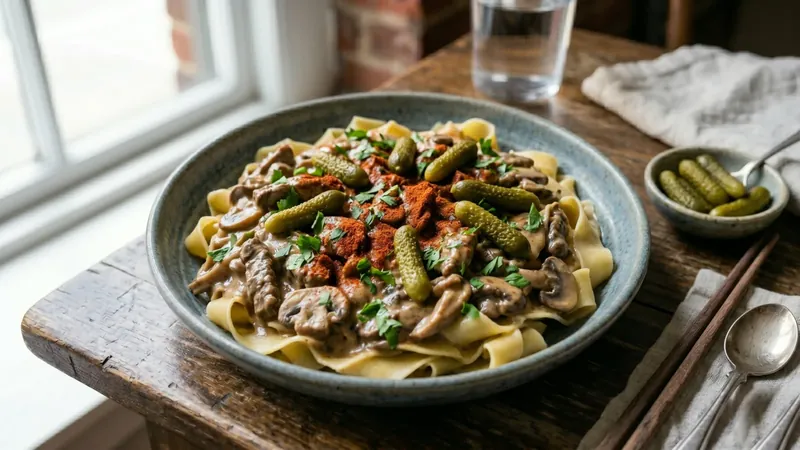
Stroganoff can taste rather one-note, all cream and beef, so this version sharpens it. Smoked paprika lends a warm, gently smoky backbone, while a handful of finely chopped cornichons stirred in at the end brings a clean, briny snap that cuts straight through the soured cream. It is still quick, still silky, but brighter and more interesting, ready in under half an hour.
Beef Stroganoff with Smoked Paprika and Cornichons
Ingredients
- 600g beef fillet or sirloin, cut into thin strips
- 2 tbsp plain flour
- 1 tsp smoked paprika, plus extra to finish
- 3 tbsp butter
- 1 tbsp olive oil
- 1 onion, finely sliced
- 300g chestnut mushrooms, sliced
- 2 garlic cloves, crushed
- 1 tbsp Dijon mustard
- 250ml beef stock
- 150ml soured cream
- 4 cornichons, finely chopped
- Small handful of parsley, chopped
- Salt and black pepper, to taste
Method
- Toss the beef strips with the flour, smoked paprika and a good pinch of salt and pepper.
- Heat 1 tbsp butter and the oil in a large frying pan over a high heat and sear the beef in batches for about 1 minute until browned. Set aside.
- Lower the heat, add another knob of butter and cook the onion for 5 minutes until soft.
- Add the remaining butter and the mushrooms, and fry for 6-7 minutes until golden. Stir in the garlic for 1 minute.
- Stir in the Dijon mustard, then pour in the stock and let it bubble and reduce for 3 minutes.
- Lower the heat and stir in the soured cream until smooth. Do not let it boil hard.
- Return the beef and any resting juices to the pan and warm through for 1-2 minutes.
- Stir in the chopped cornichons, then taste and season.
- Scatter with parsley and a dusting of smoked paprika, and serve with rice or buttered noodles.
3 The Story
Beef stroganoff is one of those dishes that has travelled so far from home it is almost unrecognisable from its origins. It emerged in nineteenth-century Russia and takes its name from the Stroganov family, an immensely wealthy dynasty of merchants and statesmen. The earliest printed recipes appear in Russian cookery books of that era, describing lightly floured cubes of beef in a mustard and soured-cream sauce. It was refined, restaurant cooking, a world away from peasant fare.
What is striking is how restrained those original versions were. There were no mushrooms and no onions in the very first printed recipe, just beef, flour, mustard and soured cream, finished simply. The mushrooms, onions and the now-familiar bed of noodles or rice were added later as the dish spread, picking up local habits wherever it landed. By the mid-twentieth century it had become a staple in Europe and North America, and a fixture of dinner parties on both sides of the Atlantic.
That history explains why two ingredients here feel entirely at home rather than forced. Mustard was part of the dish from the very beginning, so leaning on it is a return to roots rather than an invention. And soured cream, smetana in Russian, is the defining element, the thing that gives stroganoff its characteristic tang and silk. Soured cream behaves better than fresh cream over heat, splitting less readily, but it is still wise to keep the pan below a hard boil once it goes in.
The twists draw on the same northern and eastern European pantry. Smoked paprika, more Spanish and Hungarian than Russian in its smoky form, adds warmth and a subtle savoury edge that flatters seared beef. Cornichons, the tiny tart gherkins beloved across the region, are a natural partner to rich, creamy meat dishes, where a little acidity stops the whole thing feeling heavy. Chopped small and stirred in at the very end, they keep their crunch and scatter little bursts of brine through the sauce.
The cardinal rule for any stroganoff is speed with the beef. Use a tender cut, slice it thinly, sear it hot and fast, and return it to the pan only to warm through. Cook it long and it will toughen, undoing the whole point of a dish built for the quick, last-minute cooking that gave it its enduring appeal.
Related Content