Beef Rendang with Toasted Coconut Kerisik
Malaysia's slow-dry curry, given real body with hand-toasted kerisik
Contents
↓ Jump to recipeMost rendang recipes outside Malaysia and Indonesia stop at “beef simmered in coconut milk with spices,” which is true the way “bread is flour and water” is true — accurate, and missing the part that actually matters. Real rendang is a curry cooked deliberately past the point where the coconut milk would normally break, driven dry and dark over hours until the sauce and the meat become close to the same thing. The ingredient that gets that texture right, and that most home versions skip entirely, is kerisik: coconut, toasted dark and ground down to its own oil until it turns into a rough, nutty paste. Stir that in at the end and you get body no amount of extra coconut milk can fake.
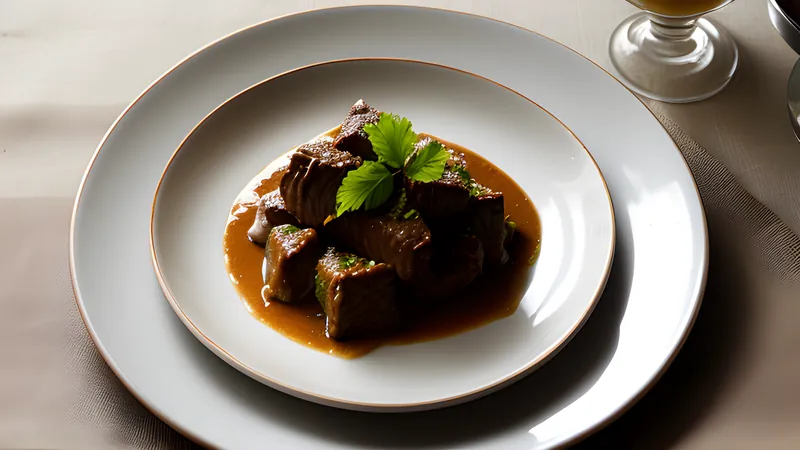
Beef Rendang with Toasted Coconut Kerisik
Ingredients
- 150g desiccated coconut (unsweetened), for the kerisik
- 1.5kg beef chuck or shin, cut into 4cm chunks
- 8 dried red chillies, soaked in hot water and drained
- 6 shallots, peeled and roughly chopped
- 6 garlic cloves
- 40g fresh ginger, peeled
- 40g fresh galangal, peeled (or extra ginger)
- 3 stalks lemongrass, tough outer layers removed, roughly chopped
- 3 tbsp vegetable oil
- 2 cinnamon sticks
- 4 whole star anise
- 6 whole cloves
- 4 cardamom pods, bruised
- 6 kaffir lime leaves, torn
- 1 turmeric leaf, sliced (optional, if you can find it)
- 800ml full-fat coconut milk
- 3 tbsp tamarind paste
- 2 tbsp palm sugar, grated or chopped
- 1.5 tsp salt, plus more to taste
Method
- Toast the desiccated coconut in a dry frying pan over medium-low heat, stirring constantly, for 12 to 15 minutes until it turns a deep, even golden-brown and smells nutty and toasty — watch it closely in the final minutes as it can catch fast.
- Tip the toasted coconut into a food processor or mortar and grind for several minutes until the natural oils release and it clumps into a moist, dark, sticky paste (kerisik). Set aside.
- Blitz the soaked dried chillies, shallots, garlic, ginger, galangal and lemongrass with a splash of water into a smooth spice paste.
- Heat the oil in a large, heavy pot over medium heat and fry the cinnamon, star anise, cloves and cardamom for 1 minute until fragrant.
- Add the spice paste and fry, stirring often, for 10 to 12 minutes until it darkens, the oil separates visibly at the edges, and the raw smell is gone.
- Add the beef and stir to coat thoroughly in the paste, cooking for 5 minutes until the outside is no longer pink.
- Pour in the coconut milk, add the kaffir lime leaves and turmeric leaf if using, and bring to a gentle simmer.
- Partially cover and simmer on the lowest heat for 1.5 hours, stirring every 15 to 20 minutes and scraping the base so nothing catches.
- Stir in the tamarind paste, palm sugar and salt, then continue simmering uncovered, stirring more frequently as it thickens, for a further 1 to 1.5 hours.
- Once the sauce has reduced to a thick, clinging, near-dry coating and the oil has separated to the surface, stir in the toasted kerisik paste and cook for a final 10 minutes, stirring constantly, until fully incorporated and glossy-dark.
- Taste and adjust salt and sugar, then rest for 10 minutes before serving with steamed rice.
Where rendang comes from
Rendang belongs to the Minangkabau people of West Sumatra, Indonesia, and travelled with Minangkabau merchants and migrants across the Malay world, which is why you’ll find versions — related but distinct — claimed by both Indonesia and Malaysia today (a rivalry that occasionally flares into genuine diplomatic huffiness over whose rendang is the “real” one). The dish was built for a specific, practical reason: without refrigeration, a wet curry spoils within a day or two in a tropical climate. Cook the same curry down until almost all the moisture is gone and the oil from the coconut and spices has taken over as the preserving medium, and it keeps for weeks at room temperature. Padang restaurants, found across Indonesia and increasingly worldwide, still serve rendang from pots that have been slow-cooking since morning, sometimes reheated and re-reduced daily for a week.
The Malaysian version served here — and this is where kerisik earns its name and its permanent place in the recipe — sits at the wetter, more curry-like end of the rendang spectrum compared to the near-black, oil-slicked rendang kering (dry rendang) you’d find at a Minangkabau wedding feast, cooked for the better part of a day. This recipe splits the difference: three hours gets you real depth and a thick, dark, clinging sauce without demanding you babysit a pot from dawn.
Within Malaysia itself the dish forks again by state. Negeri Sembilan, home to a large Minangkabau-descended population, cooks a rendang closest to the Sumatran original, often bulked out with candlenut and turmeric leaf for a sharper, more herbal edge. Perak is known for rendang tok, an even drier, darker, more heavily spiced version traditionally served at royal functions and weddings, cooked down for hours until it’s closer to a spiced meat floss than a curry. Rendang’s international profile got a real boost in 2011 when CNN’s reader poll named it the world’s most delicious food, an accolade Indonesia and Malaysia have each, only half-jokingly, claimed credit for since — the dish was also the subject of a genuine diplomatic spat in 2018 after a MasterChef UK judge criticised a contestant’s rendang for not having crispy skin, prompting the Indonesian foreign ministry to weigh in on Twitter. Rendang, in other words, is taken seriously.
Why kerisik matters
Kerisik — sometimes called serunding in its drier, more shredded form — is desiccated or fresh grated coconut, dry-toasted until deeply browned, then ground until its natural oils release and it collapses into a damp, nubbly, near-paste. It looks unpromising on the way there: pale and fluffy, then patchy gold, then suddenly, in the last couple of minutes, a deep amber-brown all at once. That speed is the danger. Coconut has a high sugar content relative to its moisture once desiccated, so it goes from perfectly toasted to bitter and burnt within about 60 seconds of inattention — stir constantly and pull it the moment it smells toasty and nutty rather than waiting for a colour that, by the time you see it, has already tipped too far.
What toasting does chemically is concentrate and transform the coconut’s flavour through the Maillard reaction and light caramelisation of its natural sugars — the same browning that makes toasted nuts taste completely different from raw ones. Grinding afterwards releases the coconut’s own oil, so what you fold into the rendang is an intensely nutty, faintly smoky flavour compound that plain coconut milk, however long you reduce it, cannot produce on its own. Add it too early and that toasted character cooks out and turns dull over the following hour of simmering; add it right at the end, off the tail of the reduction, and it stays distinct — you can taste the toast against the softer coconut milk base underneath it.
The method, explained
The spice paste — chillies, shallots, garlic, ginger, galangal, lemongrass — needs its own proper frying time before the beef goes anywhere near the pot, a minimum of 10 minutes, until the paste visibly darkens and the oil starts separating out at the edges of the pan. This is the same principle behind a good curry or laksa base: raw aromatics taste sharp and vegetal; fried hard, their sugars caramelise and their flavours concentrate and meld. Rush this step and the finished rendang tastes thin no matter how long you simmer it afterwards.
The long simmer does two jobs simultaneously. It breaks down the tough collagen in chuck or shin until the beef falls apart at a fork’s touch — connective tissue wants sustained, gentle heat over time, so resist the urge to turn things up to hurry along. And it slowly drives off the coconut milk’s water content, concentrating the sauce and letting its natural oils rise and separate to the surface, which is the visual signal that tells you rendang is approaching done. Stir more frequently as the sauce thickens in the final 30 to 40 minutes; a thick, reducing sauce catches on the base of the pot far more easily than a thin one, and a scorched patch will taint the whole batch with a bitter, burnt edge that no amount of extra sugar will rescue.
Coconut milk quality makes a bigger difference here than in a quick curry, precisely because it’s being reduced so hard. Full-fat, good-quality tinned coconut milk (look for one with a short ingredient list — coconut extract and water, nothing else) holds together better under a long simmer than the thinner “light” versions, which tend to split into a watery, oily mess rather than reducing smoothly into a clinging sauce. If you can get fresh coconut milk, pressed from grated coconut, it’s genuinely worth using — richer and less prone to splitting than tinned — but it doesn’t keep, so buy it the day you cook. Either way, a pot that looks like it’s separated into an oily layer over a thinner one in the first hour isn’t a failure; it’s meant to happen, and stirring brings it back together as the fat re-emulsifies with the paste.
The recipe
Toast desiccated coconut until deep golden and grind it to a sticky paste — that’s your kerisik, set aside. Blitz chillies, shallots, garlic, ginger, galangal and lemongrass into a spice paste, then fry it hard in oil with whole spices until dark and fragrant, 10 to 12 minutes. Brown the beef in the paste, add coconut milk and aromatic leaves, and simmer very gently, partially covered, for 1.5 hours. Stir in tamarind and palm sugar, then simmer on, uncovered now, for another hour to 90 minutes, stirring more as it thickens, until the sauce is dark, thick and mostly dry with oil visible at the surface. Fold in the kerisik for a final 10 minutes until glossy and fully incorporated. Rest 10 minutes before serving over rice.
Tips, substitutions, make-ahead and storage
Chuck or shin are the right cuts — both have enough connective tissue to turn silky over a long simmer without drying out; leaner cuts like sirloin will turn tough and stringy over these timings. If you can’t find galangal, extra ginger is an acceptable substitute, though the flavour is milder and slightly less citrusy. Tamarind paste varies hugely in concentration between brands — start with the amount given, taste, and add more for sharper acidity if it tastes flat. Kerisik can be made well ahead: toasted and ground coconut keeps in an airtight container in the fridge for up to a week, or frozen for a month, so it’s worth doubling the batch.
Rendang is, famously, a dish that improves with age — the flavours settle and deepen overnight and it will happily keep, covered, in the fridge for up to 5 days, reheated gently with a splash of water if needed to loosen it. It also freezes exceptionally well for up to 3 months, being already close to shelf-stable by design. If you’re planning ahead, the whole dish can be cooked to the end of the coconut-milk reduction and frozen at that stage, with the kerisik stirred in fresh after reheating; toasted coconut loses some of its nutty punch after freezing and reheating alongside the sauce, so holding it back preserves the contrast between the two textures.
Variations
For a properly dry Minangkabau-style rendang kering, simply keep cooking past the recipe’s endpoint for another 30 to 40 minutes, stirring almost continuously, until the sauce clings to the meat as a dark, oily coating rather than a spoonable sauce. Chicken thighs work as a lighter alternative to beef; reduce the total simmering time to around 45 minutes given chicken’s faster cooking, adding the kerisik in the final 10 minutes as before. For extra heat, add 2 to 3 fresh bird’s eye chillies, slit lengthways, along with the tamarind.
If the idea of a slow, deeply reduced sauce appeals, chicken adobo with coconut and charred garlic takes coconut milk in a sharper, vinegar-led direction, and khao soi with crackling egg noodles is another coconut curry built on a well-fried paste. Rendang rewards the patient cook more than almost any other dish in this collection — the kerisik is the one step that turns a good version into the real thing.
Related Content