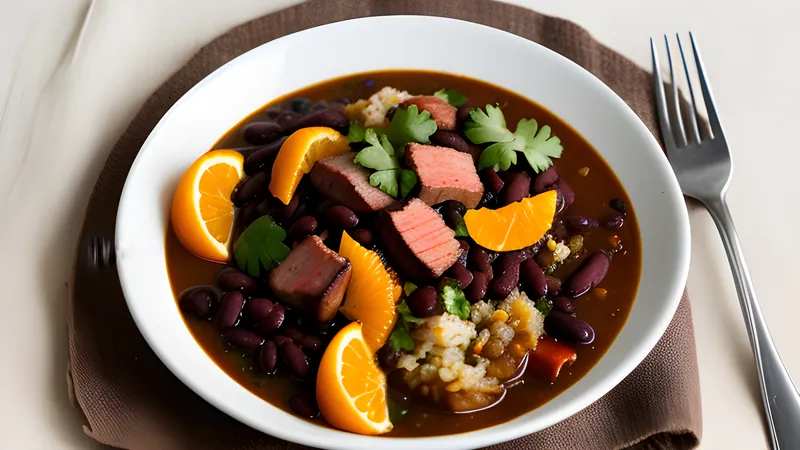
Beef Goulash with Smoked Paprika and Charred Peppers
The Hungarian herdsman's stew, deepened with flame-charred peppers and a second, smokier paprika
Contents
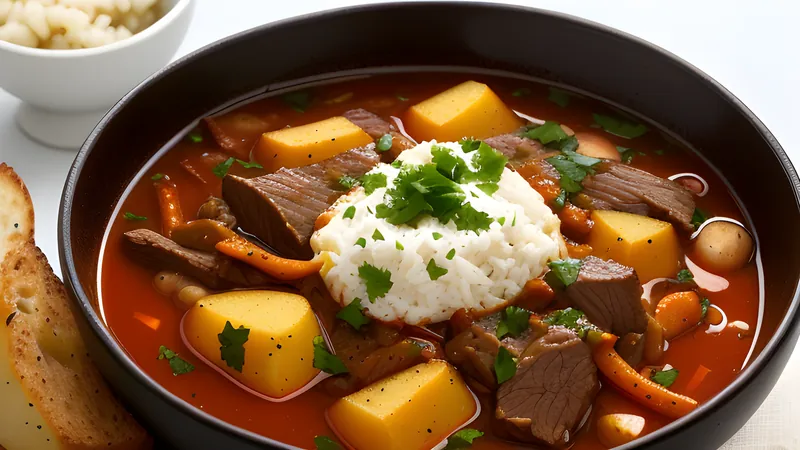
↓ Jump to recipeThe word gulyás means herdsman, and the dish is named after the men who cooked it — cattle drovers on the Great Hungarian Plain, the Alföld, who simmered beef and onions in a bogrács, an iron cauldron slung over an open fire, while they moved herds across the grassland. What they made was a soup, loose and brothy, and much of what gets served as “goulash” outside Hungary is thicker and closer to pörkölt, a related braise. This version sits between the two: a hearty, spoonable stew with potatoes in it, the way a Hungarian household is likely to cook it on a cold evening. The twist is a second paprika — a spoon of Spanish smoked pimentón alongside the sweet Hungarian kind — and red peppers charred black over a flame before they go in, both there to add a smoky depth the open cauldron once gave for free.
Beef Goulash with Smoked Paprika and Charred Peppers
Ingredients
- 1.2kg beef shin or chuck, cut into 4cm cubes
- 3 tbsp lard or vegetable oil
- 3 large onions (about 600g), finely sliced
- 4 garlic cloves, minced
- 2 red peppers (capsicum)
- 2 tbsp sweet Hungarian paprika (édesnemes)
- 1 tbsp smoked paprika (pimentón dulce)
- 1 tsp caraway seeds, crushed
- 2 tbsp tomato purée
- 1 x 400g tin chopped tomatoes
- 2 bay leaves
- 900ml beef stock
- 500g waxy potatoes, peeled and cut into 3cm chunks
- 1.5 tsp salt, plus more to taste
- 1 tsp caster sugar
- Soured cream and chopped parsley, to serve
Method
- Char the red peppers directly over a gas flame or under a hot grill, turning until the skins are blackened all over, about 8 to 10 minutes. Seal them in a bowl with a plate on top for 10 minutes, then rub off the skins, discard the seeds and slice into strips.
- Pat the beef dry and season with 1 tsp of the salt. Heat 2 tbsp of the lard in a heavy casserole over high heat and brown the beef hard in batches, about 4 minutes per batch, until deeply coloured. Remove and set aside.
- Lower the heat to medium, add the remaining lard and the onions, and cook slowly for 15 to 18 minutes, stirring often, until soft, sweet and pale gold.
- Add the garlic and crushed caraway and cook for 1 minute more. Take the pan off the heat entirely.
- Off the heat, stir in both paprikas and let them cook in the residual warmth for 30 seconds until glossy and fragrant — this stops them scorching and turning bitter.
- Return the pan to medium heat, stir in the tomato purée and cook for 1 minute, then add the tinned tomatoes, bay leaves and stock. Return the beef and any resting juices.
- Bring to a bare simmer, cover, and braise on the lowest heat (or in a 150°C fan oven) for 1.5 hours, stirring occasionally.
- Add the potatoes and the charred pepper strips and continue cooking, partially covered, for a further 40 to 45 minutes until the beef is fork-tender and the potatoes are cooked through.
- Stir in the sugar, taste, and adjust salt. Rest for 10 minutes off the heat.
- Serve in deep bowls with a spoon of soured cream and a scatter of parsley.
Where goulash comes from
Paprika is so bound up with Hungarian cooking now that it is easy to forget it arrived late. The peppers came to Europe from the Americas after Columbus, reached the Balkans through the Ottoman Empire, and were grown in Hungary from the 16th and 17th centuries onward, at first as an ornamental curiosity and a poor cook’s substitute for expensive black pepper. Ground paprika only became the defining seasoning of gulyás in the 18th and 19th centuries, as Hungarian national identity crystallised and the herdsmen’s stew was adopted as a patriotic dish. Before paprika, the drovers’ soup was seasoned with black pepper and onions alone, which tells you how young the version we think of as timeless actually is.
The confusion over what “goulash” means is worth clearing up, because it explains why recipes vary so wildly. In Hungary, gulyás (or gulyásleves, “herdsman’s soup”) is genuinely a soup, thin enough to drink, studded with beef, potatoes and sometimes little pinched pasta called csipetke. Pörkölt is the thicker braise with almost no liquid, and paprikás adds soured cream to that. When the dish travelled — into Austrian, German, Czech and eventually British and American kitchens — the soup and the braise blurred into a single thick, brown, paprika-heavy beef stew that no longer matched any one Hungarian original. This recipe leans toward the homely middle: substantial enough to be a main course, loose enough to honour the soup it descends from.
Hungarian paprika itself is graded and taken seriously, from the mild, bright édesnemes (“noble sweet”) to hotter, coarser grades. It is grown mainly around Szeged and Kalocsa in the south, and the good stuff is vivid red and smells sweet and faintly fruity rather than dusty. Hungarian paprika is traditionally not smoked — that smokiness is a Spanish characteristic, from pimentón dried over oak fires in the La Vera region. Borrowing a spoonful of it here is a deliberate liberty, and a useful one for a stew cooked on a domestic hob rather than over woodsmoke.
Why you add paprika off the heat
The single most common way to ruin goulash is to tip paprika into a hot, dry pan and let it fry. Paprika is a ground dried fruit with a high natural sugar content, and those sugars scorch fast — within seconds over direct heat — turning acrid and bitter in a way that taints the whole pot and cannot be corrected afterwards. The traditional safeguard is exactly the one used in this recipe: pull the pan off the heat, stir the paprika into the warm softened onions and fat, and let the residual warmth bloom it gently before any liquid goes in. The fat carries paprika’s fat-soluble colour and flavour compounds, so a short warm bloom in the onion fat draws out its sweetness and stains the base a deep rust-red without ever letting it catch.
Blooming in fat also matters for colour, which is half the point of the dish. Paprika’s red pigments dissolve into the fat rather than the water, so a goulash that never gives the paprika a moment in warm fat ends up looking dull and orange-brown instead of glowing red. Add the liquid too soon and you get colour but flat flavour; scorch it and you get bitterness. The 30-second off-heat bloom threads between the two.
Why char the peppers
Charring the red peppers over a live flame until the skin blackens does two things. It blisters and loosens the skin so it slips off, leaving soft, sweet flesh without the papery texture raw peppers keep even after a long braise. And the direct flame caramelises the pepper’s sugars and lightly smokes the surface, concentrating its flavour into something jammy and faintly smoky before it ever meets the stew. Dropped in for the final stretch of cooking, the charred strips add a sweetness and a whiff of smoke that echo the pimentón and reinforce the open-fire character the whole recipe is chasing. If you have only an electric hob, do this under a very hot grill instead — you want the skin genuinely black, not merely soft.
The long, slow braise
Beef shin and chuck are the right cuts because both are rich in connective tissue, and connective tissue is the whole game in a braise. Collagen only breaks down into silky gelatine with long, gentle, moist heat — roughly two hours at a bare simmer — and it is that dissolved gelatine that gives goulash its faintly sticky, lip-coating body. Cook it too fast or too hot and the muscle fibres seize and squeeze out their moisture before the collagen has had time to melt, leaving you with dry, stringy beef in a thin liquid. Keep the pot at the laziest possible simmer, barely a bubble breaking the surface, and the meat stays plump while the connective tissue quietly turns to velvet. The soft, slow-cooked onions dissolve into the sauce over the same time, thickening it without any flour. If you have made a proper beef bourguignon, the principle is identical — patience over heat — and goulash rewards it just as fully.
The recipe
Char the peppers black over a flame, steam them, peel and slice. Brown the salted beef hard in lard, then set it aside and cook the onions slowly until soft and gold. Add garlic and crushed caraway, take the pan off the heat, and bloom both paprikas in the warm fat for 30 seconds. Back on the heat, cook the tomato purée for a minute, then add tinned tomatoes, bay, stock and the beef. Braise at a bare simmer, covered, for 1.5 hours. Add the potatoes and charred peppers and cook another 40 to 45 minutes until the beef gives to a fork. Balance with a little sugar and salt, rest 10 minutes, and serve with soured cream and parsley.
Tips, substitutions and storage
Buy the freshest paprika you can and store it in the dark — ground paprika fades and dulls within a year, and stale paprika is the second-biggest reason a goulash tastes flat (after scorching it). Caraway is the quietly authentic seasoning here; crush the seeds lightly so they release their aroma without leaving hard whole pips in the finished stew. If you want warmth, a Hungarian cook would reach for hot paprika or a smear of the fermented pepper paste called erős pista rather than chilli, added off the heat with the sweet paprika. Lard gives the most traditional flavour, but vegetable oil works if you would rather.
Goulash is better on the second day, once the flavours settle and the gelatine sets the sauce to a soft jelly that loosens again on reheating. It keeps, covered, in the fridge for up to 4 days and freezes well for 3 months — freeze it before adding the potatoes if you can, since they can go grainy after freezing, and add fresh ones when you reheat. Loosen with a splash of stock if it has thickened too far.
Variations
Leave the potatoes out and thin it with more stock for something much closer to the original gulyásleves soup, and drop in small pinched dumplings (csipetke) for the last few minutes. Stir a couple of tablespoons of soured cream through the whole pot at the end, rather than spooning it on top, and you are edging toward paprikás. For a smokier, more Iberian riff on the same braise, the same charred-pepper-and-pimentón logic runs through chorizo and white bean stew, while beef stroganoff takes beef and soured cream in a quicker, creamier Eastern European direction. The paprika discipline is the thread that ties all of them together: warm fat, gentle bloom, and never, ever a scorched pan.
Related Content