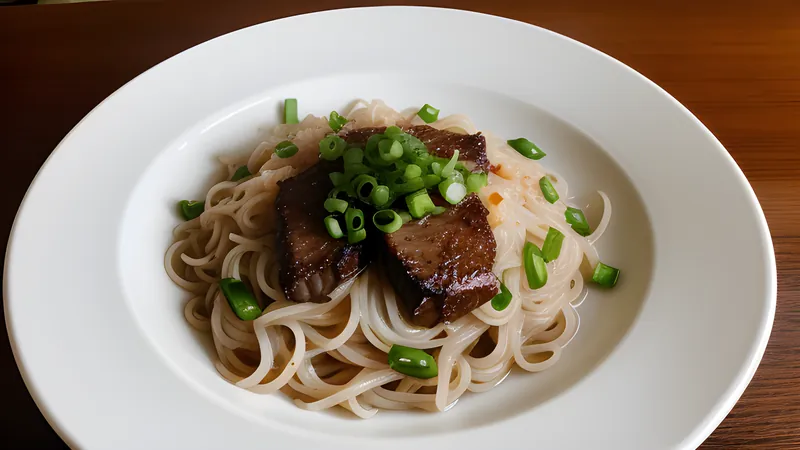
Beef Chow Fun with Charred Rice Noodles
Velveted beef and wide ho fun tossed over a screaming wok for that dry-fried char
Contents
↓ Jump to recipeBeef chow fun is the dish I order to judge a Cantonese kitchen, because it hides nothing. There are perhaps six ingredients and no sauce to speak of, so everything rests on two things the cook either has or does not: tender, silky beef and wide rice noodles that carry a smoky char without breaking into a sodden heap. When it is right, the plate is glossy and dark and smells of scorched metal and soy, and the noodles have that faintly bittersweet edge of wok hei. When it is wrong, it is a grey, wet tangle. There is nowhere to hide, and that is exactly why it is worth learning.
In Cantonese this is gon chau ngau ho — “dry-fried beef ho fun” — and the “dry” is the key word. The dish is deliberately built without a pooled sauce, so that the noodles fry rather than braise and can take on colour against the wok. It is a staple of Hong Kong cha chaan teng and dim-sum houses, a benchmark dish that cooks are quietly assessed on. The technique demands high heat and confidence, and it teaches you more about the wok in ten minutes than a week of gentler cooking.
Beef Chow Fun with Charred Rice Noodles
Ingredients
- 250g flank or sirloin steak, thinly sliced against the grain
- 400g fresh wide flat rice noodles (ho fun)
- 150g beansprouts
- 4 spring onions, cut into 5cm lengths, whites and greens separated
- 1 small onion, sliced
- 3 tbsp neutral oil
- 1 tsp light soy sauce (for the beef marinade)
- 1 tsp Shaoxing wine
- 1 tsp cornflour
- 1/2 tsp bicarbonate of soda
- 1/2 tsp toasted sesame oil
- 2 tbsp dark soy sauce
- 1 tbsp light soy sauce
- 1 tbsp oyster sauce
- 1 tsp caster sugar
- 1/2 tsp ground white pepper
Method
- Toss the sliced beef with the bicarbonate of soda and leave 15 minutes, then rinse well under cold water, pat dry, and marinate in 1 tsp light soy, the Shaoxing wine, cornflour and sesame oil.
- Mix the dark soy, light soy, oyster sauce, sugar and white pepper for the sauce and set it by the stove. Cook one portion at a time, halving per batch.
- Warm and gently separate the ho fun into loose strips.
- Heat the wok until smoking, add 1 tbsp oil and sear the beef for about 1 minute until 80 per cent cooked, then remove.
- Add 1 tbsp oil, fry the onion and spring-onion whites for 30 seconds, add the noodles and let them char in patches, then pour the sauce down the side and toss for about 2 minutes.
- Return the beef, add the beansprouts and spring-onion greens, and toss for 30-40 seconds until the beef is just cooked and the sprouts still crisp.
- Serve at once.
Velveting: the secret to silky beef
The tenderness of the beef is not luck; it is a technique called velveting, and it is the difference between a stir-fry that eats like the restaurant version and one that eats like grey shoe leather. Slice the steak thinly against the grain — this shortens the muscle fibres so they yield under the tooth — aiming for pieces about 3mm thick. Flank steak is traditional and full-flavoured; sirloin is more forgiving if flank is hard to find.
Toss the sliced beef with the bicarbonate of soda first and leave it for fifteen minutes. The alkali raises the surface pH of the meat, which loosens the proteins and stops them seizing and squeezing out moisture when they hit the heat, keeping the beef juicy. Rinse the beef well under cold water to wash off the bicarb — this step matters, or you will taste soapiness — pat it dry, then marinate it in the teaspoon of light soy, the Shaoxing wine, cornflour and sesame oil. The cornflour forms a thin, slippery coat that seals in juice and gives velveted beef its characteristic silky slither. Let it sit while you prepare everything else.
The noodles, and the twist
Wide fresh rice noodles — ho fun, sometimes labelled sha he fen — are sold in folded slabs, often stuck together in the packet. Cold, they are brittle and will shatter if you try to prise them apart. Warm them first: microwave the block for thirty to forty seconds, or steam it briefly, until the ribbons are supple and pliable, then gently separate them by hand into loose, whole strips. Handle them like something you care about, because torn noodles never look or eat right.
My small twist is to toast the dark soy for the sauce mixture with the sugar in the dry wok for a few seconds before the noodles go in, so it turns jammy and clings rather than sliding off. It deepens the colour and the flavour and gives the finished dish that lacquered, restaurant sheen most home versions lack. Mix the dark soy, light soy, oyster sauce, sugar and white pepper together in advance and keep it by the stove.
Method
Cook in single portions if your hob is domestic — two servings at once will crowd the wok, drop the temperature and steam. Halve the ingredients per batch, cook, keep warm, repeat.
Set a carbon-steel wok over the highest heat until it smokes. Add 1 tablespoon of oil, swirl, then add the velveted beef in a single layer. Sear undisturbed for thirty seconds, then stir-fry for another thirty until the beef is about 80 per cent cooked and just browned at the edges. Scoop it out onto a plate; it will finish cooking later.
Wipe the wok if it looks scorched, return it to high heat and add another tablespoon of oil. Add the onion and the spring-onion whites and stir-fry for thirty seconds until they take on a little colour. Now add the separated ho fun and let it sit against the hot metal for fifteen to twenty seconds before tossing, then repeat — the aim is to char the noodles in patches rather than stir them constantly. Pour the sauce down the side of the wok so it sizzles on the metal and caramelises, then toss to coat the noodles evenly, working fast so they colour without collapsing. This should take barely two minutes.
Return the beef and any resting juices, add the beansprouts and spring-onion greens, and toss for a final thirty to forty seconds until the beef is just cooked through and the sprouts are hot but still crisp. Taste — it should be savoury, faintly sweet and smoky, with the noodles glossy and unevenly bronzed. Tip onto a plate and serve at once.
Where it goes wrong
The classic failures are all preventable. Broken noodles come from working them cold; warm them until supple and separate them gently. Wet, grey noodles come from a cool, crowded wok — cook small batches over the fiercest heat you can raise, and let the noodles sit and char between tosses rather than stirring them into a mush. Tough beef means you skipped or rushed the velveting, or sliced with the grain instead of against it. A soupy pan means too much sauce; this is a dry fry, so keep the liquid to the small quantity in the recipe and let it reduce to a glaze on contact.
One more: resist the urge to add water or extra oil when the wok looks dry mid-cook. Dryness is the point. Adding liquid drops the temperature and turns the fry into a braise, and the char you have been building evaporates in seconds.
Variations and serving
Beef and ho fun is the canonical pairing, but the technique carries. Swap the beef for thin-sliced chicken thigh, prawns or a mix of mushrooms for a vegetarian version, adjusting the velveting only for the beef. Some cooks add a handful of Chinese garlic chives or thinly sliced peppers for colour; a scattering of toasted sesame at the end is a nice touch. For heat, a spoon of chilli oil or fresh red chilli tossed in near the end works well, though the classic is left plain to show off the smoke.
This is a close cousin of the great fried-noodle dishes of the region, and the skills overlap almost entirely. The Malaysian char kway teow with prawn and Chinese sausage uses the very same wide rice noodles and the same chase for wok hei, sweetened with lap cheong and sharpened with sambal. If you would rather build your high-heat wok confidence on a more forgiving canvas first, Yangzhou fried rice with char siu and prawn drills the same instincts on grains that will not tear, and a plate of twice-cooked pork with leek and doubanjiang makes a fine, spicy companion at a bigger table.
Choosing and storing the ho fun
The freshest rice noodles make the best chow fun, and freshness is easy to judge. Good ho fun is soft, faintly translucent and folds without cracking; if the slab has gone hard and opaque in the fridge, it has staled and will shatter no matter how gently you handle it. Buy it chilled and use it within a day or two of purchase. If your noodles have firmed up, a longer steam — a couple of minutes over boiling water — will often bring them back to pliable, though a batch that has fully dried out is a lost cause. Never refrigerate leftover fresh noodles once opened for more than a couple of days, and never freeze them; the ice crystals rupture the delicate rice starch and they turn to paste on thawing. If fresh is genuinely unavailable, wide dried rice noodles soaked until just pliable are a passable stand-in, though they lack the silk of the fresh article.
Storage
Like every dish that lives on wok hei, beef chow fun is meant to be eaten the moment it leaves the pan. Reheated, the noodles turn soft and gluey and the smoke disappears, so cook only what you will finish. You can, however, do all the slow work ahead: velvet and marinate the beef, warm and separate the noodles, slice the aromatics and mix the sauce, all up to a day in advance and stored separately in the fridge. With the prep done, the cooking is a matter of minutes over a hot wok — which is, after all, the whole discipline the dish is trying to teach you.
Related Content