Béarnaise: The Steak Sauce Worth the Faff
The classic tarragon emulsion, made with browned butter
Contents
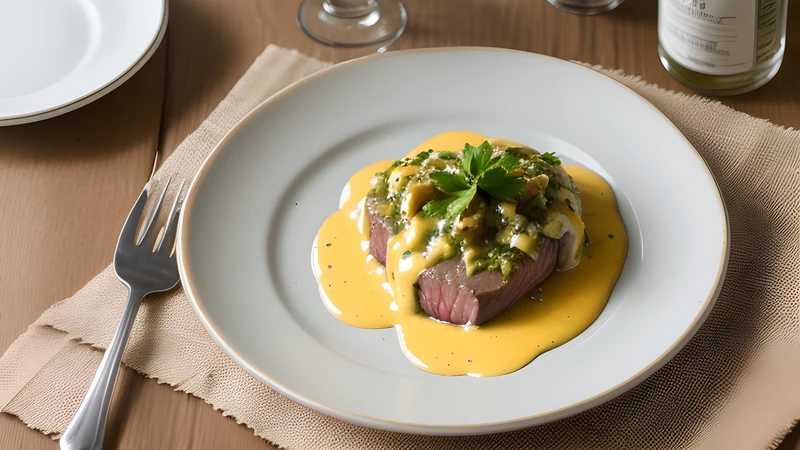
↓ Jump to recipeBéarnaise is the sauce that turns a good steak into an occasion, and the sauce that people are most frightened of making at home. It has a reputation for splitting the moment you look at it, which is a shame, because once you understand what is actually holding it together the whole thing becomes calm and repeatable. It is a warm emulsion of egg yolk and butter, sharpened with a tarragon-and-vinegar reduction, and my one change to the classic is to brown the butter first. That single step gives the finished sauce a nutty, toasted depth under all the tarragon and acid, and it makes what is already a very good steak sauce taste like something you would pay for.
Béarnaise: The Steak Sauce Worth the Faff
Ingredients
- 175g unsalted butter
- 3 tbsp white wine vinegar
- 3 tbsp dry white wine
- 1 small shallot, very finely chopped
- 1 tbsp tarragon stalks, chopped (leaves reserved)
- 6 black peppercorns, lightly crushed
- 3 large egg yolks
- 2 tbsp fresh tarragon leaves, chopped
- 1 tbsp fresh chervil or flat-leaf parsley, chopped
- 1/4 tsp fine sea salt, plus more to taste
- Pinch of cayenne pepper
- Squeeze of lemon juice (optional)
Method
- Brown the butter first. Melt it in a light pan over medium heat and cook, swirling, for 4 to 6 minutes until it foams, quietens and the milk solids turn nut-brown. Pour into a jug, leaving the darkest sediment behind, and keep warm.
- For the reduction, simmer the vinegar, wine, shallot, tarragon stalks and crushed peppercorns in a small pan until reduced to about 2 tablespoons, then strain, pressing the solids, and cool for a couple of minutes.
- Set a heatproof bowl over a pan of barely simmering water, the base not touching the water. Add the egg yolks and the strained reduction and whisk constantly.
- Keep whisking for 3 to 5 minutes until the mixture thickens to a pale, airy ribbon that holds a trail. If it steams too fiercely, lift the bowl off for a few seconds and keep whisking.
- Take the bowl off the heat. Whisking hard, pour in the warm browned butter in a slow, thin, steady stream until the sauce is thick and glossy.
- Stir in the chopped tarragon and chervil, season with salt and cayenne, and sharpen with a squeeze of lemon if it needs it.
- Serve at once, or hold warm (not hot) for up to 30 minutes over the pan's residual heat, whisking occasionally.
A sauce born in a suburb
Béarnaise is one of the daughter sauces of hollandaise, the great warm egg-and-butter emulsion of French cooking, differing mainly in its acid: where hollandaise leans on lemon, béarnaise leans on a reduction of vinegar, shallot and tarragon. The usual story credits its invention to the kitchen of the Pavillon Henri IV, a restaurant in Saint-Germain-en-Laye near Paris, around 1836, with the name nodding to Béarn, the birthplace of Henri IV in south-west France. The king was nicknamed le bon roi Henri, and the sauce carries his region’s name rather than any real connection to Béarnaise cooking, which is a good reminder that culinary names are often marketing.
What defines béarnaise is tarragon, an anise-scented herb that is difficult to love in the wrong dish and impossible to replace here. The reduction extracts its perfume into the vinegar, and fresh chopped leaves stirred in at the end keep it green and alive. The other classic partner is chervil, a delicate, faintly aniseed herb that reinforces the tarragon; if you cannot find it, flat-leaf parsley keeps the colour without fighting the flavour. This is a herb-forward sauce in the same family of thinking as a good salsa verde, Italian-style, with capers, where the herbs are the point and everything else is there to carry them.
The reduction: your flavour base and your insurance
The reduction does two jobs. It builds the sauce’s acidic, aromatic backbone, and the vinegar’s acid helps stabilise the emulsion, giving the egg proteins a hand at holding butter in suspension. Simmer white wine vinegar and dry white wine with finely chopped shallot, crushed peppercorns and the woody tarragon stalks until it reduces to about two tablespoons of intense, sharp liquid. Reducing concentrates the flavour and, importantly, softens the raw harshness of the vinegar so the finished sauce tastes rounded rather than mouth-puckering.
Strain it, pressing the solids to squeeze out every drop, and let it cool for a minute or two before it meets the yolks, because pouring it in scalding can start to cook them. Save the tender tarragon leaves for the end; only the tough stalks go in the reduction, where they give their flavour without any stringiness. If you like a smoother, less peppery sauce, strain out the shallot too; if you like texture, leave a little of the finest shallot in.
Browning the butter, the clever twist
Here is where this béarnaise parts company with the textbook. Classic recipes use clarified or simply melted butter; I brown it. Butter is about a fifth water and a fraction milk solids, and when you melt it and keep cooking, the water hisses away and those milk solids toast to a deep, biscuity brown, the beurre noisette or hazelnut butter of French cooking. Whisked into the emulsion, it brings a warm, nutty, almost caramelised note that plays beautifully against the sharp tarragon reduction and the richness of a steak.
Use a light-coloured pan so you can read the colour, melt over a medium heat, and watch for the foam to subside and the noise to quieten, which tells you the water has gone and the solids are colouring. When they turn the shade of a digestive and the kitchen smells of toffee and nuts, pull it off at once, because the gap between nutty and burnt is a matter of seconds. Pour it into a jug and leave the very darkest sediment behind in the pan, taking a spoonful or two of the toasty brown flecks with you for flavour but not the bitter black dregs. Let it cool to warm, not hot, before it goes into the sauce, or it will scramble the yolks. The same technique underpins so much good baking, from a tray of browned-butter and pecan blondies to the sauce in front of you.
The emulsion: low, slow and constant
Now the part people fear, which is really just patience. Set a heatproof bowl over barely simmering water, making sure the base does not touch the water, and whisk the yolks with the cooled reduction. Whisk constantly for three to five minutes as the yolks thicken and pale into a foamy, airy ribbon called the sabayon. What you are doing is gently cooking the yolks to thicken them and beating in air, which builds the structure that will hold the butter. The single biggest risk is heat: too hot and the yolks scramble into sweet, lumpy custard. The fix is simple: keep the water at a bare tremble and lift the bowl off the heat for a few seconds whenever it starts to steam hard, whisking all the while. If you can hold a finger against the side of the bowl for a second or two, the temperature is about right.
Once you have a thick, ribboning sabayon, take the bowl off the heat entirely and start adding the warm browned butter, whisking hard and pouring in a slow, thin stream. Going slowly at the start is what lets the fat disperse into stable droplets; tip it in too fast and the emulsion floods and splits. As it thickens you can speed up a little. When all the butter is in, you should have a glossy, spoonable sauce that just holds its shape. Fold in the chopped tarragon and chervil, season with salt and a pinch of cayenne, and brighten with a squeeze of lemon if the acid needs a lift.
Rescuing a split sauce, and holding it
If it splits, going greasy and thin with visible pools of butter, do not throw it out. Put a fresh teaspoon of warm water, or another egg yolk, in a clean bowl and whisk the broken sauce into it a spoonful at a time; the extra yolk or water gives the emulsion something new to grip and it usually comes back together. Splitting almost always means the butter went in too fast or the sauce got too hot, so slow down and cool down.
Béarnaise waits for no one, and it is happiest served within a few minutes of finishing. You can hold it for up to half an hour somewhere gently warm, such as over the pan of water with the heat off, whisking now and then, but it will not survive fierce reheating, which splits it or scrambles the yolks. Do not refrigerate and rewarm it; make it fresh. Because of the barely cooked yolks, use very fresh eggs and take the usual care if serving to anyone vulnerable.
Beyond steak, it is glorious over roast asparagus, grilled fish, poached eggs or a plate of chips, the same broad usefulness that makes a jar of romesco with roasted red pepper and almond earn its place in the fridge. For variations, a choron adds a spoon of tomato purée to the finished sauce for colour and a mild sweetness, while a paloise swaps the tarragon for mint, lovely with lamb. But the browned-butter original, tarragon-sharp and glossy over a rested steak, is the one worth the quarter-hour of whisking. It is, genuinely, worth the faff.
Related Content