Basque Burnt Cheesecake
Caramelised top, molten middle, no crust
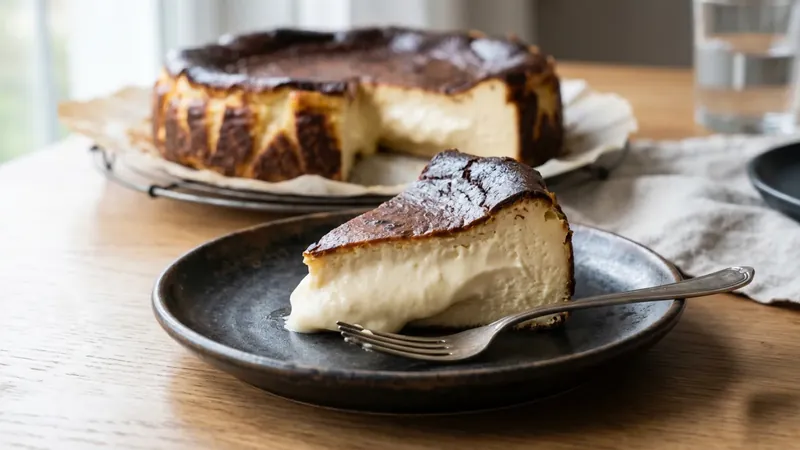
This is the cheesecake that broke all the rules and won everyone over. No biscuit base, no water bath, no anxious checking for cracks; instead it is baked fierce and fast until the top scorches to a deep mahogany. The reward is a molten, almost custardy centre under a bittersweet, caramelised crown. It is genuinely one of the easiest impressive puddings going.
Basque Burnt Cheesecake
Ingredients
- 900g full-fat cream cheese, at room temperature
- 300g caster sugar
- 5 large eggs
- 400ml double cream
- 1 tbsp plain flour
- 1 tsp vanilla extract
- 0.25 tsp fine salt
Method
- Heat the oven to 220C fan and line a deep 23cm springform tin with two overlapping sheets of baking paper, leaving the edges proud of the rim.
- Beat the room-temperature cream cheese with the sugar until completely smooth.
- Add the eggs one at a time, beating well after each, then beat in the salt and vanilla.
- Pour in the double cream and mix until silky, then sift over the flour and fold through.
- Pour the batter into the lined tin and tap it gently on the worktop to release air bubbles.
- Bake for 45 to 50 minutes until the top is deeply browned, almost burnt, and the centre still wobbles dramatically.
- Leave to cool in the tin to room temperature, where it will sink and set.
- Serve at room temperature or lightly chilled, peeling back the paper just before slicing.
3 The Story
The burnt cheesecake takes its name and form from La Vina, a bar in the old town of San Sebastian in the Basque Country of northern Spain. There, a crustless, deeply caramelised cheesecake has been served by the slice for decades, baked tall in paper-lined tins and browned far beyond what most cooks would dare. For years it was a regional speciality, known to those who passed through the pintxos bars of the city but little discussed elsewhere.
Its global moment came when the style was picked up by food writers and chefs abroad, who were drawn to its rule-breaking simplicity. The dessert spread quickly through restaurants and home kitchens, valued precisely because it inverts the usual cheesecake anxieties. Where a New York cheesecake is coddled in a water bath at a low temperature to keep it pale and crack-free, the Basque version is shoved into a hot oven and encouraged to colour, blister and crack. Those flaws are the whole point.
The high heat is doing two things at once. At the surface, the sugars and proteins brown rapidly, producing the bitter, almost toffee-like top that balances the richness beneath. Deeper in the cake, the centre never fully sets, staying loose and creamy because it is pulled from the oven while still wobbling. As it cools, residual heat firms the edges while the middle settles into something between a baked custard and a soft cheese.
The minimal ingredient list rewards good basics. Full-fat cream cheese and double cream give the body, while a single spoonful of flour is just enough to steady the structure without making it dense. Bringing the cream cheese fully to room temperature matters, as cold cheese beats to a lumpy batter that never quite smooths out.
Part of the appeal is how unfussy it is to make look beautiful. The rough, scrunched paper that lines the tin leaves the sides ruffled and rustic, so there is no need for neat edges or polished finishes. A cheesecake that is meant to look a little burnt and a little collapsed is an unusually generous thing to bake, forgiving of imperfection in a way that few desserts are.
Related Content