Pesto Genovese with a Basil-Mint Blend
Vivid, fresh and fragrant
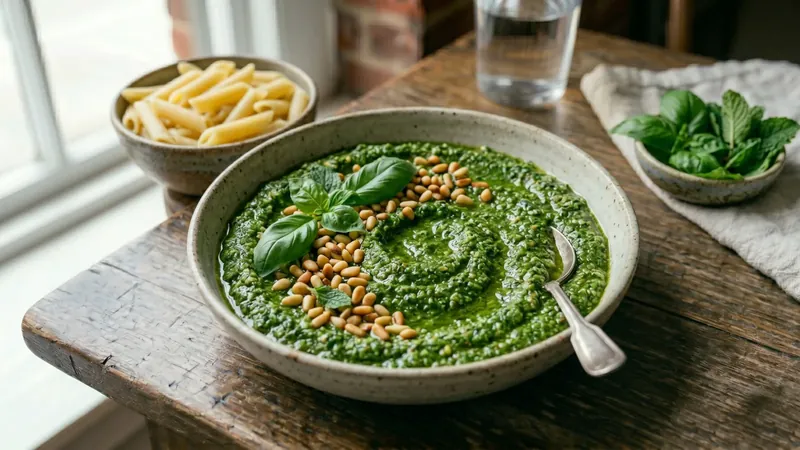
Classic Genovese pesto is one of the great uncooked sauces, all sweet basil, grassy olive oil and salty cheese pounded into a fragrant paste. The twist here is a small handful of fresh mint blended in with the basil, which adds a cool, lifted note that makes the whole sauce taste even greener, and toasting the pine nuts for a deeper, nuttier backbone. It comes together in minutes and tastes of high summer whatever the season.
Pesto Genovese with a Basil-Mint Blend
Ingredients
- 60 g fresh basil leaves
- 15 g fresh mint leaves
- 40 g pine nuts
- 1 small garlic clove
- 40 g Parmesan, finely grated
- 20 g Pecorino, finely grated
- 120 ml extra-virgin olive oil
- Sea salt, to taste
- Squeeze of lemon (optional)
Method
- Toast the pine nuts in a dry frying pan over a medium heat for 3-4 minutes, shaking often, until pale golden. Tip out and cool.
- Crush the garlic with a pinch of salt to a paste, using a mortar and pestle or the flat of a knife.
- Add the basil and mint leaves and pound or pulse until broken down.
- Work in the cooled pine nuts until you have a coarse green paste.
- Stir in the grated Parmesan and Pecorino.
- Add the olive oil gradually, mixing until loose and glossy. Avoid over-blending, which dulls the colour.
- Season with salt and a tiny squeeze of lemon if it needs lifting.
- Toss through hot pasta with a splash of cooking water, or use as you like. Store under a film of oil in the fridge.
3 The Story
Pesto takes its name from the Italian verb pestare, meaning to pound or crush, a reminder that the sauce is defined by its method rather than any single ingredient. It is the signature condiment of Liguria, the crescent of coast in north-west Italy that curls around the port city of Genoa, from which the classic version, pesto alla genovese, takes its full name. Traditionalists insist on a marble mortar and a wooden pestle, arguing that crushing the leaves releases their oils more gently than the whirring blades of a food processor, which can bruise the basil and turn it bitter.
The hero ingredient is basil, and not just any basil. The leaves grown on the Ligurian hillsides are prized for being small, tender and especially sweet, without the sharp, almost minty edge that larger leaves can carry. Whatever basil you use, the goal is the same: a vivid green sauce that smells of summer. The garlic, pine nuts and two cheeses each play a supporting role, the Pecorino bringing a salty tang and the Parmesan a mellow, nutty depth, while good olive oil binds everything into a loose, spoonable paste.
The mint in this version is a gentle liberty rather than a reinvention. Mint and basil are botanical cousins, both members of the same aromatic plant family, which is why they sit together so comfortably; a small proportion of mint amplifies the freshness of the basil and adds a clean, cooling lift without ever tasting like a separate ingredient. The trick is restraint, keeping the mint to a quarter or less of the basil so that it supports rather than competes.
Toasting the pine nuts is the second small refinement. Raw, they are soft and faintly resinous; warmed in a dry pan until golden, they develop a rounder, more pronounced nuttiness that gives the finished sauce extra depth. A light hand throughout is the real lesson of pesto. Over-working it in a blender heats the leaves and turns the bright green dull and khaki, so whether you use a mortar or a machine, work quickly and stop sooner than you think.
Pesto’s uses stretch far beyond a bowl of pasta. It is wonderful stirred into a minestrone at the last moment, spooned over roasted vegetables or grilled fish, spread thinly through a sandwich, or loosened with a little more oil into a dressing. When tossing it through pasta, never add it to a pan over direct heat; instead combine it with the drained, still-hot pasta and a splash of the cooking water off the stove, which warms it through gently and helps it coat every strand. The reward is a sauce that tastes of the garden and brightens everything it touches.
Related Content