Banoffee Pie with Salted Caramel
A 1970s Sussex invention, sharpened with real caramel and espresso cream
Contents
↓ Jump to recipeThere is a plaque on a former restaurant in the village of Jevington, tucked into the East Sussex Downs, and it makes a claim most puddings could never dream of: it names the exact building where a dessert was invented. The Hungry Monk closed in 2012 after nearly fifty years, but in 1971 its owner Nigel Mackenzie and his chef Ian Dowding took an unreliable American recipe for a coffee-toffee pie and rebuilt it around the one ingredient that made it sing. They added sliced banana. Dowding wanted a name that told you what you were eating, spliced banana and toffee together, and banoffi was born — later respelled banoffee by everyone who copied it, which was, within a decade, more or less the entire country.
The copying is the point of the story. Mackenzie used to say, with a mixture of pride and exasperation, that he had seen banoffee pie on menus from Argentina to the far side of the world, almost always uncredited, and that people would insist to his face the pudding was an old family recipe or a Victorian classic. It is neither. It is a piece of 1970s English restaurant cooking, younger than the colour television, and it went feral because it is genuinely brilliant: no baking, a handful of ingredients, and a flavour combination — dairy, caramelised sugar, ripe banana — that hits some deep and slightly embarrassing pleasure centre. I make no apology for loving it.
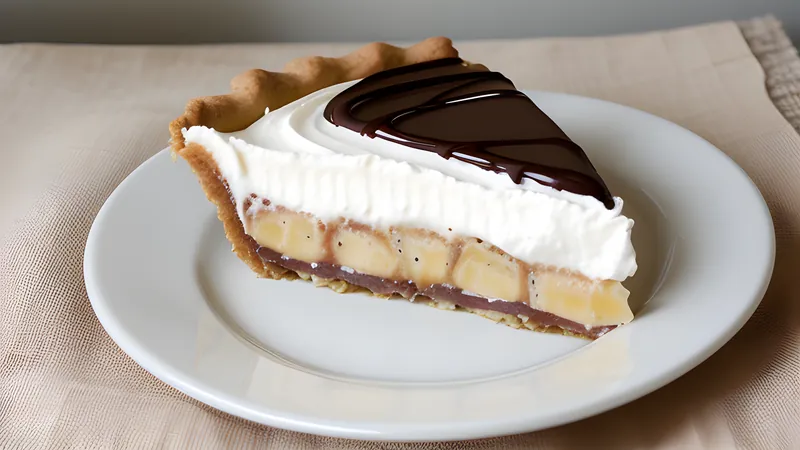
Banoffee Pie with Salted Caramel
Ingredients
- 250g digestive biscuits
- 125g unsalted butter, melted
- 1 pinch fine salt
- 200g caster sugar
- 90g unsalted butter, cubed
- 150ml double cream (for the caramel)
- 1 tsp flaky sea salt, plus extra to finish
- 3 ripe but firm bananas
- 1 tbsp lemon juice
- 400ml double cream (for the topping)
- 1 tbsp icing sugar
- 1 tsp instant espresso powder
- 20g dark chocolate, for grating
Method
- Blitz the digestives to fine crumbs, stir in the melted butter and a pinch of fine salt, then press firmly into a 23cm loose-bottomed tin. Chill for 30 minutes.
- Make the caramel: melt the caster sugar in a dry heavy pan over a medium heat until it turns deep amber, swirling rather than stirring.
- Off the heat, whisk in the cubed butter, then slowly pour in the 150ml cream, whisking through the fierce bubbling. Stir in the flaky salt and cool until thick but spreadable.
- Spread the caramel over the chilled base and return to the fridge for 20 minutes to set.
- Slice the bananas, toss with the lemon juice, and layer them over the caramel.
- Whip the 400ml cream with the icing sugar and espresso powder to soft peaks and pile over the bananas.
- Grate over the dark chocolate, scatter with a little more flaky salt, and serve within a few hours.
Where the original cuts a corner, and why I don’t
The Hungry Monk method boiled an unopened tin of condensed milk for a couple of hours until the milk sugars caramelised into a thick fudge. It works, it is genuinely delicious, and half the country still swears by it. I have moved away from it for two reasons. The first is safety: a tin boiled dry, or opened while still scaldingly hot, can burst, and I have scrubbed caramel off a ceiling exactly once, which was enough. The second is flavour control. When you make caramel from loose sugar in a pan, you decide how dark it goes, and darkness is where the interest lives. Take the sugar past pale gold to a deep amber that smells almost of coffee, and the finished toffee carries a faint bitterness that stops the whole pie sliding into pure sweetness.
That bitterness is what the salt then amplifies. Salted caramel became a cliché for a reason, and the reason is real chemistry: salt suppresses our perception of bitterness at low doses and sharpens our perception of sweetness, so a properly salted caramel tastes both less cloying and more intensely of itself. Flaky sea salt, stirred in while the caramel is still warm and scattered again at the very end, does more work here than any other single decision in the recipe.
The espresso cream, which is the twist
The classic finish is plain whipped cream, sometimes dusted with grated chocolate or a little instant coffee for looks. I fold the coffee right into the cream instead, as a proper flavour rather than a garnish. A teaspoon of instant espresso powder whipped into the double cream turns the whole top layer faintly bitter and grown-up, echoing the coffee note in the dark caramel and cutting through the richness underneath. It is a small change that makes people pause on the first forkful and try to work out what is different. If you keep a jar of espresso cream in your head, it also transforms an ordinary bowl of berries, and it is a close cousin of the coffee buttercream I use on a coffee and walnut cake.
The base, and the trouble with soggy bottoms
A banoffee base is just crushed digestives bound with melted butter, and the two things that go wrong are both about pressure and cold. Press the crumbs firmly, using the back of a spoon or the base of a glass to compact them into an even layer that climbs a little up the sides, because a loose base collapses the moment a fork goes in. Then chill it hard before the caramel goes on. A warm base half-melts into the caramel and never firms up. If you want a little more character, brown 25g of the butter before you mix it in, which gives the crumbs a nuttier, almost toasted-hobnob flavour that stands up to the sweetness above.
Method, step by step
Blitz 250g of digestives to fine crumbs in a processor, or seal them in a bag and take out your week’s frustration with a rolling pin. Stir in 125g of melted butter and a pinch of fine salt until the crumbs look like damp sand, then tip into a 23cm loose-bottomed tart tin and press firmly and evenly across the base and up the sides. Chill for at least 30 minutes.
For the caramel, tip 200g of caster sugar into a wide, heavy, dry pan and set it over a medium heat. Leave it alone until the edges begin to melt, then swirl the pan gently so the melted sugar runs over the dry, and keep swirling rather than stirring until you have a smooth, deep amber liquid that smells rich and just a touch bitter. This takes patience and a steady nerve; caramel goes from perfect to burnt in seconds, so pull it off the heat a shade before you think it’s ready. Drop in 90g of cubed butter and whisk hard — it will foam and spit — then pour in 150ml of double cream in a slow stream, still whisking, until you have a glossy sauce. Stir in a teaspoon of flaky salt. Let it cool until it is thick enough to hold a line when you drag a spoon through it, then spread it over the chilled base and return the tin to the fridge for 20 minutes.
Slice three ripe but still firm bananas on the diagonal, toss the slices with a tablespoon of lemon juice to slow the browning, and arrange them over the set caramel in an overlapping layer. Whip 400ml of double cream with a tablespoon of icing sugar and a teaspoon of instant espresso powder to soft, floppy peaks — stop while it still slumps, because banoffee cream should be pillowy and not stiff. Pile it over the bananas, swoosh it into soft waves, grate over a little dark chocolate and finish with a last pinch of flaky salt.
Getting the bananas right
Banana ripeness is the quiet make-or-break. Too green and they taste starchy and add nothing; too far gone and they turn to grey mush and weep liquid into the cream. You want fruit that is fully yellow with the first freckles of brown appearing, sweet and fragrant but still holding their shape when sliced. The lemon juice is doing real work: banana browns because an enzyme reacts with oxygen, and the acid in lemon juice slows that reaction, buying you a few hours of good looks. This is also why banoffee pie is a same-day pudding. Assemble it in the morning for an evening dinner and you are fine; make it the day before and the bananas will have surrendered.
Make-ahead, storage and small variations
You can get ahead in stages, which is how I actually cook it. The base keeps, chilled and wrapped, for three days. The caramel keeps in a jar in the fridge for two weeks and is worth making in a double batch for exactly that reason — gently warmed, it is a sauce for ice cream, a filling for a sponge, or the beginnings of the torched crust on a crema catalana. Assemble the pie only on the day you’ll eat it, and eat it within about six hours of the cream going on. Leftovers keep overnight in the fridge and taste perfectly good the next day even if the bananas have dulled.
For variations, a spoonful of dark rum whisked into the warm caramel turns the whole thing faintly tropical and adult; a scrape of banana into that boozy caramel doubles down. Swap the espresso cream for one flavoured with a little cardamom if you want something more perfumed, or fold in a spoon of mascarpone to hold the cream firmer for longer. And if you cannot be persuaded away from the boiled tin, at least salt it and darken the sugar in your head next time — the pie you already love has one more gear in it.
Related Content