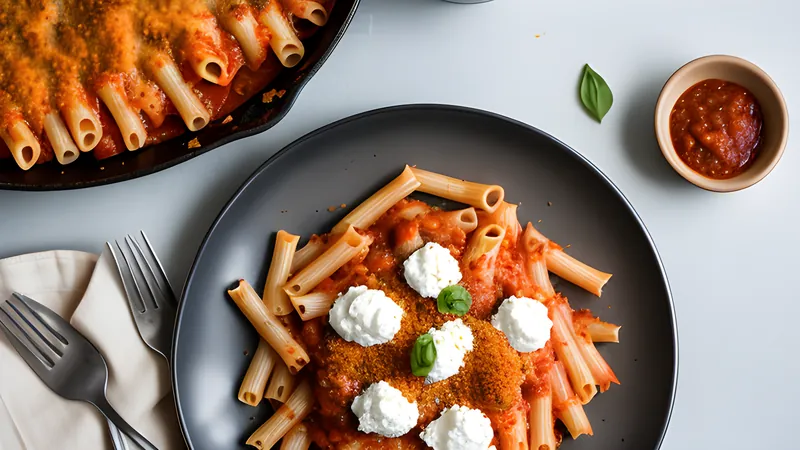
Baked Ziti with Sausage and Three Cheeses
The Italian-American Sunday casserole, built for a crowd
Contents
↓ Jump to recipeBaked ziti is the dish that shows up when there are people to feed and not much money to do it with: a First Communion, a wake, a Sunday when the cousins are coming. It is Italian-American to its bones, a casserole that took the frugal southern-Italian habit of baking leftover pasta with cheese and scaled it up for big American families and big American ovens. You assemble it ahead, slide it in, and pull out a bubbling, golden dish that feeds eight and asks almost nothing of you at the table. Every family that makes it swears their version is the right one, and every version is delicious.
It sits in the same tradition as lasagne and baked rigatoni, the great casserole cousins, but ziti is easier than all of them because there is no layering of delicate sheets and no béchamel to whisk. Tubes, sauce, cheese, oven. That simplicity is the whole appeal, and it is why the dish became a weeknight staple as readily as a Sunday one.
Baked Ziti with Sausage and Three Cheeses
Ingredients
- 500g dried ziti (or rigatoni or penne)
- 400g Italian sausages, skins removed
- 2 tbsp olive oil
- 1 onion, finely diced
- 4 garlic cloves, sliced
- 1 tsp fennel seeds, lightly crushed
- 1/2 tsp chilli flakes
- 2 tbsp tomato purée
- 2 x 400g tins plum tomatoes, crushed by hand
- 1 tsp dried oregano
- A handful of basil leaves, torn
- 250g ricotta
- 1 egg
- 50g Parmesan, grated
- 250g low-moisture mozzarella, grated
- Salt and black pepper
Method
- Heat the oil in a large pan. Add the sausage meat and brown it well, breaking it into small pieces, about 8 minutes. Add the onion and cook for 6 minutes until soft.
- Stir in the garlic, fennel seeds and chilli flakes and cook for 1 minute. Add the tomato purée and cook for 2 minutes until darkened.
- Add the crushed tomatoes and oregano, season, and simmer gently for 25–30 minutes until thick and rich. Stir in the basil. Taste and adjust seasoning.
- Meanwhile, cook the ziti in well-salted boiling water for 2 minutes less than the packet says, so it stays firm. Reserve a cup of pasta water, then drain.
- In a bowl, beat the ricotta with the egg, half the Parmesan and a pinch of salt and pepper until smooth.
- Heat the oven to 200°C fan. Toss the drained ziti with about two-thirds of the tomato sauce, loosening with a little pasta water if needed.
- Spoon half the pasta into a large baking dish. Dollop over half the ricotta mixture and half the mozzarella. Add the rest of the pasta, the remaining sauce, then the remaining ricotta and mozzarella. Finish with the last of the Parmesan.
- Bake for 25–30 minutes until bubbling and browned on top. Rest for 10 minutes before serving.
Where it comes from
Ziti the pasta shape takes its name from the Neapolitan word for “bride”, because a baked ziti dish was traditional at wedding feasts in Campania and Sicily, snapped into lengths by hand and baked with ragù. Southern Italian cooks have long finished pasta in the oven, a technique called pasta al forno, partly to use up what was left from a big pot and partly because a crisp, browned top is its own reward. Italian immigrants carried the habit to America, where cheap dried ziti, tinned tomatoes and plentiful cheese turned it into the red-sauce classic now served from New Jersey to California. The dish you make tonight is the direct descendant of a Campanian wedding table.
The twist: whip the ricotta with an egg
Most baked ziti dots cold ricotta straight from the tub between the layers, and it bakes into dry, chalky pockets that sit apart from everything else. My small change fixes that: beat the ricotta with one egg, a handful of Parmesan and a little seasoning before it goes in. The egg sets the ricotta into a soft, light custard as it bakes, so instead of grainy lumps you get tender, savoury pillows threaded through the pasta, closer to the filling of a good lasagne. It is a thirty-second job that transforms the texture of the whole dish, and once you have done it you will not go back.
While you are at it, buy a firm, drier ricotta if you can, or drain a wetter one in a sieve for twenty minutes. Watery ricotta bleeds liquid into the bake and loosens everything. The same care with cheese pays off in my gnocchi alla Sorrentina, another baked tomato-and-mozzarella number worth knowing.
Building the sauce
The sauce is a straightforward sausage ragù, and the sausage does the heavy lifting. Use good Italian sausages with a decent fennel content; squeeze the meat from the skins and brown it hard, breaking it into small, craggy pieces. Those browned edges are where much of the flavour lives, so give it a proper eight minutes and let it catch a little. The fennel seeds and chilli flakes reinforce the sausage’s own seasoning and give the finished dish that unmistakable pizzeria warmth.
Cook the tomato purée for a couple of minutes before the tinned tomatoes go in; it loses its raw, metallic edge and turns sweeter. Crush the plum tomatoes by hand for a rougher, more interesting texture than a smooth passata. Half an hour of gentle simmering is enough to thicken the sauce and marry the flavours. Keep it slightly looser than you think you want, because the pasta will drink some of it in the oven and you do not want a dry bake.
Why you undercook the pasta
The single most important instruction in the whole recipe is to boil the ziti two full minutes short of the packet time. The pasta continues to cook in the oven, absorbing sauce and moisture as it bakes, and if you started with pasta that was already al dente it will finish soft and bloated. Take it out while it still has real bite and a chalky centre, toss it with most of the sauce, and it will come out of the oven perfect. Reserve a little pasta water to loosen the mix if it tightens up before it goes in the dish.
Tossing most of the sauce through the pasta before layering, rather than just spooning it on top, means every tube is coated and nothing bakes dry. Keep a little sauce back for between the layers and the top so the surface stays moist under its blanket of mozzarella.
Assembly, baking and the crucial rest
Layer it simply: half the sauced pasta, half the whipped ricotta in dollops, half the mozzarella, then repeat, finishing with mozzarella and the last of the Parmesan on top. Use low-moisture mozzarella, the firm block kind sold for pizza, rather than fresh mozzarella balls, which release too much water and leave you with a soggy dish. Fresh mozzarella is a joy sliced over a salad or a pizza, but a baked casserole wants the drier cheese that browns and stretches. If you love the aubergine-and- ricotta school of Sicilian pasta, my pasta alla Norma is the dish to cook next.
Twenty-five to thirty minutes at 200°C fan gives you a bubbling interior and a blistered, golden top. If the top is not as brown as you like, flash it under the grill for a minute, watching it closely. Then, and this takes discipline, let it rest for a full ten minutes before you cut into it. Straight from the oven the sauce is molten and the portions collapse into a puddle; ten minutes lets everything set enough to hold a clean square while staying piping hot.
Make-ahead, freezing and variations
This is a champion make-ahead dish. Assemble it completely, cover and refrigerate for up to a day, then bake from cold, adding ten minutes or so to the time. It also freezes well, either baked or unbaked; thaw overnight before baking, or bake from frozen at a lower temperature, covered with foil, until heated through.
For variations, a layer of wilted spinach or roasted courgette adds vegetables and cuts the richness. Vegetarians can drop the sausage and lean on more fennel, chilli and a handful of chopped olives or mushrooms browned hard for savour. And if you like a creamier bake, a few spoons of béchamel folded through the pasta with the sauce takes it a step toward lasagne. However you build it, baked ziti is generous, forgiving food, made to be shared from the middle of a busy table.
Choosing your shape and cheese
Ziti is the classic tube, smooth-sided and hollow, but it can be hard to find outside Italian delis, so do not fret if you cannot. Rigatoni, with its sturdy ridges, is my favourite substitute because the grooves grip the sauce and the wide bore traps little pockets of ricotta. Penne works too, and its angled ends scoop up sauce nicely. Whatever you choose, pick a substantial tube that holds its shape through a boil and a bake; delicate shapes turn to mush.
On the cheese, the three-cheese framing is doing real work rather than showing off. The mozzarella gives the stretch and the browned top, the Parmesan brings the sharp, savoury depth, and the whipped ricotta supplies the soft, creamy counterpoint that keeps the bake from being all chew and sauce. Skimp on any one and you feel the gap. Grate your own mozzarella from a block if you can, because the pre-grated bags are dusted with anti-caking starch that stops the cheese melting into a proper molten sheet. It is a five-minute job that genuinely improves the finished crust, and it costs less than the ready-grated bags besides.
Related Content