Baingan Bharta with Smoked Aubergine
Charred over a live flame, mashed rough, finished with browned ghee
Contents
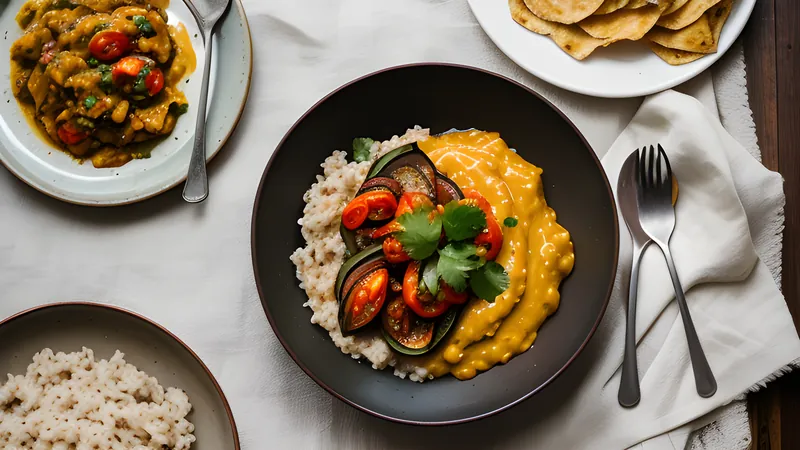
↓ Jump to recipeEvery winter my kitchen smells of scorched aubergine skin, and the smoke alarm and I reach an uneasy truce. That smell is the whole point of baingan bharta. This is a dish built entirely around one flavour you cannot buy in a jar or fake with paprika: the deep, almost meaty smokiness of an aubergine cooked directly in fire until its skin blackens and its insides slump into something soft and grey and wonderful.
My one small liberty with tradition is the finish. Once the bharta is thick and cooked down, I brown a last spoonful of ghee until it turns amber and nutty, then pour it over the top like a second, quieter tarka. It gives the dish a toasted, caramel edge that plays beautifully against the smoke. Everything else here I keep faithful, because baingan bharta earned its reputation the hard way and does not need rescuing.
Baingan Bharta with Smoked Aubergine
Ingredients
- 2 large aubergines (about 800g total)
- 4 tbsp ghee (or 3 tbsp ghee plus 1 tbsp neutral oil)
- 1 tsp cumin seeds
- 2 medium onions, finely chopped
- 4 garlic cloves, crushed
- 1 tbsp fresh ginger, grated
- 2 green chillies, finely chopped
- 3 medium tomatoes, chopped (about 300g)
- 1 tsp ground coriander
- 1/2 tsp ground turmeric
- 1/2 tsp Kashmiri chilli powder
- 1 tsp salt, plus more to taste
- 1 tsp dried fenugreek leaves (kasuri methi)
- Small handful coriander, chopped
- 1/2 tsp garam masala, to finish
Method
- Prick each aubergine several times and char whole over a gas flame, turning with tongs, for 12–15 minutes until the skin is blistered black all over and the flesh has fully collapsed. Rest until cool enough to handle.
- Peel away the burnt skin, scrape out any stubborn charred bits, and mash the smoky flesh roughly with a fork. Keep the juices.
- Heat 3 tbsp ghee in a wide pan over medium heat. Add cumin seeds and let them sizzle for 20 seconds.
- Add onions and cook 8–10 minutes until deep golden. Stir in garlic, ginger and green chillies for 2 minutes.
- Add tomatoes, ground coriander, turmeric, chilli powder and salt. Cook 8–10 minutes until the tomatoes break down and the ghee separates at the edges.
- Fold in the mashed aubergine and its juices. Cook 6–8 minutes, stirring, until thick and glossy. Crush in the kasuri methi.
- In a small pan, brown the remaining 1 tbsp ghee over medium heat until it smells nutty and turns amber, about 90 seconds. Pour it over the bharta.
- Stir through fresh coriander and garam masala. Taste for salt and serve hot with roti or rice.
Where the dish comes from
Bharta simply means something mashed or pounded, and versions of it appear right across northern India and Pakistan wherever aubergines grow and fires burn. In Punjab it is winter food, made when the big glossy aubergines are cheap and cooks fire up coal angithis for warmth anyway. The aubergine goes straight onto the embers, which is why the smoke is not an accident or a garnish. It is the founding idea.
The genius of the dish is economy. One or two aubergines, a couple of onions, tomatoes and store-cupboard spices feed a family, and the technique turns a bland, spongy vegetable into the most flavour-forward thing on the table. There is no cream, no cashew paste, no long list of whole spices to bloom. It is a lean, confident recipe, and that leanness is exactly why the smoke has to be real. If you skip the charring and steam the aubergine instead, you get a perfectly nice mash with nowhere to hide its own dullness.
If you like this kind of coaxing flavour out of a humble vegetable, you will recognise the same logic in moutabal, the Levantine smoked aubergine with yoghurt and pomegranate, which starts from an almost identical burnt aubergine and takes it somewhere cool and tart instead of warm and spiced.
Charring the aubergine
This is the step that matters, so give it your attention. Choose aubergines that feel heavy and taut. Prick each one several times with a knife or fork, which lets steam escape and stops any dramatic bursting. Set them directly over a medium-high gas flame and leave them be for a minute or two before you start turning. You want the skin to blister, split and go properly black, and you want that char right across the whole surface, every side blistered black.
The real test is not the skin, it is the give. Press the aubergine with tongs. When it is done it will feel completely slack, almost deflated, as though there is nothing solid left inside. That usually takes 12 to 15 minutes for a large one. Undercook it and the flesh near the skin stays firm and bitter; the collapse is what tells you the whole thing has steamed itself soft in its own jacket.
No gas hob? Char the aubergines under a very hot grill, turning often, or straight on the wire shelf of an oven at 240°C. You will get less of the fireside smoke, so I sometimes drop a small piece of lit charcoal into a metal bowl beside the mashed flesh, cover it, and let it smoke for a few minutes, the old dhungar trick. It doesn’t quite match the open flame, though it comes close.
Let the charred aubergines cool until you can handle them, then peel. The skin should slip off in blackened sheets. Do not rinse the flesh, no matter how tempting, because you will wash away the smoke you worked for. Pick out any large stubborn burnt flecks, but a few dark specks are flavour. Mash roughly with a fork. I like it coarse, with some texture left, so it never turns to baby food.
Building the masala
The base is a straightforward onion-tomato masala, and the only trick is patience. Cook the onions past soft and into deep gold, which takes a full 8 to 10 minutes over medium heat. This is where the body and sweetness of the dish live. Rush it and the bharta tastes raw and sharp.
Once the garlic, ginger and green chillies have had their two minutes, in go the tomatoes and ground spices. Cook this hard until the tomatoes lose their shape entirely and you see ghee beading at the edge of the pan. That separation, what my mother-in-law calls the masala “leaving the oil”, is the signal that the water has cooked off and the fat has taken on all the flavour. Only then does the aubergine go in.
Fold the smoky flesh through and let it cook down with the masala for another 6 to 8 minutes so the two become one thing rather than mash sitting on top of sauce. Crush the kasuri methi between your palms as you add it; that little dried-fenugreek musk is one of the most recognisably north Indian smells there is.
The browned-ghee finish
Here is the twist. In a small pan, take your reserved tablespoon of ghee past melted and keep going until the milk solids at the bottom turn the colour of weak tea and the whole thing smells of toasted hazelnuts, around 90 seconds. Watch it like a hawk, because the gap between nutty and burnt is about ten seconds. Pour it, sizzling, straight over the finished bharta.
It sounds fussy for a rustic dish, and you can absolutely leave it out. But browned ghee adds a roasted, caramel depth that flatters the smoke, and it costs you one small pan and two minutes. Stir it through with the fresh coriander and a pinch of garam masala at the very end, off the heat, so those top notes stay bright.
Tips, swaps and storage
- Heat control. Kashmiri chilli powder brings colour more than fire. If you want real heat, leave the seeds in the green chillies or add a second one.
- Peas and their friends. Some Punjabi cooks stir a handful of green peas into the masala, which I love in the depths of winter. A few fenugreek greens or spinach leaves wilted in at the end are also traditional.
- Make it richer. A knob of butter or a spoon of thick yoghurt stirred through at the end softens the edges if your tomatoes were very sharp, though a good bharta rarely needs it.
- Storage. It keeps, covered, for three days in the fridge and honestly improves overnight as the smoke settles into the masala. Reheat gently with a splash of water. It freezes well for up to two months.
- What went wrong? Watery bharta means the masala was underdone or the aubergine gave up a lot of juice; just cook it down harder. Bitter bharta usually means undercharred aubergine or a scrap of skin left in.
Serve it hot with soft rotis, or with plain basmati and a spoon of yoghurt. It sits happily alongside a richer main such as paneer butter masala when you want a smoky, savoury counterweight to all that cream, or next to dal makhani for a proper cold-weather thali. It is the kind of dish that asks for almost nothing and gives back the smell of a fire on a dark evening.
Related Content