Bagels, Boiled and Blistered, with a Chewy Crumb
The dense, glossy roll that lives or dies in the pot
Contents
↓ Jump to recipeThere is a particular sound a good bagel makes when you tear it: a soft resistance, then a give, the crumb pulling in strands rather than crumbling. That texture is the whole point, and it comes from decisions made long before the oven. A bagel is a stiff, low-hydration dough that gets boiled before it bakes, and every serious bagel argument you have ever half-heard is really about those two facts.
I make mine with a malt-and-bicarbonate boil, which is my one deviation from the strictly traditional. The malt is standard New York practice for colour and a faint toffee note. The teaspoon of bicarb is borrowed from the pretzel world: it lifts the pH of the water, deepens the crust to a proper mahogany and encourages the blistering that makes a bagel look like it means business. It is a small trick with an outsized payoff, and once you have tried it you will find the plain-water version a little pale and polite.
Bagels, Boiled and Blistered, with a Chewy Crumb
Ingredients
- 500g strong white bread flour (ideally 13%+ protein)
- 290g cold water
- 10g fine salt
- 7g instant dried yeast
- 15g barley malt syrup (or 12g runny honey)
- For the boil: 3 litres water
- 2 tbsp barley malt syrup (or honey)
- 1 tbsp bicarbonate of soda
- 1 tsp fine salt
- Toppings: sesame seeds, poppy seeds, or everything-bagel mix
Method
- Stir the yeast and malt syrup into the cold water until dissolved. Add the flour and salt and mix to a shaggy mass.
- Knead for 10 to 12 minutes by hand, or 8 minutes in a stand mixer on medium, until the dough is smooth, very stiff and passes a rough windowpane. It should feel firm and slightly tacky, never wet.
- Cover and rest for 10 minutes, then divide into 8 pieces of about 100g each.
- Roll each piece into a tight ball, then a 22cm rope, and wrap the rope around your knuckles, sealing the overlap by rolling it under your palm on the bench.
- Sit the shaped bagels on a floured tray, cover, and proof at room temperature for 20 minutes.
- Transfer the tray to the fridge, covered, and cold-proof overnight, 12 to 18 hours.
- Heat the oven to 220C fan. Bring the boil ingredients to a gentle rolling boil in a wide pan.
- Boil the bagels in batches, 45 seconds on the first side, then flip and boil 45 seconds on the second. Lift out with a slotted spoon and drain briefly.
- Dip the wet tops into your chosen seeds, or scatter them over, and sit the bagels on a lined tray.
- Bake for 20 to 22 minutes until deep golden and glossy, rotating the tray halfway. Cool on a rack for at least 20 minutes before slicing.
Where the bagel comes from
The bagel is Polish before it is American. The earliest firm reference is a 1610 community ordinance from Kraków, listing bagels among the gifts given to women after childbirth. For the next few centuries it was a staple of Ashkenazi Jewish communities across Poland and the wider Pale of Settlement, a boiled roll robust enough to be threaded on strings and carried to market. The ring shape was practical rather than decorative: easy to display, easy to transport, quick to judge for freshness by feel.
It crossed the Atlantic with Eastern European Jewish immigration in the late nineteenth century and found its spiritual second home in New York, where the Bagel Bakers Local 338 union controlled production with almost mythical strictness until automation broke their grip in the sixties. What we think of as the “New York bagel”, chewy, dense, boiled in malted water, is really that early-twentieth-century immigrant recipe frozen in amber. Montreal took a different fork: smaller, sweeter, honey in the boil and a wood-fired oven, which is a genuinely different animal and worth its own trip.
The reason the bagel travels so poorly, and why supermarket versions are so often sad, is that the whole character depends on a high-protein dough worked hard and boiled properly. Skip the boil and you have a ring-shaped roll. The boil is the bagel.
Building a stiff dough
Hydration here is around 58 per cent, which is low enough that the dough will feel almost unfriendly at first: dense, tight, reluctant. That is correct. If your dough feels soft and supple like a sandwich loaf, you have added too much water and your bagels will bake up airy and bready. Weigh everything. A stiff dough forgives nothing, and the difference between a good bagel and a slack one is often 20g of water.
I use cold water and start with the yeast and malt dissolved in it, because a stiff dough heats up under the friction of kneading and I would rather it stayed cool and slow. Strong bread flour with a protein content of 13 per cent or higher gives you the gluten strength to fight back against, which is what you want. Canadian-milled flours are ideal; if you can find a flour labelled for bagels or pizza, use it.
Kneading is the workout. Ten to twelve minutes by hand on a stiff dough is genuinely tiring, and you will be tempted to stop early. Don’t. You are looking for a smooth, taut surface and a rough windowpane, the point where a stretched piece goes translucent before it tears. A stand mixer handles it in about eight minutes on medium, though a light domestic machine will complain, so give it rests. This same reluctant, muscular dough is what makes a chewy simit worth the effort, and the shaping instinct carries straight over.
Shape, then wait
Divide into eight even pieces, weighed, because uneven bagels boil and bake unevenly. Roll each into a tight ball first to build surface tension, then into a rope about 22cm long. Wrap the rope around the base of your fingers so the ends overlap in your palm, then roll that overlap against the bench to weld it shut. A seam that hasn’t been sealed will spring open in the boil and you will get a horseshoe. The hole should look too big, because it will close as the dough proofs and boils.
Now the overnight cold proof, which is my favourite bit and the step most home bakers skip. A 20-minute rest at room temperature, then 12 to 18 hours in the fridge. The slow cold fermentation develops a deeper, faintly sour flavour and, crucially, firms the dough so it holds its shape through the boil. Cold bagels also float, which is your doneness test: drop one in a bowl of cold water before boiling, and if it floats within 10 seconds it is ready. If it sinks, give it more time at room temperature.
The boil and the bake
Get the oven fully up to 220C fan before you boil anything, because bagels go straight from pot to oven and a cool oven means a flat, dull crust. Bring the boiling water up with the malt, bicarb and salt to a lively but not violent roll. Boil in batches, never crowding, 45 seconds a side. A longer boil, up to 90 seconds a side, gives a thicker, chewier crust and a denser crumb, so treat this as your dial: 45 seconds for a slightly lighter bagel, 90 for a proper dense bruiser.
Lift them out, drain for a second, then top while wet so the seeds stick. Bake 20 to 22 minutes until deep golden with a glossy, blistered skin. Rotate the tray halfway; ovens are liars about evenness. Cool for at least 20 minutes before you cut one, because the crumb is still setting and a hot bagel gums up under the knife.
What goes wrong, and why
Pale, wrinkled crust: your boil water was too cool, or you skipped the malt. A gentle rolling boil matters. Flat bagels that spread: over-proofed, or the dough was too wet, or both. Tough, tight crumb with no chew, just hardness: under-fermented, so the flavour never developed and the gluten never relaxed. Bagels that split open on top in the oven: usually a shaping fault, an unsealed seam, or an oven that wasn’t hot enough to set the crust before the interior expanded.
The commonest disappointment is the airy, bready bagel, and it is almost always too much water. Next time, drop the hydration to 56 per cent and knead a little longer. You want to fight the dough.
Toppings, storage and a few ideas
Sesame and poppy are the classics; an everything mix of sesame, poppy, dried garlic, dried onion and flaky salt is worth keeping in a jar. Toast the sesame lightly first for a deeper, nuttier crust, which is a tiny move with a real return. For a cinnamon-raisin version, work 100g of soaked raisins and a teaspoon of cinnamon into the dough after the first knead, and drop the malt from the boil.
Bagels are best the day they are baked, full stop. On day two, they want toasting. Beyond that, slice and freeze them, then toast from frozen straight in the toaster. Freezing whole and thawing gives you a leathery result, so always slice before freezing.
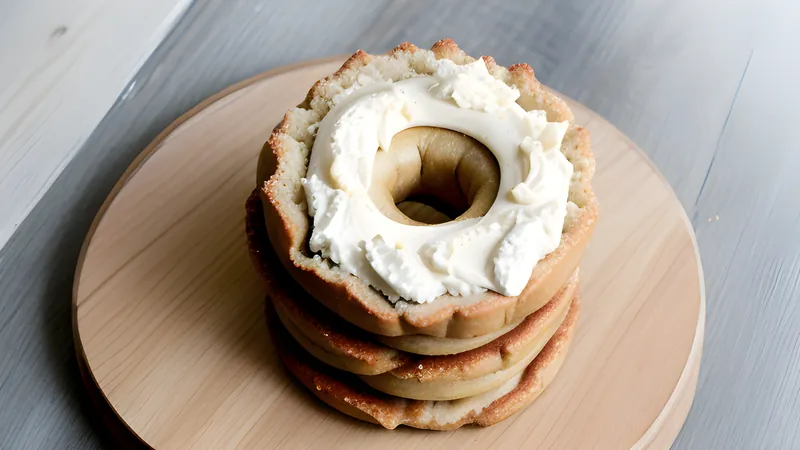
A fresh bagel wants a proper foundation, and if you have got the baking bug this same discipline turns straight into a batch of English muffins for a griddled breakfast, or a glossy egg-washed six-strand challah for the weekend. Split a still-warm bagel, toast the cut faces hard, and pile on cream cheese and smoked salmon, or a fried egg with hot sauce. The chew is the reward for the pot.
Related Content