Bacalhau à Brás: Salt Cod, Egg and Potato
Lisbon's late-night tangle of cod, crisp potato and softly set egg
Contents
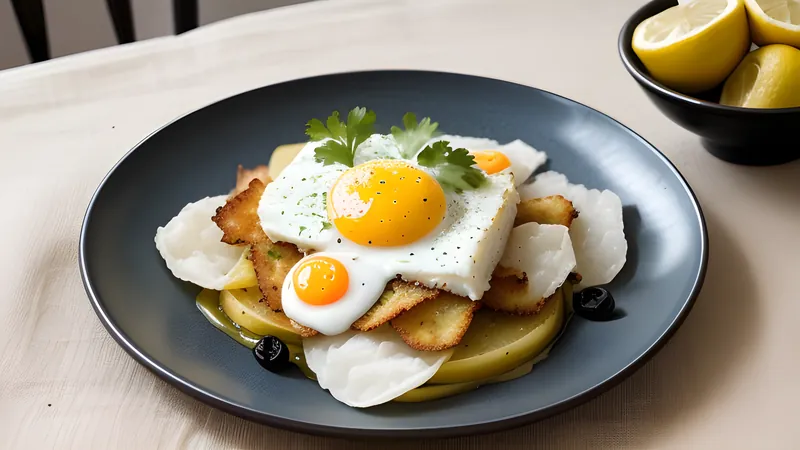
↓ Jump to recipeThere is a version of this dish served in a hundred tiled Lisbon tascas at one in the morning, when the fado has finished and everyone is hungry in that specific way that only cheap wine and singing produces. It arrives in a tangle: golden, faintly wobbly, flecked with black olives and green parsley, smelling of onions that have been coaxed rather than hurried. You eat it with a fork and a glass of something cold, and it tastes like the best decision you have made all week.
Bacalhau à Brás is the great trick of Portuguese cooking, which is that salt cod, a preserved ingredient invented for the long Atlantic voyages, can taste this alive. The Portuguese claim more than three hundred ways with bacalhau, one for every day of the year and a few spare. This is the one I make most, because it turns storecupboard humility into something you would happily serve to people you want to impress.
Bacalhau à Brás: Salt Cod, Egg and Potato
Ingredients
- 400g salt cod (bacalhau), thick loin pieces
- 600g floury potatoes (Maris Piper or similar), peeled
- Sunflower or vegetable oil, for frying (about 500ml)
- 3 tbsp olive oil
- 2 medium onions, halved and thinly sliced
- 4 garlic cloves, thinly sliced
- 1 bay leaf
- 8 large eggs
- 1/2 tsp smoked paprika (pimentón)
- 20 good black olives, pitted
- Large handful flat-leaf parsley, chopped
- Black pepper
Method
- Soak the salt cod in cold water in the fridge for 24-48 hours, changing the water 3-4 times, until it tastes pleasantly salty rather than harsh.
- Poach the drained cod in barely simmering water for 8 minutes, lift out, cool, then remove skin and bones and flake into rough shreds.
- Cut the potatoes into 3-4mm matchsticks. Rinse in cold water, then dry thoroughly on a tea towel.
- Heat 500ml oil to 170C and fry the potatoes in batches for 4-5 minutes until pale gold and just crisp. Drain on kitchen paper and salt lightly.
- In a large wide pan, warm the olive oil and cook the onions, garlic and bay leaf gently for 12-15 minutes until soft and sweet.
- Stir in the flaked cod and smoked paprika and warm through for 2 minutes.
- Fold in the fried potatoes so they stay coated but keep some crunch.
- Beat the eggs with black pepper. Turn the heat to low, pour them in and stir constantly for 60-90 seconds until barely set and still glossy. Remove from the heat while soft.
- Scatter with olives and parsley and serve at once.
Where the dish comes from
The name points to a man called Brás, thought to have run a tavern in the Bairro Alto district of Lisbon in the nineteenth century. The recipe is a masterclass in using up what a cook already has to hand: yesterday’s fried potatoes, the salt cod that hangs stiff as a board in every grocer’s, eggs, onions, olives. Nothing here was expensive even when it was invented, which is the mark of a dish born in a working kitchen rather than a grand one.
Salt cod itself is older and stranger. From the fifteenth century, Portuguese and Basque fishermen sailed to the cod banks off Newfoundland, salting and drying their catch on deck so it would survive months at sea. A landlocked, fish-loving nation grew up around a fish it caught two thousand miles away, and bacalhau became the national obsession, the thing eaten on Christmas Eve and ordinary Tuesdays alike. The preservation was practical; the affection that followed was entirely a matter of taste.
What separates à Brás from its cousin, bacalhau à Gomes de Sá, is texture and timing. Gomes de Sá bakes the cod and potato with hard-boiled eggs into something more casserole-like. À Brás keeps everything loose and quick, the raw egg stirred in at the very last second so it clings to the strands like a soft sauce. Get that final minute right and the whole thing sings.
The salt cod, and how not to fear it
The single thing that puts people off making this is the cod, and it is the single thing worth getting right. Salt cod is stiff, pale and aggressively salty out of the packet, and it needs soaking to become usable. Thick loin pieces want 24 to 48 hours in cold water in the fridge, with the water changed three or four times. Thinner tail ends soak faster, so if your piece is uneven, cut it and treat the parts separately.
How do you know when it is ready? Taste a sliver. It should be pleasantly seasoned, like a good ham, rather than making you wince. Under-soaked cod will wreck the finished dish because there is no salvaging it later; over-soaked cod loses its character and goes woolly. Somewhere in the middle is the sweet spot, and your tongue is a better judge than any timer.
If you genuinely cannot find salt cod, you can approximate it: take 400g of fresh, thick cod, bury it in coarse salt for 24 hours in the fridge, rinse it, then use it as below. It lacks the deep, matured savour of the real thing, though it will still be good. The proper article rewards the patience, though, and it keeps for months in the cupboard, ready for the next craving.
Once soaked, I poach the cod very gently for eight minutes, then flake it warm, pulling out skin and any stray bones. Flake it in generous shreds rather than mincing it to fluff; you want to feel the fish.
The potatoes are half the dish
People obsess over the cod and forget the potatoes, which is a mistake, because à Brás is really a potato dish with fish through it. They should be cut into proper matchsticks, three to four millimetres square, and fried until pale gold and crisp at the edges. Floury varieties like Maris Piper give the best contrast: shattering outside, fluffy within.
Two details make or break them. First, rinse the cut sticks in cold water to wash off surface starch, then dry them ferociously on a tea towel; wet potatoes spit and steam instead of crisping. Second, fry in batches at 170C so the oil temperature does not crash. A crowded pan gives you pale, greasy, floppy chips, and floppy chips make a sad à Brás.
Here is my one small liberty with tradition. A proper Brás uses only the sweet onions for flavour, but I stir half a teaspoon of smoked paprika into the cod and onions just before the potatoes go in. It leans into the Atlantic, iron-pot character of the dish and echoes the smoke you would get if you cooked over wood. It is a whisper rather than a shout; you should wonder where the warmth is coming from rather than taste “paprika”. If you want to stay strictly classical, leave it out and you lose nothing essential.
Bringing it together
The assembly is fast, so have everything ready before you start. Soften the onions, garlic and a bay leaf in olive oil for a good twelve to fifteen minutes until sweet and slumped; this slow start is where the backbone flavour lives, so do not rush it over high heat. Stir in the flaked cod and the paprika, warm it through, then fold in the fried potatoes so they take on a gloss of oil while keeping their crunch.
Now the moment that matters. Beat eight eggs with black pepper, turn the heat right down, pour them over the cod and potato and stir constantly. You are aiming for the texture of a very loose scramble, barely set and still glossy, coating every strand. This takes 60 to 90 seconds and no more. The residual heat keeps cooking the egg after it leaves the hob, so pull the pan off while it still looks slightly underdone. Egg cooked to firm curds is the commonest failure; it turns a silky dish dry and granular.
Off the heat, scatter over black olives and a great deal of chopped parsley. Serve immediately, on warm plates, with a green salad sharp with vinegar and a glass of vinho verde. It waits for no one, which is part of its charm.
Tips, swaps and what to do with leftovers
- Egg insurance. If you are nervous about timing, cook the egg over a diffuser or the lowest flame you have. Slow and gentle gives you a wider margin than fast and hot.
- Onions matter. Spanish onions are milder and sweeter and behave well here. Red onions work but tint everything pink.
- Olives. Use small, firm black olives that carry real flavour and avoid the soft, over-ripe kind. A few capers alongside stray from tradition and taste excellent.
- Make-ahead. Soak the cod and fry the potatoes earlier in the day; keep the potatoes at room temperature, uncovered, so they stay crisp. The final assembly then takes five minutes.
- Leftovers. Cold à Brás the next morning, gently reheated in a pan with a splash of oil, is one of the best breakfasts going. It will never be as silky as the first serving, but it will still make you happy.
If you have caught the salt cod habit, it pairs naturally with the smoky, Atlantic mood of grilled octopus with smoked paprika and potato, and it sits in the same family of thrifty, fish-forward suppers as a proper fish pie with a cheddar mash crust. For another tomato-rich take on humble fish that punches far above its cost, look at chraimeh, the Libyan-Jewish spiced fish.
Make it once and you will understand why the Portuguese never tired of their far-travelled fish. It is humble, quick and generous, and it turns a hard board of salted cod into supper for four with something to talk about.
Related Content