Aubergine Katsu Curry
Panko-crisp aubergine under a glossy, faintly sweet Japanese curry
Contents
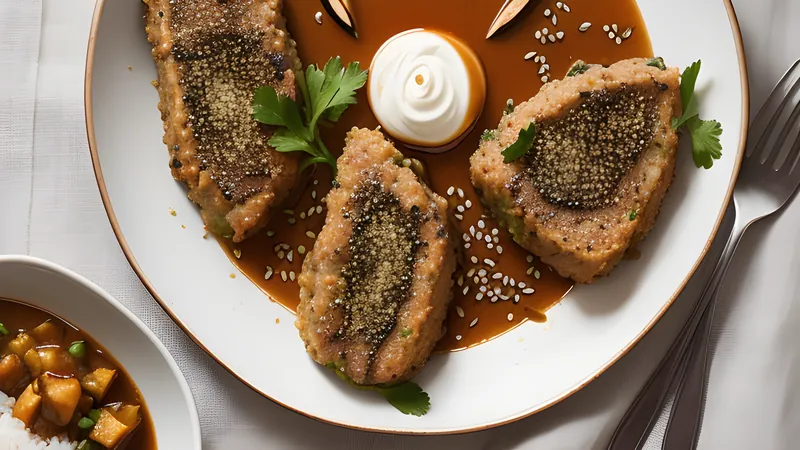
↓ Jump to recipeKatsu curry is one of those dishes that quietly conquered Britain, sold in every high-street chain and supermarket chiller, and it is easy to forget how good the real thing is until you make it at home. The classic uses a breaded pork or chicken cutlet, but aubergine turns out to be a superb stand-in: cut into thick steaks, salted, crumbed in panko and shallow-fried, it goes silky and custardy inside its crisp golden shell, and it drinks up that glossy, faintly sweet Japanese curry sauce in a way meat never quite does.
My twist is in the sauce. Most home recipes reach for a block of Japanese curry roux, which is convenient but tastes of the packet. I build the sauce from scratch with grated apple and a spoon of honey for the signature mellow sweetness, and it comes together in the time it takes to crumb the aubergine. Once you have made it this way, the block starts to taste like a shortcut you no longer need.
Aubergine Katsu Curry
Ingredients
- 2 large aubergines, cut lengthways into 1.5cm steaks
- 100g plain flour
- 2 eggs, beaten
- 120g panko breadcrumbs
- Neutral oil for shallow-frying
- For the sauce: 2 tbsp neutral oil
- 1 large onion, finely chopped
- 3 garlic cloves, grated
- 1 tbsp fresh ginger, grated
- 2 tbsp mild curry powder
- 1 tsp garam masala
- 1 tsp ground turmeric
- 2 tbsp plain flour
- 600ml vegetable stock
- 1 tbsp soy sauce
- 1 tbsp honey
- 1 eating apple, grated
- 1 tsp mild-medium curry paste or a squeeze of ketchup (optional)
- Steamed short-grain rice, to serve
- Pickled ginger and toasted sesame seeds, to garnish
Method
- Make the sauce first. Heat 2 tbsp oil and soften the onion for 10 minutes until sweet and pale gold. Add garlic and ginger for 1 minute.
- Stir in the curry powder, garam masala, turmeric and flour to make a paste, and cook 1 minute.
- Gradually whisk in the stock, then add soy sauce, honey and grated apple. Simmer gently for 15 minutes, stirring, until glossy and thick enough to coat a spoon. Blend smooth if you prefer, and keep warm.
- Salt the aubergine steaks lightly and press between kitchen paper for 10 minutes to draw out moisture, then pat dry.
- Set up three trays: flour, beaten egg, panko. Coat each aubergine steak in flour, then egg, then panko, pressing the crumbs on firmly.
- Heat 1cm of oil in a wide pan to 180°C. Shallow-fry the steaks 2–3 minutes each side until deep golden and crisp. Drain on a rack.
- Slice each katsu into thick fingers. Serve over short-grain rice with the curry sauce poured alongside, topped with pickled ginger and sesame seeds.
What katsu curry actually is
Katsu curry is a poster child for yoshoku, the genre of Western-influenced Japanese cooking that emerged in the late nineteenth and early twentieth centuries as Japan opened up and adapted foreign dishes to local taste. Curry itself arrived via the British Royal Navy rather than from India directly, which is why Japanese curry is thick, mild and gravy-like rather than fragrant and fiery. The Japanese made it their own, sweetening and smoothing it into something closer to a stew, and it became one of the country’s most beloved everyday foods.
Katsu, meanwhile, is short for katsuretsu, a loan-word rendering of “cutlet”, a panko-crumbed, deep-fried piece of meat that is itself pure yoshoku. Put a katsu on a plate of rice, pour curry sauce alongside, and you have katsu karē, comfort food served in Japanese homes, canteens and railway stations alike. The aubergine version, nasu katsu, is a genuine Japanese vegetarian riff and not a Western invention, which is part of why it works so honestly.
If you like the crisp-crumbed, panko world, you will recognise the technique from tonkatsu with shredded cabbage and Bulldog sauce, the pork cutlet this dish borrows from, and for another comforting rice-bowl in the same idiom, katsudon, the pork cutlet and egg over rice, is worth your time.
Building the sauce
The sauce is where a scratch-made katsu curry earns its keep, and it hangs on two ideas: a proper roux for body and grated apple for that unmistakable mellow sweetness.
Start by cooking the onion slowly, a full ten minutes, until it is soft and just golden. This sweetness is the backbone of the sauce. Then bloom the spices, curry powder, garam masala and turmeric, with the flour in the oil to make a paste, cooking it for a minute so the flour loses its raw taste and the spices open up. Whisk in the stock gradually, exactly as you would a béchamel, to keep it lump-free, and let it simmer until it thickens to a glossy sauce that coats the back of a spoon.
The grated apple is the classic Japanese trick, dissolving into the sauce to give fruity sweetness and roundness without sugar’s flat edge. Honey backs it up and soy sauce brings the savoury depth. Simmer for a good fifteen minutes so the flavours marry and the raw floury taste cooks out completely. I like the sauce with a little texture from the onion, but if you want the smooth, pourable finish of the restaurant version, blitz it with a stick blender. Keep it warm and slacken with a splash of stock if it thickens too far while the aubergine fries.
Crumbing and frying the aubergine
Aubergine holds a lot of water, and water is the enemy of a crisp crust, so salt the steaks lightly and press them between kitchen paper for ten minutes before you crumb them. This draws out surface moisture and seasons the flesh, so the coating adheres and stays crisp instead of steaming loose.
Set up a tidy production line: flour, beaten egg, panko. Flour first so the egg has something to grip, egg to glue on the crumb, then panko pressed on firmly with your hands. Panko, the coarse Japanese breadcrumb, is what gives katsu its distinctive shaggy, extra-crunchy shell; ordinary breadcrumbs go dense and are no substitute here. Keep one hand for the dry steps and one for the wet, or you will end up crumbing your own fingers.
Shallow-fry in about a centimetre of oil at 180°C. Too cool and the crumb soaks up oil and turns greasy; too hot and it browns before the aubergine softens through. Two to three minutes a side gives you a deep-golden crust and a meltingly soft interior. Drain on a wire rack rather than paper, which keeps the underside crisp instead of sitting in its own steam. Then slice each steak into thick fingers, the traditional presentation, which also lets the sauce find its way between the pieces.
Assembly and the trimmings
Bowl of short-grain Japanese rice, the crisp aubergine katsu sliced on top or to one side, and the curry sauce poured generously alongside rather than over the whole thing, so the crust keeps some of its crunch. A little mound of pink pickled ginger cuts the richness, and a scatter of toasted sesame seeds adds nuttiness. A handful of finely shredded raw cabbage on the side, as with tonkatsu, gives a fresh, crunchy counterpoint.
Tips, swaps and make-ahead
- Make the sauce ahead. It keeps three days in the fridge and freezes well for two months, thickening as it sits, so loosen with stock when reheating. This makes a weeknight katsu genuinely quick.
- Oven or air-fryer. For less oil, spray the crumbed steaks with oil and bake at 220°C fan for about 20 minutes, turning once, or air-fry at 200°C for 12 to 15 minutes. You lose a little of the shallow-fried richness but gain ease.
- Heat level. Japanese curry is mild by design. For more warmth add a teaspoon of curry paste or a pinch of cayenne, but keep the sweet, rounded character intact.
- Other vegetables. Thick slices of sweet potato, whole flat mushrooms, or firm tofu all crumb and fry well the same way; sweet potato will want a little longer to cook through.
- Keeping it crisp. Hold fried katsu on a rack in a low oven while you finish the batch. Never stack them or cover them tightly, as trapped steam softens the crust in minutes.
This is a proper weekend-supper reward with a weeknight-friendly sauce, and once you have tasted the from-scratch version, glossy, apple-sweet and deeply savoury against that shattering panko crust, the boxed roux goes to the back of the cupboard for good.
A little depth, if you have five spare minutes
The scratch sauce is complete as written, but two optional additions push it closer to the umami-rich versions you get in a good Japanese canteen. A teaspoon of instant dashi granules stirred into the stock, or a small square of kombu simmered in it and lifted out, adds a savoury undertow that makes the sauce taste cooked-down and complex rather than merely thick. And a knob of butter whisked in right at the end, off the heat, gives it a glossy, restaurant-smooth finish and rounds off any residual sharpness from the spices. Neither is essential; both are the difference between very good and quietly outstanding.
One last word on the aubergine itself. Choose specimens that feel heavy and firm with taut, glossy skin, because older aubergines are spongier and more bitter, and cut your steaks an even 1.5cm thick so they cook through at the same rate as the crust browns. Get those two things right, salt them properly, and the interior turns to something silken and almost creamy under the crackling panko. That textural swing, shatter then melt, is the whole reason to make katsu at home, and it is worth every minute at the crumbing tray.
Related Content