Ash Reshteh: Persian Noodle and Herb Soup
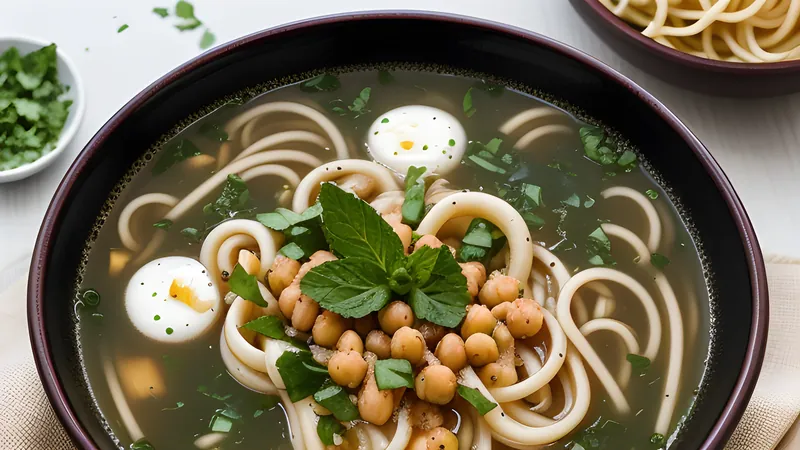
A thick green tangle of herbs, beans and noodles, crowned with fried mint, garlic and soured whey
Contents
↓ Jump to recipeAsh reshteh is the soup Iranians make to mark a turning point. It is eaten at Nowruz, the Persian New Year at the spring equinox, and at the thresholds of life more generally - before a journey, before a new job, at moments when a family gathers to wish someone well. The noodles matter here in a symbolic way: reshteh means “thread” or “string”, and pulling the long strands out of the pot stands for untangling the knots of life and choosing a good path ahead. Cooks even say a small prayer as they add them. It is food with intention woven right into it.
It is also, plainly, one of the great vegetarian soups of the world. Pounds of fresh herbs cook down into a thick, dark, almost stew-like broth, studded with three kinds of pulse and tangled with chewy noodles, then crowned with a triple garnish that is half the pleasure of the whole dish. The first spoonful, with its swirl of soured whey, crisp onion and minty oil, tastes of far more than the sum of a few cheap ingredients.
Ash Reshteh: Persian Noodle and Herb Soup
Ingredients
- 100 g dried chickpeas, soaked overnight
- 100 g dried red kidney beans, soaked overnight
- 100 g brown or green lentils
- 3 tbsp olive oil, plus more for frying
- 2 large onions, thinly sliced
- 4 cloves garlic, sliced
- 1 tsp ground turmeric
- 2 litres water or light stock
- 200 g fresh flat-leaf parsley, chopped
- 200 g fresh coriander, chopped
- 150 g fresh dill, chopped
- 200 g spinach, chopped
- 50 g garlic chives or spring onion tops, chopped
- 200 g reshteh (Persian noodles) or linguine, broken into pieces
- Salt and black pepper
- For the garnish: 4 tbsp kashk (or thick Greek yoghurt), 2 more onions fried crisp, 2 tbsp dried mint, 2 cloves garlic
Method
- Drain the soaked chickpeas and kidney beans. Put them in a large pot with plenty of fresh water, bring to the boil, then simmer for 45-60 minutes until nearly tender. Add the lentils for the final 20 minutes. Drain and set aside.
- In your largest pot, heat 3 tbsp oil over medium heat. Fry the sliced onions with a pinch of salt for 12-15 minutes until deep gold and soft. Add the garlic and turmeric and cook for 1 minute more.
- Add the 2 litres of water and the cooked pulses. Bring to a simmer.
- Stir in all the chopped herbs and the spinach. The pot will look overfull; it wilts down within minutes. Simmer, partly covered, for 30 minutes, stirring occasionally, until the greens have melted into a thick dark broth.
- Add the broken noodles and simmer for a further 10-12 minutes until tender and the soup has thickened. Season generously with salt and pepper. It should be thick enough to hold a trench when you drag a spoon through it; add water if too dense.
- For the garnish, fry the two extra sliced onions slowly in oil until deep brown and crisp, then drain. In a small pan, warm a few tablespoons of oil, take it off the heat and stir in the dried mint and grated garlic to make a fragrant mint oil.
- Serve each bowl swirled with kashk, a spoon of mint oil, a scatter of crisp fried onions and, if you like, extra kashk drizzled on top.
Ash: the mother of Persian soups
In Persian, ash is a whole category - a family of thick, hearty soups so central to the cuisine that the word for cook, ashpaz, literally means “ash-maker”, and the kitchen is the ashpazkhaneh, the “ash house”. These are ancient dishes, thick enough to eat as a meal, and every region and season has its own. There are ash made with pomegranate, with barley, with yoghurt, with fresh green wheat; ash reshteh, the noodle one, is the most famous and the one most tied to celebration.
The heap of herbs is the whole character of the dish, and it is genuinely a heap - half a kilo or more of parsley, coriander and dill for a single pot, cooked down until they lose their brightness and turn dark and mellow. This long cooking is deliberate. Fresh, these herbs are sharp and grassy; simmered for half an hour they turn deep, savoury and almost meaty, giving the soup a body and depth that no quick blitz of raw herbs could. Do not be tempted to shortcut it - the soup you want is the one where the greens have surrendered completely.
Three pulses, cooked properly
Chickpeas, kidney beans and lentils each bring something different: chickpeas for their nutty firmness, kidney beans for their creamy softness, lentils for the way they break down and thicken the broth. Soak the chickpeas and kidney beans overnight, always - unsoaked they take an age to soften and kidney beans in particular need a proper hard boil to be safe to eat. Cook the two big pulses together until nearly tender before the lentils go in, since lentils cook far faster and would turn to mush if they went in at the start.
Getting the beans properly tender before they join the herb broth matters, because once they are in the acidic, herb-heavy soup they soften very slowly - the same reason cooks tell you to salt beans late and never cook them in tomato until they are already soft. Do the bean-cooking as its own stage and you avoid a bowl of chalky, half-done chickpeas.
The noodles, and what to do without them
Reshteh are flat Persian wheat noodles, a little like a soft linguine, sold dried in Iranian and Middle Eastern shops. They are slightly saltier and starchier than Italian pasta, which helps thicken the soup, and they have that symbolic weight I mentioned. If you cannot find them, broken linguine or fettuccine is the standard substitute and works fine - add a touch more salt to compensate. Break the noodles into rough lengths before they go in so they distribute through the thick soup rather than clumping.
Add the noodles near the end and watch the timing. They release starch as they cook and thicken the ash considerably, so you may need to loosen with a splash of water to keep it spoonable. Overcook them and they go flabby; the sweet spot is tender with a slight chew, which usually lands around ten to twelve minutes. The finished soup should be thick enough that a spoon dragged across the surface leaves a trench that fills back in slowly.
The garnish is not optional
Here is where an ordinary green soup becomes ash reshteh, and it is the small clever turn that lifts the whole bowl. Three toppings go on, and each does a distinct job.
Kashk is the traditional one - a fermented, dried whey product, sharp and salty and funky, sold as a thick pourable paste in Persian shops. Swirled into the hot soup it adds a tangy, almost cheesy depth that plays against the mellow herbs. If you cannot get kashk, thick Greek yoghurt or soured cream stands in for the tang, though it lacks the deep fermented note; loosen it with a little water and stir some through the soup as well as spooning it on top.
The second garnish is onions fried slowly to a deep, crisp brown - piaz dagh, the caramelised onion that flavours half of Persian cooking. Fry them patiently until they are genuinely dark and crunchy, and drain them well, because their sweetness is the counterweight to the soup’s herby, tangy backbone.
The third is the mint oil, and here is the discipline: warm the oil, then take it off the heat before you stir in the dried mint and garlic. Dried mint scorches to bitterness in a hot pan in seconds, so bloom it in oil that has been pulled off the flame, letting the residual heat draw out its flavour without burning it. A drizzle of that dark green mint oil over the pale swirl of kashk and the brown crisp onions is the picture everyone recognises.
Tips, make-ahead and storage
Ash reshteh is a soup that rewards being made in a big batch, and it genuinely improves after a night in the fridge, once the herbs and beans have settled into one another. It thickens dramatically as it cools - the pulses and noodles keep drinking liquid - so expect to loosen it with a good splash of water when you reheat, and re-season, since the fresh water dilutes the salt. Reheat gently and stir often, as a thick bean soup catches easily on the base.
Cook the noodles fresh if you are making the base ahead, or accept that pre-cooked noodles will soften further overnight. It freezes reasonably well without the noodles - freeze the herb-and-bean base, then add fresh noodles when you reheat. Always garnish to order, since the crisp onions go soft and the mint oil loses its lift if they sit in the soup.
For another Middle Eastern soup that leans on tempered dairy and a scald of mint butter, see Yayla Çorbası: Turkish Yoghurt and Rice Soup. And to serve alongside, a warm round of Barbari: The Persian Flatbread with Nigella and Sesame is exactly what an Iranian table would put next to the pot.
Related Content