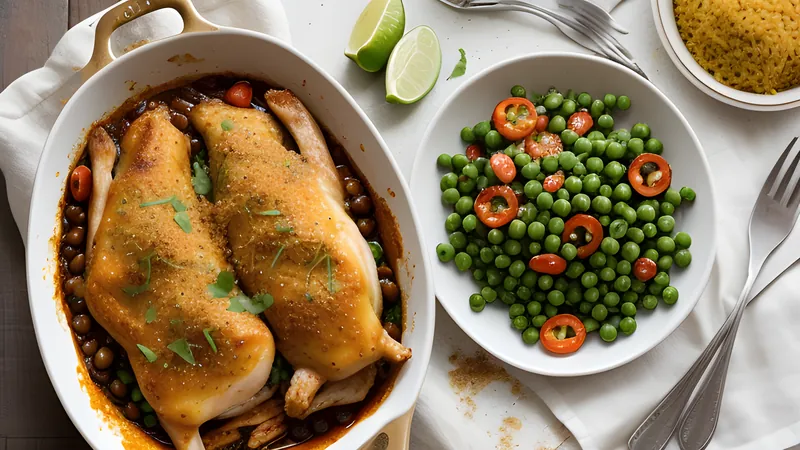
Arroz con Pollo with Sofrito and Peas
The one-pot chicken-and-rice that raised half of Latin America
Contents
↓ Jump to recipeThere are as many arroz con pollo recipes as there are grandmothers in the Spanish-speaking world, and every one of them is correct. It travelled from Spain with the paella tradition, then settled across the Caribbean and Latin America, picking up local habits at each stop — achiote in Puerto Rico, beer in Colombia, capers and olives wherever the Spanish pantry followed. What holds all the versions together is a browned chicken, a patiently built sofrito, and rice that finishes in the same pot, drinking up everything that came before it.
This is the dish I make when I want to feed people generously from one pan without hovering. It rewards good browning and a slow start, then more or less looks after itself. The twist I hold onto is the olive brine — a splash stirred into the stock gives the finished rice a briny lift that keeps all that richness bright.
Arroz con Pollo with Sofrito and Peas
Ingredients
- 8 bone-in, skin-on chicken thighs
- 300g medium-grain rice (Valencia or bomba)
- 1 onion, finely chopped
- 1 green pepper, finely chopped
- 1 red pepper, finely chopped
- 4 garlic cloves, minced
- 3 ripe tomatoes, grated (or 200g passata)
- 600ml chicken stock, warm
- 1 large pinch saffron threads (about 0.25g)
- 1 tsp ground achiote (annatto) or 1 tbsp achiote oil
- 1 tsp ground cumin
- 1 tsp dried oregano
- 150g frozen peas
- 100g pimiento-stuffed green olives, plus 2 tbsp brine
- 1 bay leaf
- Small bunch coriander, chopped
- 3 tbsp olive oil
- Fine sea salt and black pepper
Method
- Season the 8 chicken thighs with salt and pepper. Warm the oil in a wide, deep pan over medium-high heat and brown the thighs skin-side down for 5 to 6 minutes until deep gold, then 2 minutes on the flesh side, working in batches. Lift out and set aside.
- Pour off all but about 3 tbsp of the fat. Over medium heat, cook the onion and both peppers with a pinch of salt for 10 minutes until soft, then add the garlic, cumin and oregano and cook 1 minute more.
- Add the grated tomato and cook, stirring, for 8 to 10 minutes until it darkens and thickens and the oil separates at the edges to make the sofrito.
- Steep the saffron in a few tablespoons of the warm stock. Stir the achiote into the sofrito, add the rice and stir for 1 minute so every grain is coated.
- Pour in the warm stock, the saffron and its liquid, the olive brine and the bay leaf. Stir once, taste and adjust the salt. Nestle the chicken back in skin-side up and bring to a simmer.
- Stop stirring. Cover, turn the heat to low and cook undisturbed for 18 to 20 minutes, until the rice is tender and the liquid absorbed.
- Scatter the peas and olives over the top, cover and cook 3 minutes. For socarrat, raise the heat for a final 1 to 2 minutes until you hear a gentle crackle, then rest, covered, for 5 minutes.
- Scatter over the chopped coriander and serve, with lime wedges and sliced avocado alongside.
Sofrito is the whole game
If you take one thing from this recipe, make it the sofrito. It’s the aromatic base — onion, peppers, garlic and tomato cooked down slowly in oil until jammy and sweet — and it’s the flavour foundation for a huge sweep of Latin cooking. The Spanish brought the technique; the Caribbean added ají peppers and culantro; the principle stayed the same everywhere it landed.
The mistake people make is rushing it. A sofrito cooked for five minutes tastes raw and sharp. Cooked for fifteen or twenty, until the vegetables collapse and the tomato turns brick-dark and the mixture pulls away from the base of the pan, it turns deep and sweet and savoury. That slow reduction is where the dish gets its soul, so don’t hurry it and don’t skip the tomato-darkening stage.
Achiote — annatto — is the other regional signature. The little brick-red seeds stain the oil a sunset orange and add an earthy, faintly peppery note. If you can’t find ground achiote or achiote oil, warm the whole seeds in the olive oil over a low heat until it turns orange, then strain them out. A little turmeric plus a pinch of paprika will fake the colour at a push, though the flavour won’t be quite the same.
Choosing the rice
Use a medium-grain rice that soaks up liquid and stays a touch firm — Valencia or bomba, the same rices used for paella, are ideal because they drink in three times their volume of stock without turning to mush. Failing that, a medium-grain Italian rice works. Long-grain will give you a looser, more separate result closer to the Cuban style, which is perfectly good but a different texture. Don’t rinse it here; you want it to absorb every drop of that flavoured stock.
Method
Season the chicken thighs well with salt and pepper. Warm the oil in a wide, deep pan or shallow casserole over medium-high heat and brown the thighs skin-side down for five to six minutes until the skin is deep gold and crisp, then two minutes on the flesh side. Work in batches so the pan stays hot. Lift them out and set aside — they won’t be cooked through yet, and that’s fine.
Pour off all but about three tablespoons of the fat. Turn the heat down to medium and add the onion and both peppers with a good pinch of salt. Cook gently for ten minutes until soft, then add the garlic, cumin and oregano and cook another minute until fragrant. Add the grated tomato and cook, stirring, for eight to ten minutes until it darkens and thickens and the oil begins to separate out at the edges. This is your sofrito, and it should look jammy and smell sweet.
While it cooks, steep the saffron in a few tablespoons of the warm stock. Stir the achiote into the sofrito, then add the rice and stir it through the base for a minute so every grain gets coated in the coloured fat.
Pour in the warm stock, the saffron and its liquid, the olive brine and the bay leaf. Stir once, taste the liquid and adjust the salt — it should taste pleasantly seasoned, because the rice will absorb it all. Nestle the chicken thighs back in, skin-side up, so the tops sit proud of the liquid and stay crisp. Bring to a simmer.
Now stop stirring. From here on, stirring releases starch and turns the rice gluey; you want distinct grains. Cover, turn the heat to low, and cook undisturbed for 18 to 20 minutes, until the rice is tender and the liquid absorbed.
Scatter the peas and olives over the top, cover again, and cook for a final three minutes to warm the peas through. Then, if you want the prize, turn the heat up for a minute or two right at the end and listen for a gentle crackle — that’s the socarrat, the caramelised layer of rice forming on the base of the pan. Pull it off the heat before it catches, and let it rest, covered, for five minutes.
Serve and finish
Scatter over the chopped coriander and bring the whole pan to the table. Dig down to lift some of the crisp bottom layer into each serving — it’s the best bit and everyone fights for it. A wedge of lime and a few slices of ripe avocado on the side are traditional and welcome.
What goes wrong, and why
Mushy rice comes from stirring after the stock goes in, or too much liquid. Measure the stock, and once it’s simmering, leave it alone.
A pale, flat dish means a rushed sofrito. Give it the full twenty minutes and let the tomato go dark; that’s where the flavour lives.
Crunchy rice on top means the liquid ran out before the grains cooked — your heat was too high. Keep it low and covered, and add a splash more warm stock if it dries out early.
Greasy rice is too much rendered chicken fat left in the pan. Pour most of it off after browning; three tablespoons is plenty for the sofrito.
Make-ahead, storage and variations
This reheats beautifully, which makes it a great batch supper — the flavours deepen overnight. Warm leftovers gently with a splash of stock, covered, so the rice steams back to life rather than drying out. It keeps three days in the fridge and freezes well for a month.
For a Colombian slant, deglaze the sofrito with a bottle of lager before the stock goes in; the beer cooks off and leaves a malty depth. For heat, drop in a chopped scotch bonnet with the peppers. And if you’d rather use up a roast, shred leftover cooked chicken and fold it in for the last ten minutes instead of browning raw thighs.
If this style of one-pot cooking appeals, the same Spanish pantry underpins ropa vieja, the Cuban braised shredded beef, which leans on an almost identical sofrito. And for another slow-built, deeply spiced Latin main to keep in your back pocket, carnitas, slow-braised and crisped makes a fine companion project for a weekend of cooking. Both share this dish’s philosophy: build the base with patience, and the rest takes care of itself.
One habit worth keeping: taste the stock before the lid goes on. Once the rice starts absorbing, you can’t season it evenly again without stirring and ruining the grain, so the moment before you cover the pan is your last real chance to get the salt right. Get it there, then trust the pot and walk away.
A note on the chicken
Bone-in, skin-on thighs are the right cut and worth insisting on. The bones give the rice a rounder, meatier flavour as it cooks, the skin crisps up into something worth eating, and dark meat stays juicy through the long braise where breast would dry to string. If all you have is a whole bird, joint it into thighs, drumsticks and halved breasts, and add the breast pieces ten minutes later than the rest so they don’t overcook. Leave the skin on regardless — it renders into the sofrito and carries a lot of the flavour, and you can always lift it off at the table if someone objects.
Bring the chicken to room temperature for twenty minutes before you brown it. Cold thighs straight from the fridge steam rather than sear, and you’ll never get that deep golden skin that colours the whole pan. Pat them dry first, too: surface moisture is the enemy of a good crust, and a dry thigh in a hot pan is halfway to dinner before the rice even goes in.
Related Content