Arancini with a Molten Mozzarella Centre
Crisp risotto balls, oozing within
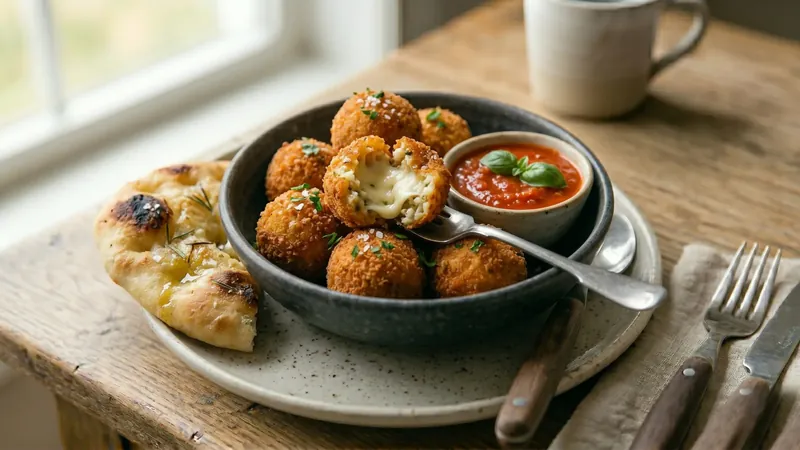
Arancini are the great Sicilian street snack: cold risotto rolled into balls, crumbed and fried until shatteringly crisp. The twist tucked inside is a cube of mozzarella buried at the centre, which melts as the balls fry so that each one pulls into a long, satisfying string of cheese when you break it open. Make them with leftover risotto or cook a batch specially. Either way, serve them hot, while the centre is still molten and the crust still crackles.
Arancini with a Molten Mozzarella Centre
Ingredients
- 300g risotto rice (arborio or carnaroli)
- 1 small onion, finely chopped
- 2 tbsp olive oil
- 100ml dry white wine
- 900ml hot vegetable or chicken stock
- Pinch of saffron threads (optional)
- 60g grated Parmesan
- 1 egg yolk
- 125g mozzarella, cut into 12 small cubes
- 2 eggs, beaten
- 100g plain flour
- 150g fine dried breadcrumbs
- Sunflower or vegetable oil, for deep-frying
- Salt and black pepper
Method
- Soften the onion in the olive oil over a medium heat until translucent, about 5 minutes.
- Stir in the rice and toast for a minute, then add the wine and let it bubble away.
- Add the saffron, if using, then the hot stock a ladleful at a time, stirring, until the rice is cooked and creamy, about 18-20 minutes.
- Beat in the Parmesan and egg yolk, season well, and spread the risotto on a tray to cool completely.
- Take a heaped tablespoon of cold risotto, flatten it in your palm, press a cube of mozzarella into the centre, and mould the rice around it into a smooth ball.
- Repeat with the rest, then chill the balls for 20 minutes to firm up.
- Set up three bowls: flour, beaten egg and breadcrumbs. Roll each ball in flour, then egg, then breadcrumbs to coat fully.
- Heat the frying oil to 180C in a deep pan, no more than half full.
- Fry the arancini in batches for 3-4 minutes, turning, until deep golden and crisp, keeping the centres hot enough to melt.
- Drain on kitchen paper, season with a little salt, and serve hot so the mozzarella is still molten.
3 The Story
Arancini are one of the most beloved foods of Sicily, the large island off the southern tip of Italy, where they are sold from bakeries, fryers and street stalls across the region. The name comes from the Italian word for orange, arancia, and describes the little balls’ appearance: round, golden and roughly the size of a small citrus fruit when fried to a deep amber crust. The comparison is apt, and it has stuck for generations.
There is a long-running and good-natured rivalry over the name and the shape, which differs across the island. In the east, around the city of Catania, they are traditionally cone-shaped and known by a masculine form of the word; in the west, around Palermo, they are round and take the feminine. The cone is sometimes said to echo the shape of Mount Etna, the volcano that looms over the eastern coast. Either way, the dish is part of everyday Sicilian life and a fixture of the island’s celebrated street food.
The rice itself is essentially a risotto, and Sicily’s appetite for rice dishes owes much to the island’s layered history. Rice cultivation and the use of saffron, which lends arancini their golden hue, are among the many culinary legacies left by the Arab presence in Sicily during the medieval period. That heritage threads through much of the island’s cooking, from sweets to savoury rice, and arancini sit squarely within it.
Classic fillings vary widely. A common version is filled with a rich meat ragù and peas; another with ham and cheese; another simply with butter. The molten cheese centre used here is in that same spirit, a pocket of melting richness hidden within the creamy rice and the crisp crust. The trick to good arancini lies in the texture of the risotto: it must be cooked until properly creamy, then cooled completely so that it firms up enough to shape and hold together in the fryer. Chilling the formed balls before crumbing helps them keep their shape, and frying at a steady, hot temperature gives the deep, even crust that makes them so irresistible.
Related Content