Apple and Caraway Coleslaw
Crunchy, tangy and a little aromatic
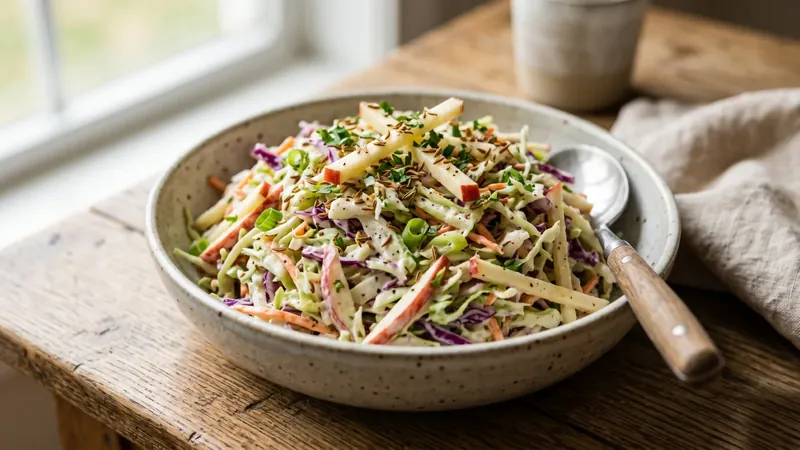
Coleslaw can be a sad, claggy afterthought, but a couple of small changes turn it into something you actively look forward to. Coarsely grated apple, stirred into the dressing skin and all, brings sweetness and an extra layer of crunch, while a teaspoon of toasted caraway lends a warm, faintly aniseed aroma that lifts the whole bowl. The result is fresh and tangy rather than heavy, the ideal partner to a roast, a burger or a slab of mature cheese.
Apple and Caraway Coleslaw
Ingredients
- 1 tsp caraway seeds
- 400g white cabbage, finely shredded
- 2 carrots, coarsely grated
- 1 crisp eating apple, such as Braeburn
- 1/2 small red onion, very thinly sliced
- 100g mayonnaise
- 2 tbsp natural yoghurt
- 1 tbsp cider vinegar
- 1 tsp Dijon mustard
- Small handful of chopped parsley
- Salt and black pepper
Method
- Toast the caraway seeds in a dry frying pan over a medium heat for a minute or two until fragrant, then tip out to cool.
- Put the shredded cabbage and grated carrot into a large bowl.
- In a smaller bowl, whisk together the mayonnaise, yoghurt, cider vinegar and Dijon mustard, then season.
- Grate the apple coarsely, leaving the skin on, and stir it straight into the dressing to stop it browning.
- Add the sliced red onion and most of the toasted caraway seeds to the dressing.
- Pour the dressing over the cabbage and carrot and toss thoroughly until everything is evenly coated.
- Taste and adjust the seasoning, adding a little more vinegar if you like it sharper.
- Scatter with the parsley and remaining caraway seeds, and chill for 20 minutes before serving.
3 The Story
Coleslaw has a longer pedigree than its supermarket-tub reputation suggests. The name comes from the Dutch koolsla, a contraction of kool, meaning cabbage, and sla, meaning salad. Dutch settlers brought the dish to North America, where it took root and evolved, and the anglicised spelling we use today grew out of that transplanted tradition. At its core it has always been the same simple thing: raw cabbage, finely cut and bound with a dressing, a clever way of making a hardy, long-keeping winter vegetable into something fresh and palatable.
The dressing is where styles diverge. Some cooks favour a sharp vinaigrette, others a creamy base of mayonnaise; this recipe splits the difference by cutting the mayonnaise with yoghurt and cider vinegar, so the slaw stays light and keeps its tang without turning gloopy. A little Dijon adds backbone. The aim is to coat the vegetables rather than drown them, leaving the cabbage and carrot with plenty of audible crunch.
Apple is a natural friend to cabbage, a pairing found across the cooking of northern Europe, from German and Eastern European kitchens to British ones. Choosing a crisp eating variety such as Braeburn keeps the texture firm and the flavour balanced between sweet and sharp; softer apples tend to collapse. Grating it straight into the acidic dressing is a small but useful trick, as the vinegar and lemony notes slow the browning that would otherwise set in within minutes of cutting. Leaving the skin on adds colour and a little extra bite.
Caraway is the real signature here. These slender, curved seeds come from a plant in the carrot family and carry a distinctive warm, earthy flavour with a hint of anise, the same seed that flavours rye bread and many a Central European cabbage dish, from sauerkraut to braised red cabbage. Cabbage and caraway have a long-standing affinity, the seed’s aroma seeming purpose-built to season the vegetable, and it is no surprise to find the two together across so much of the cooking of northern and eastern Europe.
Toasting the seeds briefly in a dry pan wakes up their fragrance and makes all the difference, so do not skip that step; the gentle heat draws out the aromatic oils and rounds off any harshness. Let the finished slaw sit for twenty minutes or so before serving, which gives the cabbage time to soften just slightly and the flavours time to mingle, then bring it to the table while it is still cold and crisp. It keeps well in the fridge for a day or two, though the apple is at its freshest soon after mixing.
Related Content