Andy Warhol’s iconic Marilyn Monroe portrait sells for record $195m
Marilyn Monroe may have died in 1962, but she still managed to make history when her iconic portrait by Andy Warhol sold for $195m.

Contents
<p>At Christie’s Rockefeller Center saleroom in New York on the evening of 9 May 2022, a single canvas took just under twenty minutes to become the most expensive American artwork ever sold at auction. The painting was Andy Warhol’s <em>Shot Sage Blue Marilyn</em>, and its hammer price of $195 million — around $170 million before the buyer’s premium — broke the record for any twentieth-century work sold publicly and made it, at the time, the second most expensive artwork ever to change hands at auction, behind only Leonardo da Vinci’s <em>Salvator Mundi</em>. The winning bid came from the dealer Larry Gagosian, bidding in the room, and the seller was the foundation of the late Swiss dealers Thomas and Doris Ammann, which pledged the proceeds to children’s health and education charities. That a forty-square-inch silkscreen of a dead film star could command such a sum says a great deal about how Warhol, Monroe and the idea of the icon have fused in the decades since both artist and subject died.</p>
<p>The record was less a surprise than a coronation. Warhol’s Marilyns had long been treated as the touchstone images of American Pop art, and this particular one carried a story dramatic enough to match the price.</p>
<h2 id="the-painting-behind-the-price">The painting behind the price</h2><div class="ad-unit ad-in-article" aria-label="Advertisement">
<span class="ad-label">Advertisement</span>
<ins class="adsbygoogle" style="display:block;text-align:center"
data-ad-client="ca-pub-3726833845844946"
data-ad-slot="3291553914"
data-ad-format="auto"
data-full-width-responsive="true"></ins>
<script>(adsbygoogle = window.adsbygoogle || []).push({});</script>
</div>
<p><em>Shot Sage Blue Marilyn</em> is a silkscreen in acrylic on linen, forty inches square, one of a set of five that Warhol produced in his New York studio, the Factory, in 1964. Each shares the same source and the same square format but a different background colour — sage blue, red, orange, turquoise and a light “eggshell” — and the group is known collectively as the “Shot Marilyns”. All of them derive from a single publicity photograph taken for the 1953 film noir <em>Niagara</em>, a still that Warhol cropped tightly to Monroe’s face: the platinum hair, the heavy-lidded eyes, the parted red lips reduced to flat planes of screened colour. Warhol did not paint Monroe from life; he took a mass-produced studio photograph and mass-produced it again, which is exactly the point of the work.</p>
<h2 id="why-they-are-called-the-shot-marilyns">Why they are called the “Shot” Marilyns</h2>
<p>The unsettling name has nothing to do with Monroe’s death and everything to do with an incident in the Factory. In 1964 the performance artist Dorothy Podber, who arrived with her greyhound and a reputation for the theatrical, visited Warhol’s studio, asked whether she might “shoot” a stack of the finished Marilyn canvases, and — taking the word literally — drew a pistol from her handbag and fired a bullet through the pile. Several of the paintings were pierced through the forehead and later repaired. The <em>sage blue</em> version was not in the stack that day and escaped undamaged, but the whole series took its collective title from Podber’s stunt. Warhol, characteristically unruffled, banned her from the Factory but kept the name and the bullet holes, absorbing an act of vandalism into the legend of the work.</p>
<h2 id="how-warhol-made-a-marilyn">How Warhol made a Marilyn</h2><div class="ad-unit ad-in-article" aria-label="Advertisement">
<span class="ad-label">Advertisement</span>
<ins class="adsbygoogle" style="display:block;text-align:center"
data-ad-client="ca-pub-3726833845844946"
data-ad-slot="3291553914"
data-ad-format="auto"
data-full-width-responsive="true"></ins>
<script>(adsbygoogle = window.adsbygoogle || []).push({});</script>
</div>
<p>The technique matters, because it is inseparable from the meaning. Warhol did not draw or paint Monroe’s face by hand. He took the <em>Niagara</em> publicity photograph, had it transferred photographically onto a fine silk screen, and pushed ink through that screen onto a canvas he had first hand-painted with blocks of flat colour — the sage-blue ground, a patch for the hair, another for the lips. The result deliberately courts the imperfections of cheap printing: ink smudges, colours slip out of register, edges blur. A hand-painted portrait hides its making; a Warhol silkscreen advertises the machine. This was a genuine break in his own practice — through the 1950s he had worked as a commercial illustrator, drawing shoes and advertisements by hand, and the Marilyns marked the point at which he made the assembly line itself his subject and his method. He would soon name his studio the Factory in the same spirit, staffing it with assistants who could pull the screens as readily as he could.</p>
<h2 id="two-icons-one-image">Two icons, one image</h2>
<p>Warhol began the Marilyn series in the weeks after Monroe was found dead of a barbiturate overdose at her Los Angeles home on 4 August 1962, aged 36. The timing matters. Choosing a glamour still of a woman who had just died, and reproducing it in the flat, repetitive language of advertising, let Warhol fold together the themes that ran through his whole career: celebrity, mortality and the endless mechanical copy. The bright, almost garish colour and the deadpan repetition turn grief into commodity and back again, which is why critics have never settled on whether the Marilyns mourn their subject or merchandise her.</p>
<p>The image of Monroe that Warhol used was itself already a construction — a studio photograph engineered to sell a film — so the painting is a copy of a copy, a portrait with, as one description of the series puts it, no features beyond the open lips and the mask of the face. Monroe the person is almost absent; Marilyn the icon is entirely present. The story of the woman behind that mask, told in more detail in our profile of <a href="/story/marilyn-monroe/">Marilyn Monroe</a>, is in many ways the opposite of what Warhol chose to paint.</p>
<h2 id="what-a-195-million-price-actually-means">What a $195 million price actually means</h2>
<p>Records like this are partly about the object and partly about the market that surrounds it. A single, undamaged, vividly coloured example from a canonical Warhol series, fresh from a distinguished private collection and sold for charity, is about as blue-chip as a modern artwork gets, and Christie’s marketed it accordingly, comparing it openly to a da Vinci or a Botticelli. For comparison, the previous benchmark for a publicly sold American work was Warhol’s own <em>Silver Car Crash (Double Disaster)</em>, which fetched about $105 million in 2013; <em>Shot Sage Blue Marilyn</em> nearly doubled it in a single evening. The figure also dwarfed what a Warhol had ever earned within his own lifetime — he died in 1987, and prices in the hundreds of millions belong entirely to the market’s later canonisation of him, a valuation the living artist never saw and would probably have found delicious.</p>
<p>The sale also sat inside a wider pattern. Warhol has for years been one of the two or three most valuable names in the postwar market, and the Marilyns are his most recognisable motif, endlessly reproduced on posters, mugs and gallery walls until the image is arguably better known than any painting behind it. That ubiquity is not a discount at auction; it is the premium. Collectors at this level are buying cultural centrality — the certainty that the object is <em>the</em> thing everyone already pictures when they think “Warhol” — and there is no more central Warhol image than a Shot Marilyn. Christie’s understood this precisely, hanging the sale not on connoisseurship but on fame, and pricing the estimate at a headline-making $200 million before a paddle was raised.</p>
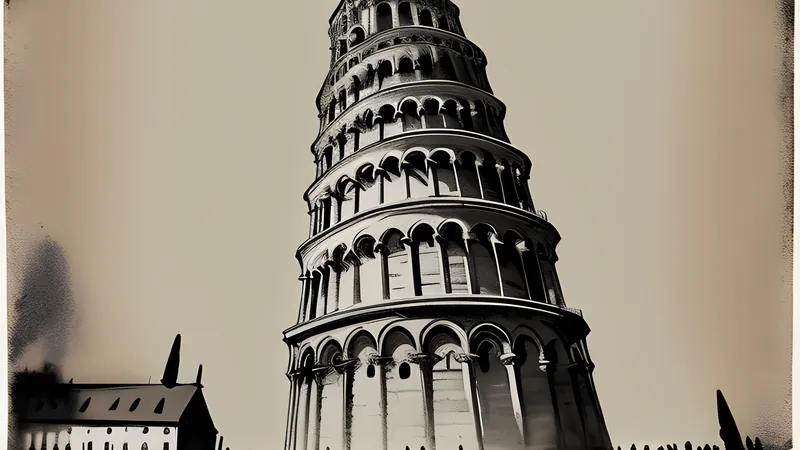
<p>Prices at this altitude also reveal how thoroughly a piece of Pop art has become a monument. There is a certain irony in a work built entirely from the imagery of cheap mass reproduction — a movie publicity photo, screened ink, a picture designed to be endlessly copyable — becoming a scarce, guarded, nine-figure treasure. The same tension between fame and manufacture that Warhol painted into the canvas is precisely what the market now pays for, and the phenomenon of an object whose value rests on story and status as much as on materials is one it shares with famous monuments elsewhere, from the <a href="/story/inside-the-leaning-tower-the-engineering-miscalculations-that-made-pisas-icon-iconic/">leaning tower of Pisa</a> to any other accidental icon the world has decided to treasure.</p>
<h2 id="the-record-in-context">The record in context</h2>
<ul>
<li>The sale on 9 May 2022 lasted under twenty minutes and set the auction record for any American artwork and any twentieth-century artwork.</li>
<li>All five “Shot Marilyns” date from 1964 and share a single source: a publicity still from the 1953 film <em>Niagara</em>.</li>
<li>The series is named for Dorothy Podber’s 1964 stunt of firing a pistol through a stack of the canvases — the sage blue version was spared.</li>
<li>The buyer was the dealer Larry Gagosian; the seller was the Thomas and Doris Ammann Foundation, which directed the proceeds to children’s charities.</li>
<li>Warhol started the Marilyns in 1962, in the weeks after Monroe’s death on 4 August that year, though the “Shot” set itself was made in 1964.</li>
</ul>
<h2 id="a-closing-reflection">A closing reflection</h2>
<p>There is something fitting, and a little bleak, in the arithmetic of this sale. Warhol took the most mechanically reproducible image imaginable — a dead star’s publicity photo, run through a silkscreen to strip away everything but the surface — and the art market has since made that surface almost priceless. The painting is worth $195 million not despite being a copy of a copy but partly because of it, because Warhol understood before almost anyone that in a culture of images, the copy could become the most real thing of all. Monroe died in 1962 and Warhol in 1987; the mask they made together has outlived them both and, it turns out, appreciates handsomely.</p>
Advertisement
Related Content



Advertisement
