Aloo Tikki Chaat with Yoghurt and Tamarind
Crisp spiced potato patties buried under yoghurt, tamarind, chutney and a snowfall of sev
Contents
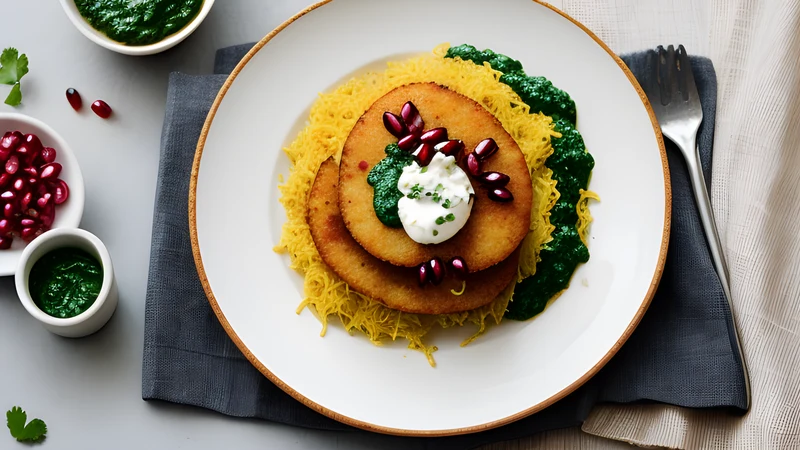
↓ Jump to recipeChaat is the loud, joyful heart of Indian street food, and aloo tikki chaat is one of its finest expressions: a crisp, spiced potato cake, still hot from the pan, then buried under cool yoghurt, sweet-sour tamarind, sharp green chutney, crunchy sev and a dust of black salt and mango powder. It hits sweet, sour, salty, spicy, hot, cold, crisp and creamy in a single mouthful, which is the whole point of chaat — a controlled riot of contrasts, eaten standing up from a paper bowl.
The word chaat comes from the Hindi chaatna, to lick, which tells you everything about how it is meant to be eaten. It belongs to the bazaars and street corners of North India — Delhi, Lucknow, the towns of Uttar Pradesh — where chaat vendors work fast from carts, assembling each plate to order with a dozen little pots in front of them. Aloo tikki, the fried potato patty, is the workhorse of the genre, grilled on huge flat tawa griddles slicked with ghee until the edges go lacy and dark, then broken open and dressed at the counter.
Aloo Tikki Chaat with Yoghurt and Tamarind
Ingredients
- 700 g floury potatoes (Maris Piper), boiled and cooled
- 40 g poha (flattened rice), soaked 2 min and squeezed dry — or 3 tbsp fine breadcrumbs
- 1 tsp cumin seeds
- 1 green chilli, finely chopped
- 2 tsp ginger, grated
- 1/2 tsp garam masala
- 1/2 tsp amchur (dried mango) powder
- 1 tsp salt
- 2 tbsp fresh coriander, chopped
- 4 tbsp vegetable oil, for shallow-frying
- For the tamarind chutney: 60 g seedless tamarind pulp
- 80 g jaggery or soft brown sugar
- 1/2 tsp roasted cumin, ground
- 1/4 tsp black salt
- 250 ml water
- To assemble: 200 g plain yoghurt, whisked with 1 tsp sugar and a pinch of salt
- green chutney (coriander-mint), to drizzle
- chaat masala, to dust
- red chilli powder, to dust
- 50 g sev (crisp gram-flour noodles)
- 1/2 red onion, finely diced
- 1 handful pomegranate seeds (optional)
- fresh coriander, to finish
Method
- Make the tamarind chutney first: simmer the tamarind pulp, jaggery, cumin, black salt and water for 8-10 minutes until syrupy. Push through a sieve if needed and cool. It should coat a spoon and taste sweet-sour.
- Boil the potatoes whole in their skins until tender, drain very well, cool, then peel and mash or rice them until smooth and quite dry.
- Add the squeezed poha, cumin seeds, green chilli, ginger, garam masala, amchur, salt and coriander. Mix and knead lightly until it holds together like a firm dough.
- Divide into 8 and shape into flat patties about 2 cm thick. Chill for 20 minutes to firm up — cold tikki hold their shape and crisp better.
- Heat the oil in a wide frying pan over a medium heat. Shallow-fry the tikki for 4-5 minutes each side, pressing gently, until deep golden and crisp. Don't move them until a crust has formed.
- To assemble, place two hot tikki on each plate. Spoon over the sweetened yoghurt, then drizzle generously with tamarind chutney and green chutney.
- Dust with chaat masala and a little red chilli powder. Scatter over the diced onion, a heap of sev, pomegranate seeds and fresh coriander. Serve immediately, while the tikki are still crisp.
The tikki: getting the potato right
A good tikki is crisp outside and soft, fluffy and well-seasoned within, and it holds together without being gluey. The enemy is wet, sticky mash, which fries into a heavy, pasty cake and often falls apart in the pan. Two habits fix this. First, use floury potatoes — Maris Piper or King Edward — and boil them whole in their skins, so they soak up as little water as possible; drain them thoroughly and let the steam die down before you mash. Second, mash or rice them until smooth and genuinely dry, with no lumps to break the crust.
Season boldly. Cumin, ginger, green chilli, garam masala and amchur go into the mix, along with fresh coriander and a proper amount of salt — undersalted tikki taste of nothing under all those chutneys. Knead the mixture just until it coheres; over-working develops the potato’s starch and turns it sticky.
The clever bit: poha for a shatter-crisp crust
Street vendors bind their tikki in all sorts of ways — cornflour, bread, arrowroot — but my favourite trick is a handful of poha, the flattened rice used across India for breakfast. Soak it for a couple of minutes until soft, squeeze it bone-dry, and knead it through the potato. The poha does two things at once: it absorbs stray moisture, keeping the mixture firm, and as the tikki fries the little flakes of rice crisp up into the surface, giving a genuinely shattering, almost lacy crust that plain mashed potato never achieves. It is the same principle that makes a rice-flour coating so crisp, worked from the inside out.
Chilling the shaped patties for twenty minutes before frying is the other non-negotiable. Cold tikki keep their shape, form a crust before the centre softens, and are far less likely to break up when you turn them. Fry in a medium-hot pan with enough oil to come a few millimetres up the sides, and leave them alone until a deep golden crust forms before you dare to flip.
If you cannot find poha in an Indian grocer, fine dry breadcrumbs do a similar job, though the crust is a little less delicate; a couple of tablespoons of cornflour worked through the mix will also tighten things up. Whatever you use, resist adding it by the handful — too much binder and the tikki turn dense and bready. You want just enough to hold a firm patty that yields to a gentle press without cracking apart.
Tamarind chutney, the sweet-sour anchor
Imli (tamarind) chutney is the dark, glossy, sweet-and-sour sauce that defines chaat. Tamarind brings a deep, fruity sourness; jaggery — unrefined cane sugar — brings a molasses sweetness; roasted cumin and black salt bring earth and funk. Simmer them together until syrupy and you have a sauce you will want to put on everything. Made from a block of seedless tamarind pulp it takes ten minutes; keep it loose enough to drizzle, as it thickens further on cooling. A batch keeps for a fortnight in the fridge.
Alongside it goes green chutney — the same bright coriander-mint blend that partners so many fried snacks — and sweetened, whisked yoghurt. The yoghurt should be loose enough to pour and lightly sweetened, which balances the tang of the tamarind and cools the heat of the chilli. Whisk the yoghurt well until it is completely smooth and pourable; a lumpy, stiff yoghurt sits on top of the chaat instead of running into every crevice. If it is very thick, a splash of cold milk loosens it to the right consistency.
Assembly: fast and generous
Chaat is assembled at the last second, because the whole magic depends on the tikki still being crisp when it meets the cold yoghurt. Have everything ready and lined up before you fry: the whisked yoghurt, both chutneys, the sev, diced onion, pomegranate, coriander and your little dishes of chaat masala and chilli.
Set the hot tikki down, spoon over yoghurt, then zigzag both chutneys across the top. Dust with chaat masala and a pinch of chilli, then pile on the sev — those crisp gram-flour noodles — with the onion, pomegranate and coriander. Serve at once, and eat it immediately, before the sev softens and the crust gives way. The contrast between hot crisp potato and cold creamy yoghurt lasts only a minute or two, and that fleeting moment is exactly what you are chasing.
Make-ahead, storage and variations
Almost everything here can be prepped in advance. The tamarind chutney keeps for weeks; the green chutney for a few days; the tikki mixture can be shaped and chilled the day before. Fry the tikki fresh, though — reheated ones never regain the same crust. If you want to get ahead for a party, part-fry them, then finish in a hot oven as guests arrive.
Turn the same plate into other members of the chaat family with barely any effort: top the tikki with warm spiced chickpeas for aloo tikki chole chaat, or break them into a bowl of crushed papdi for a fuller papdi chaat. For a lighter version, griddle the tikki in a non-stick pan with just a brushing of oil rather than shallow-frying.
If you have arrived here from the fryer, this plate is the natural next step after mixed vegetable pakoras with chaat masala and onion bhaji with green chutney — the same chutneys and the same chaat masala pull all three together into a proper spread. Make the green chutney and the tamarind chutney once, keep them in the fridge, and you are always ten minutes from a plate of something that tastes of a Delhi evening.
Related Content